
If you are an executor, administrator, or heir dealing with an estate that includes a home with a reverse mortgage, you have probably discovered that reverse mortgages operate very differently from traditional mortgages. The rules are different. The deadlines are different. And the protections are different too.
This article walks through every major question that comes up when a reverse mortgage borrower dies in Texas: what happens to the loan, what deadlines apply, how the 95% nonrecourse rule works, whether a surviving spouse can stay in the home, what happens when probate slows things down, and what practical steps heirs should take. Nothing here replaces advice from a qualified Texas probate attorney or a HUD-approved reverse mortgage counselor, but it should give you a clear map of the terrain so you know what to ask next.
If the home has a traditional (forward) mortgage instead, see our companion article: What Happens to the Mortgage When a Homeowner Dies in Texas? The rules for forward mortgages are different in important ways.
This article provides general educational information about reverse mortgages, federal HUD guidelines, and Texas probate considerations. It is not legal, tax, or financial advice. The specific rights, deadlines, and options depend on the loan documents, the type of reverse mortgage (HECM versus proprietary), the circumstances of the borrower's death, title, and other facts. Every reverse mortgage servicer may have slightly different procedures. Consult a qualified Texas probate attorney, a HUD-approved reverse mortgage counselor, and the loan servicer for guidance specific to your situation.
What Is a Reverse Mortgage?
A reverse mortgage is a type of loan available to homeowners aged 62 and older that allows them to convert a portion of their home equity into cash without making monthly mortgage payments. The most common type is the Home Equity Conversion Mortgage (HECM), which is insured by the Federal Housing Administration (FHA), a part of the U.S. Department of Housing and Urban Development (HUD). [1]
Here is how a reverse mortgage works at its most basic level:
| Feature | How It Works |
|---|---|
| No monthly payments | Unlike a traditional mortgage, the borrower does not make monthly principal and interest payments. The loan balance grows over time as interest and fees are added. |
| Borrower retains title | The homeowner remains on the deed and retains ownership of the property. The lender holds a lien, not the title. |
| Borrower obligations | The borrower must continue to pay property taxes, maintain homeowners insurance, and keep the property in reasonable condition. Failure to meet these obligations can cause the loan to become due. [2] |
| Loan becomes due | The loan becomes due and payable when the last surviving borrower dies, sells the home, permanently moves out, or fails to meet loan obligations (taxes, insurance, maintenance). |
| Nonrecourse protection | A HECM is a nonrecourse loan. The lender generally may enforce the debt only against the mortgaged property, not against the borrower's other assets or an heir's personal assets. When heirs retain the property, the required payoff is generally the lesser of the outstanding loan balance or 95% of the property's current appraised value. Different sale rules apply when the property is sold. |
The key difference between a reverse mortgage and a traditional forward mortgage is simple but critical: in a forward mortgage, you make monthly payments to pay down the loan balance. In a reverse mortgage, the lender makes payments to you (or provides a line of credit), and the loan balance grows over time. When the borrower dies, the full balance becomes due — not just remaining payments, but the entire accumulated balance.
A common misconception is that the lender owns the home in a reverse mortgage. That is not correct. The borrower retains full ownership and title, just as with any other mortgage. The lender holds a lien against the property as security for the loan.
Key Point
The homeowner retains title and ownership. The lender does not own the home. The loan must be repaid when the last surviving borrower dies or permanently leaves the home, but the borrower's estate or heirs are protected by the federal nonrecourse rule — they can never owe more than the home is worth.
When the Reverse Mortgage Becomes Due
A reverse mortgage becomes due and payable when the last surviving borrower experiences a "maturity event." The most common maturity events are:
- Death of the last surviving borrower — This is the most common scenario for the families reading this article. When the last borrower named on the loan dies, the full loan balance becomes due, not just the remaining payments. For HECMs originated after August 4, 2014, death triggers due-and-payable status unless an Eligible Non-Borrowing Spouse qualifies for a Deferral Period under HUD guidelines.
- Permanent move-out — If the borrower permanently leaves the home (for example, moving into assisted living or a nursing home), the loan can become due.
- Failure to meet loan obligations — If the borrower stops paying property taxes, lets homeowners insurance lapse, or fails to maintain the property, the lender can call the loan due.
- Sale or transfer of the property — Selling or otherwise transferring the property triggers the due-and-payable clause.
When the loan becomes due, the entire outstanding balance — including the original principal, all accrued interest, the upfront and annual mortgage insurance premiums, and any servicing fees — must be repaid or resolved. This is a key difference from a traditional mortgage. With a forward mortgage, only the missed payments are technically due (though the lender can eventually accelerate the full balance after default). With a reverse mortgage, the full balance is due immediately upon the maturity event. [4]
The good news is that heirs are not expected to write a check for the full balance the day the borrower dies. HUD provides a structured timeline for heirs to resolve the loan — through sale, refinance, or payoff — which we cover in the next section.
Deadlines Imposed by the Servicer
The loan servicer will send a formal notification to the estate and known heirs when it learns of the borrower's death. This notification starts a clock with several important deadlines. [5]
The HECM Timeline at a Glance
| Stage | What the rule means | Recommended action |
|---|---|---|
| Notice to the estate or titleholder | For a death-related HECM maturity, the mortgagee must send the due-and-payable notice within 30 days after the mortgagee notifies HUD that the loan became due and payable. This is not necessarily 30 days after the borrower's death. | Notify the servicer promptly, provide the death certificate and authority documents it requests, and obtain every deadline in writing. |
| First 30 days after the notice | The notice must give the estate, heirs, or other party with legal title 30 days to engage in an authorized resolution: satisfy the loan, sell the property as permitted by HUD, or provide a deed in lieu of foreclosure. | Respond in writing and begin the selected course of action. Merely stating an intention without taking action may not be sufficient. |
| Additional resolution time | HUD and CFPB materials explain that a servicer may allow additional time — commonly up to six months — to complete a sale or obtain financing. Do not describe this as an automatic six-month right or as a universal "completion deadline." | Ask the servicer what date it is using and whether additional time has been approved. |
| Possible extensions | In qualifying cases, as many as two additional 90-day periods may be available when the estate or heirs document active efforts to sell the property or satisfy the debt. The extension process may require HUD approval through the servicer. | Submit the request before the current deadline and include a listing agreement, contract, financing records, probate filings, or other proof of progress. |
| Foreclosure timing | HUD's servicing rules generally require the mortgagee to begin foreclosure within six months after the due-and-payable date unless HUD permits additional time. That servicing deadline is not the same as an automatic six-month period guaranteed to heirs. | Continue communicating with the servicer and do not assume foreclosure is suspended unless the servicer confirms that in writing. |
Because the due-and-payable date, notice date, foreclosure deadline, and any approved extension dates may be different, heirs should not calculate a deadline solely from the date of death. The controlling dates should be confirmed with the servicer in writing.
These deadlines apply to FHA-insured HECM loans, which make up the vast majority of reverse mortgages. Proprietary (non-FHA) reverse mortgages may have different timelines. The heirs should ask the servicer specifically which program rules govern the loan and request all deadlines in writing. [5]
The single most important thing heirs can do is respond to the servicer promptly, even if they do not yet have a plan. Acknowledging receipt of the notice and asking for information keeps the lines of communication open and shows good faith. Ignoring the notice is the surest way to lose control of the timeline.
How to Request Extensions
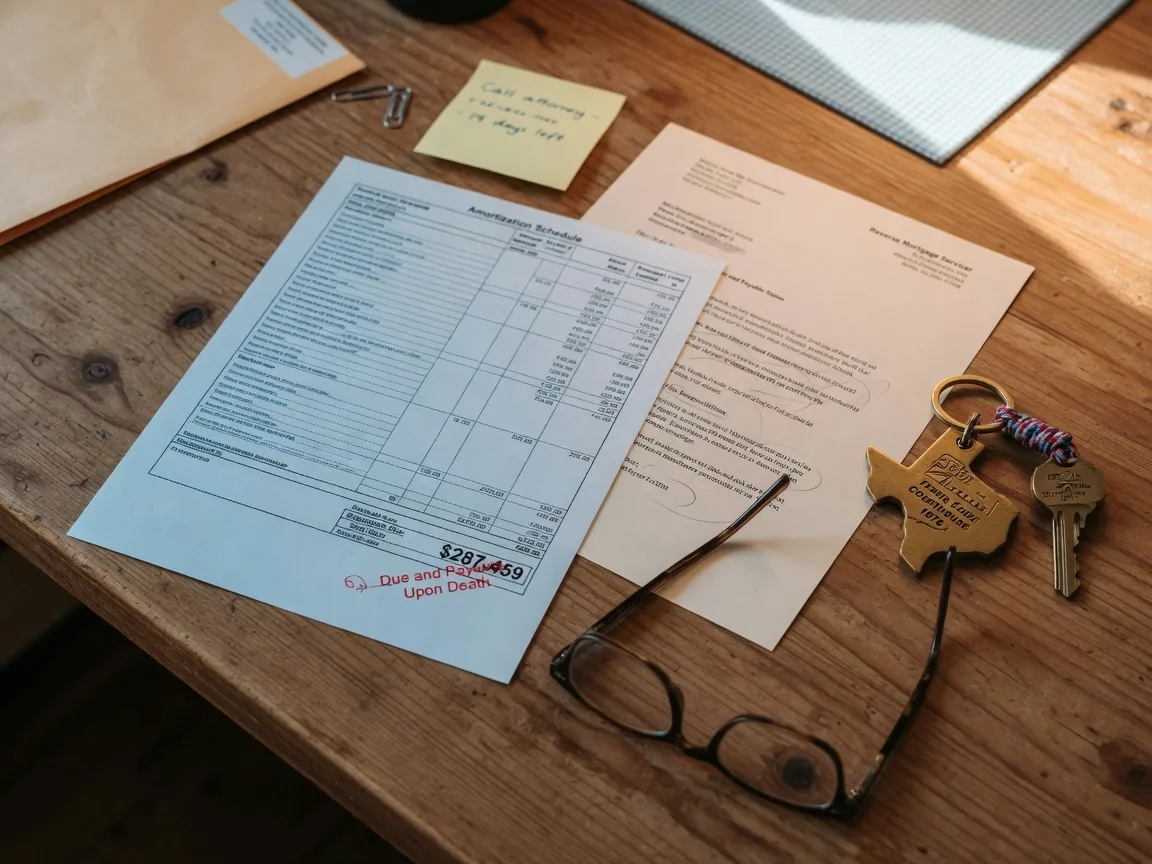
Extensions are not automatic. They must be requested in writing before the current deadline expires. The estate or heirs may request additional time by documenting active efforts to sell the property or satisfy the debt. HUD guidance permits as many as two additional 90-day periods in qualifying cases, but the extensions are not automatic and may require HUD approval through the servicer. The servicer should confirm any approved extension and its expiration date in writing. [5]
Documentation the Servicer May Request
Proof of Listing
If the home is listed for sale, provide a copy of the listing agreement with a licensed real estate agent, showing the active listing status and asking price.
Proof of Refinance Application
If an heir is applying for a traditional mortgage to buy out the loan, provide a loan application receipt, pre-approval letter, or correspondence with a lender showing active progress.
Probate Court Documentation
If probate proceedings are delaying the sale, provide a copy of the court order, letters testamentary, or a letter from the probate attorney explaining the timeline and expected resolution date.
Written Correspondence
Maintain a written record of all communication with the servicer. Send extension requests by certified mail with return receipt requested so you have proof of delivery.
The importance of communicating with the servicer early cannot be overstated. Regular communication creates a record of the estate's progress, but it does not guarantee an extension. Only written confirmation from the servicer should be treated as approval. A servicer who is contacted for the first time after a deadline has already passed has much less flexibility. [5]
HUD has made clear that servicers should consider reasonable requests for extensions when heirs are making diligent efforts. The key phrase is "diligent effort" — the heirs must be actively working toward resolution, not waiting passively. [5]
Critical Reminder
Request extensions before the current deadline expires. Missing a deadline without an approved extension can cause the servicer to initiate foreclosure proceedings, and getting those proceedings stopped after they have started is much harder than preventing them in the first place.
Interest and MIP Continue to Accrue
Requesting extensions does not freeze the loan. Interest and the 0.5% annual mortgage insurance premium continue to accrue daily and compound monthly during any extension period or foreclosure process. The outstanding balance grows over time, which is why prompt resolution is important even when additional time is available.
Appraisal Issues After Death
When a reverse mortgage borrower dies, the servicer will typically order a new appraisal of the property to determine its current market value. This appraisal has significant consequences because it determines the 95% threshold — the maximum amount heirs may need to pay to keep the home. [6]
How the Appraisal Process Works
- For a potential sale, the mortgagee must order an appraisal from an FHA Roster appraiser no later than 30 days after receiving a request from an applicable party in connection with the proposed sale. The rule should not be described as requiring an appraisal within 30 days after the servicer learns of the death.
- When the HECM is due and payable, the mortgagee initially bears the appraisal expense but may be reimbursed from the proceeds of a sale by the borrower, estate, or other permissible party.
- If the loan balance exceeds the property's value, the appraisal is used to determine the amount required under HUD's 95% sale or retention rules.
- The estate should request a complete copy of the appraisal and confirm its effective date because HUD limits how long an appraisal may be used.
Can Heirs Dispute the Appraisal?
Yes, heirs can dispute an appraisal, but there must be a legitimate basis for doing so. Simply disagreeing with the value is not enough. Valid grounds for disputing an appraisal include:
- Errors in the appraisal report — incorrect square footage, wrong number of bedrooms or bathrooms, or missing property features.
- Inadequate comparable sales — the appraiser used properties that are not truly comparable to the subject property, or failed to use more relevant recent sales.
- Omitted information — recent upgrades, renovations, or value-enhancing features that were not included in the analysis.
An estate or titleholder that identifies factual errors or material valuation problems should promptly send the evidence to the servicer and ask what review or reconsideration procedure is available for the HECM appraisal. HUD rescinded its expanded mandatory borrower-initiated Reconsideration of Value protocol in Mortgagee Letter 2025-08, so the article should not imply that every heir has a standardized HUD ROV right. A separately commissioned appraisal or market analysis may support a request, but it does not automatically replace the valuation accepted by the servicer and HUD. [7]
If the appraised value comes in lower than expected, it is not necessarily bad news. Remember the 95% rule: a lower appraisal means a lower repayment cap. If the loan balance is $300,000 and the home appraises for $250,000, heirs can purchase the home for $237,500 (95% of $250,000) rather than paying the full $300,000 balance. [3]
Selling the Property to Pay Off the Loan
For most estates, selling the home is the cleanest way to resolve a reverse mortgage. Understanding property tax obligations is essential — see our Boerne property tax guide. Here is how the process works.
The Sale Process
- List the property with a real estate agent — The executor or an authorized heir lists the home for sale, just as with any other property. An experienced agent who understands reverse mortgages can help navigate the specific requirements.
- Market the home at fair market value — If the outstanding balance can be paid in full from the transaction, obtain and satisfy the servicer's payoff demand. If the loan is underwater and the estate wants the sale accepted in full satisfaction of the HECM, obtain the servicer's written approval of the transaction. HUD's HECM rules generally permit an approved sale for an amount established under HUD requirements, commonly at least 95% of the current appraised value, subject to HUD's rules concerning allowable closing costs and net proceeds.
- Obtain a payoff quote — The title company or closing agent orders a reverse mortgage payoff statement from the servicer. The payoff includes the outstanding balance, accrued interest, and any fees.
- Close the sale — At closing, the reverse mortgage is paid from the sale proceeds. Any remaining equity after the loan is paid goes to the estate or the heirs. [6]
Important distinction for the 95% rule. When heirs or third parties are purchasing the property in a short sale, the transaction must net at least 95% of the current appraised value for the sale to be accepted in full satisfaction of the HECM. This is a net-proceeds requirement tied to the sale. When an heir retains the property instead (not a sale to a third party), the heir may satisfy the loan by paying the lesser of the outstanding loan balance or 95% of the appraised value. These are different scenarios with different pricing requirements: the short-sale rule sets a floor on what the servicer can accept from a sale, while the retention rule caps what an heir must pay to keep the home.
What If the Sale Price Is Less Than the Loan Balance?
This is where the nonrecourse protection comes into play. If an approved sale is completed and the net proceeds are less than the loan balance, the estate and heirs are not required to make up the difference. The FHA mortgage insurance fund covers the shortfall. [3] When the property needs significant work, our guide to selling a home as-is covers your options.
For example, if the reverse mortgage balance is $350,000 and an underwater sale is completed in accordance with HUD and servicer requirements, the approved net sale proceeds are applied to the HECM. The estate and heirs are not personally responsible for the remaining HECM deficiency merely because they inherited the property. The mortgagee may submit an eligible insurance claim to FHA. Actual closing costs and the approved net proceeds make it inaccurate to assume that the lender necessarily receives the entire gross sale price.
This protection makes reverse mortgages fundamentally different from forward mortgages, where a short sale or foreclosure can leave the borrower or co-signer personally liable for the deficiency. With a reverse mortgage, there is no personal liability for the borrower or the heirs. [4]
Keeping the Home as an Heir
Heirs who want to keep the home have several options. The nonrecourse protection ensures they never have to pay more than the property is worth.
Options for Keeping the Home
| Option | Description | Best For |
|---|---|---|
| Pay the lesser of the loan balance or 95% of appraised value | Under the HECM nonrecourse rule, heirs who keep the home pay the lesser of the outstanding loan balance or 95% of the current appraised value. This is often the most affordable option when the loan balance exceeds the home's value. | Heirs who have cash available and want to keep the home without taking on new debt. Best when the loan balance exceeds the home's value. |
| Pay off the full loan balance | Heirs can pay off the entire reverse mortgage balance using cash, proceeds from other estate assets, or a sale of other assets. | Estates with sufficient liquid assets when the loan balance is manageable and the home has substantial equity. |
| Refinance into a traditional mortgage | The heir obtains a new traditional mortgage in their own name to pay off the reverse mortgage balance. The heir must qualify based on credit, income, and the property value. | Heirs who want to keep the home but lack cash to pay off the loan. Best when interest rates are favorable and the heir qualifies for new financing. |
The Nonrecourse Protection When Keeping the Home
The 95% rule is one of the most important protections for heirs of a reverse mortgage borrower. Here is how it works in practice:
Example: The 95% Rule in Action
Loan balance at death: $320,000
Home's appraised value: $280,000
95% of appraised value: $266,000
What heirs pay to keep the home: $266,000 (not $320,000)
The FHA insurance fund covers the $54,000 difference between what the heirs pay and the outstanding loan balance. The heirs never have to come up with the full $320,000.
Conversely, if the home appraises for more than the loan balance, the heirs would pay the full loan balance (or the 95% figure, whichever is less), and the equity belongs to the estate.
Key Protection
An heir does not become personally liable for the HECM merely by inheriting the property. If an heir wants to retain the property, the required payoff is generally the lesser of the outstanding loan balance or 95% of the current appraised value. If the property is sold instead, the estate must follow the servicer's payoff or approved-sale requirements.
Negative Equity and Nonrecourse Protections
The nonrecourse nature of HECM reverse mortgages is one of their most important features. Here is what it means in plain language:
A "nonrecourse" loan means the lender's only remedy if the loan is not repaid is to take the property. The lender cannot come after the borrower's other assets, the estate's other assets, or the heirs' personal assets to collect any shortfall. This is codified in HUD regulations at 24 CFR 206.125. [4]
How Nonrecourse Protection Works
- If the home is sold and the sale proceeds are less than the loan balance, the lender accepts the sale proceeds as payment in full. The FHA mortgage insurance fund covers the loss.
- If heirs want to keep the home, they pay the lesser of: (a) the full loan balance, or (b) 95% of the home's appraised value. They are not required to pay the difference if the loan balance exceeds 95% of value. [3]
- If heirs simply walk away and deed the property back to the lender, they have no further obligation. The lender cannot pursue a deficiency judgment. [4]
Deed in Lieu of Foreclosure (DIL)
A deed in lieu of foreclosure (DIL) is the official process by which the property owner voluntarily transfers the deed to the mortgagee to satisfy the reverse mortgage debt and avoid formal foreclosure proceedings. For heirs who do not want to retain the property and want to resolve the HECM without a contested foreclosure, a deed in lieu may be an option. The servicer must approve the DIL, and the estate should obtain written confirmation that the DIL fully satisfies the HECM obligation. Heirs should consult with the probate attorney before executing a deed in lieu to understand any tax implications and confirm that the transfer is authorized under the probate administration.
Comparison: Reverse Mortgage vs. Forward Mortgage
| Scenario | Traditional Forward Mortgage | Reverse Mortgage (HECM) |
|---|---|---|
| Home value: $200K, Loan balance: $250K | An heir does not become personally liable merely by inheriting the property. Depending on the loan documents, applicable law, and method of foreclosure, a deficiency claim may exist against the borrower's estate or a person who separately signed or assumed the debt. A co-borrower or guarantor may have personal liability. | Heirs owe nothing beyond the sale proceeds. The FHA insurance fund covers the $50K shortfall. No personal liability. |
| Home value: $200K, Loan balance: $100K | Loan is paid from sale proceeds. Heirs receive the remaining $100K equity. | Loan is paid from sale proceeds. Heirs receive the remaining $100K equity. |
| Heirs want to keep the home | An heir may be able to keep making payments, seek a formal assumption if available, or refinance. Continuing payments or receiving the property does not by itself make the heir personally liable on the note. | Heirs can pay the lesser of the loan balance or 95% of appraised value. They can also refinance. |
This protection is not optional. It is built into the FHA HECM program rules. Any servicer that suggests heirs are personally liable for a shortfall is not following HUD requirements. [4]
The Surviving Spouse Problem
One of the most difficult situations in reverse mortgage estates arises when a surviving spouse is not named on the loan. This is often called the "non-borrowing spouse" problem.
The scenario: A couple lives in a home. Only one spouse signs the reverse mortgage (perhaps because the other spouse was under 62 at the time). The borrowing spouse dies. The non-borrowing spouse is still living in the home. What happens?
Eligible Non-Borrowing Spouse Protections
Under current HUD rules, an "eligible non-borrowing spouse" may qualify for a deferral period that allows them to remain in the home after the borrowing spouse dies, even though they are not on the loan. To qualify, the non-borrowing spouse must meet all of the following conditions: [3]
Married at Origination
The spouse must have been legally married to the borrower when the HECM loan closed and must have remained married to the borrower for the borrower's remaining lifetime.
HUD recognizes a limited exception for certain same-sex spouses who could not legally marry when the HECM originated. The spouse may qualify if the couple was legally married before the borrower's death and the other HUD conditions are satisfied.
Disclosed at Origination
The spouse must have been properly identified and disclosed to the lender at the time of loan origination and specifically named as a non-borrowing spouse in the HECM loan documents.
Continues to Occupy
The spouse must have occupied, and continue to occupy, the property as their principal residence. If the spouse moves out permanently, the deferral ends.
Maintains Loan Obligations
The spouse must continue to pay property taxes, maintain homeowners insurance, and keep the property in reasonable condition. Failure to meet these obligations can terminate the deferral.
An eligible non-borrowing spouse must continue required occupancy certifications. The spouse generally cannot receive additional loan advances during the deferral period.
For HECMs with case numbers assigned on or after August 4, 2014, the loan documents must contain a provision deferring the due-and-payable status when the last surviving borrower dies, allowing an eligible non-borrowing spouse to remain in the home. [8]
For HECMs originated before August 4, 2014, the rules are different. Lenders may voluntarily assign the loan to HUD instead of foreclosing, allowing the surviving spouse to remain. This is called a Mortgagee Optional Election (MOE) assignment. MOE assignment is an option available to the mortgagee; it is not a right the surviving spouse can force the mortgagee to elect. Mortgagee Letter 2019-15 clarified that lenders can defer foreclosure until after the death of the non-borrowing spouse. Under the pre-August 4, 2014 MOE policy, the eligible surviving non-borrowing spouse must obtain title to the property, or a legally enforceable right to remain such as a life estate, within 90 days of the borrower's death to qualify for the Mortgagee Optional Election assignment. [8]
If the non-borrowing spouse does not meet the eligibility requirements (for example, they were not disclosed at origination, or the couple was not married when the loan was made), they do not qualify for these protections, and the loan becomes due and payable upon the borrower's death.
Important
The rules for non-borrowing spouses have changed over time, and the specific protections depend on when the loan was originated, whether the spouse was disclosed, and whether the loan is a HECM or a proprietary reverse mortgage. A surviving spouse in this situation should contact the loan servicer immediately and consult with a HUD-approved reverse mortgage counselor or a qualified attorney. Do not assume the spouse is protected or unprotected without checking the specific loan documents and origination date.
When Probate Delays the Sale
The reverse mortgage timeline and the Texas probate process do not always align. Probate timelines vary significantly depending on the county court, complexity of the estate, and form of administration. It is common for probate to take longer than the period HUD gives heirs to resolve the loan. Here is what happens and how to handle it.
How Texas Probate Interacts With Reverse Mortgage Deadlines
Texas law provides that a decedent's property generally vests immediately in the devisees under a will or, if there is no will, in the heirs at law, subject to the decedent's debts and estate administration. Whether an executor, administrator, devisee, or heir may list or convey the property depends on the will, the type and status of the administration, title, and the need for estate administration. [10]
Important. While Texas law provides that title vests in the heirs or devisees immediately upon death, a binding sales contract for the property generally cannot be executed without court-issued Letters Testamentary or Letters of Administration confirming the personal representative's authority. Heirs should not assume they can independently list, contract, or convey the property without first establishing the proper legal authority through probate.
Before accepting an offer or signing a deed, determine who presently holds title and who has legal authority to bind the property. A proposed sale may sometimes be marketed or negotiated before letters issue, but the listing party's authority and the ability to deliver insurable title must be confirmed. Do not represent that no one can take any action before letters issue.
In an independent administration, an independent executor generally may sell estate property without a court order unless the will or court order limits that power. A dependent administrator generally must follow the court-supervised sale procedures. Texas Estates Code Section 401.006 outlines an independent executor's statutory power of sale to settle estate debts when authorized by a will or by consent of all distributees.
What to Do When Probate Slows Things Down
Notify the Servicer About Probate Status
Contact the reverse mortgage servicer as soon as probate is opened. Explain that the estate is in probate and provide the court case number, the name of the probate court, and an estimated timeline from the attorney.
Request Extensions With Documentation
Submit a written extension request with copies of the probate court filings, letters testamentary, or a letter from the probate attorney. Explain how probate delays affect the ability to sell or refinance.
Keep Communication Open
Update the servicer regularly on probate progress, even if there is no major change. A servicer who hears from the estate every 30 days is far more likely to be patient than one who hears nothing for months.
Texas reverse mortgages are subject to special foreclosure requirements. Article XVI, §50(k)(11) of the Texas Constitution requires foreclosure under a court order. Depending on the circumstances, the lender may seek an expedited foreclosure order under Texas Rule of Civil Procedure 736 or bring a judicial foreclosure action. Executors and heirs should not assume that the ordinary nonjudicial foreclosure timeline for a deed of trust fully describes a Texas reverse-mortgage foreclosure.
The biggest risk in a slow probate is not the delay itself, but a breakdown in communication. If the servicer does not hear from the estate and the deadlines lapse without an extension request, the servicer can proceed with foreclosure. Servicers may consider documented resolution efforts, but the estate should not rely on informal assurances or assume that probate automatically suspends HUD or foreclosure deadlines.
Practical Steps for Heirs
Here is a step-by-step guide for heirs dealing with a reverse mortgage after the borrower's death.
Step 1: Notify the Servicer
Contact the reverse mortgage servicer as soon as possible after the borrower's death. Inform them of the death and provide a certified copy of the death certificate. Ask to speak with the department that handles estate or death notifications. Write down the name of everyone you speak with, the date and time, and any reference numbers.
Step 2: Get the Loan Balance in Writing
Request a written payoff statement from the servicer showing the current loan balance, the interest rate, the date interest is calculated through, and any fees. This is the starting point for deciding what to do next.
Step 3: Get an Appraisal
The servicer will order an appraisal. Heirs should also understand the home's likely market value. A local real estate agent experienced with reverse mortgages can provide a comparative market analysis. The appraised value is critical because it determines the 95% threshold for keeping the home.
Step 4: Decide Whether to Sell or Keep
Compare the loan balance to the home's appraised value. If there is equity, selling provides cash to the estate. If the loan exceeds the value, selling may still be the cleanest option (no personal liability). If heirs want to keep the home, evaluate whether they can pay the lesser of the outstanding loan balance or 95% of the current appraised value, or qualify for a refinance.
Step 5: Communicate Deadlines
Mark the 30-day response deadline and the 6-month resolution deadline on a calendar. Set reminders. Request extensions in writing before deadlines expire. Keep the servicer updated on progress.
Step 6: Get Legal Advice
Consult a qualified Texas probate attorney and a HUD-approved reverse mortgage counselor. An attorney can advise on the estate's authority to sell, the interplay with probate timelines, and the legal options. A reverse mortgage counselor can help interpret the loan documents and HUD rules.
HUD-Approved Counseling Resource
HUD-approved housing counseling agencies provide free or low-cost objective guidance to homeowners, heirs, and family members dealing with reverse mortgage issues. Families can locate a local agency through HUD's counselor search tool or by calling 1-800-569-4287. Counseling is available before and after the borrower's death and can help heirs understand their options, evaluate payoff costs, and navigate the servicer's requirements.
Step 7: Also Review the Mortgage Article
For a broader understanding of how mortgages work in Texas probate estates, see our companion article: What Happens to the Mortgage When a Homeowner Dies in Texas? While that article focuses on forward mortgages, many of the estate administration principles are relevant.
Frequently Asked Questions
Can heirs ever owe more than the home is worth on a reverse mortgage?
No. A HECM is a federally insured nonrecourse loan. The lender generally may enforce the debt only against the mortgaged property, not against other assets of the estate or the personal assets of heirs. If an heir wants to retain the property, the required payoff is generally the lesser of the outstanding loan balance or 95% of the current appraised value. If the property is sold instead, sale proceeds are applied to the HECM, and the FHA insurance fund covers any shortfall. [3]
How long do heirs have to sell a home with a reverse mortgage after the borrower dies?
Under HUD rules for HECM loans, the lender sends a due-and-payable notice. Heirs have 30 days to respond with their intentions, and then up to 6 months to complete the sale, refinance, or pay off the loan. The servicer can grant up to two 90-day extensions with proper documentation, extending the total timeline to approximately 12 months. Proprietary reverse mortgages may have different timelines. [5]
What happens to a surviving spouse who is not on the reverse mortgage?
An eligible non-borrowing spouse who was legally married to the borrower at loan origination, was disclosed in the loan documents, and continues to occupy the home as a principal residence may qualify for a deferral period under HUD rules. During the deferral, the lender cannot demand repayment or foreclose as long as the spouse meets the loan obligations (taxes, insurance, maintenance). Non-borrowing spouses who were not disclosed at origination or were not married at the time do not qualify for these protections. [3]
Can heirs keep the house if it has a reverse mortgage?
Yes. Heirs can keep the home by paying off the full loan balance, paying the lesser of the outstanding loan balance or 95% of the current appraised value, or refinancing into a traditional mortgage if they qualify. The nonrecourse protection means an heir does not become personally liable for the HECM merely by inheriting the property. [3]
What happens if probate delays the sale past the reverse mortgage deadline?
The executor should notify the servicer about the probate status immediately and request an extension in writing with documentation of the court proceedings. Texas reverse mortgages are subject to special foreclosure requirements. Article XVI, §50(k)(11) of the Texas Constitution requires foreclosure under a court order. Depending on the circumstances, the lender may seek an expedited foreclosure order under Texas Rule of Civil Procedure 736. However, if communication breaks down and deadlines are missed, the servicer can proceed with foreclosure. [12]
The Bottom Line
Reverse mortgages are different. They work differently from traditional mortgages, and the rules for what happens after the borrower dies are different too. Understanding reverse mortgage after death Texas rules is essential for executors and heirs navigating this complex situation. The good news is that the system includes real protections for heirs — most notably the nonrecourse protection that limits heirs' obligation to the lesser of the outstanding loan balance or 95% of the current appraised value, no matter how much the loan balance has grown.
The key to a successful outcome is early action. Notify the servicer promptly. Get the loan balance and appraisal in writing. Understand the deadlines. Request extensions before they expire. Keep communication open. And consult with professionals who understand both reverse mortgages and Texas probate.
If you are an executor or heir in this situation, you do not have to figure it out alone. Reach out for a confidential consultation to discuss your specific circumstances.
Sources
- HUD, HECM program information. https://www.hud.gov/hud-partners/single-family-hecmhome
- CFPB, heirs keeping or selling the home. https://www.consumerfinance.gov/ask-cfpb/with-a-reverse-mortgage-loan-can-my-heirs-keep-or-sell-my-home-after-i-die-en-242/
- CFPB, what happens after death and non-borrowing-spouse rules. https://www.consumerfinance.gov/ask-cfpb/what-happens-my-reverse-mortgage-when-i-die-en-2096/
- 24 CFR §206.125. https://www.ecfr.gov/current/title-24/subtitle-B/chapter-II/subchapter-B/part-206/subpart-C/subject-group-ECFRd09050999b4dfd2/section-206.125
- HUD Mortgagee Letter 2022-15, due-and-payable notices. https://www.hud.gov/sites/dfiles/OCHCO/documents/2022-15hsgml.pdf
- HUD Mortgagee Letter 2023-23, appraisals and sale rules. https://www.hud.gov/sites/dfiles/OCHCO/documents/2023-23hsngml.pdf
- HUD Mortgagee Letter 2025-08, rescinded ROV protocol. https://www.hud.gov/sites/dfiles/OCHCO/documents/2025-08hsgml.pdf
- HUD Mortgagee Letter 2019-15, pre-2014 MOE assignments. https://www.hud.gov/sites/dfiles/OCHCO/documents/19-15hsgml.pdf
- HUD Mortgagee Letter 2017-12, MIP rates. https://www.hud.gov/sites/documents/17-12ml.pdf
- Texas Estates Code §101.001. https://statutes.capitol.texas.gov/Docs/ES/htm/ES.101.htm#101.001
- Texas Estates Code §401.006. https://statutes.capitol.texas.gov/Docs/ES/htm/ES.401.htm#401.006
- Texas Constitution, Article XVI, §50(k). https://statutes.capitol.texas.gov/docs/sdocs/thetexasconstitution.pdf
- Texas Rules of Civil Procedure 735-736. https://www.txcourts.gov/rules-forms/rules-standards/
- HUD Housing Counseling Program Handbook 7610.1. https://www.hud.gov/sites/dfiles/OCHCO/documents/76101HSGHBK.pdf