

Sometimes the person administering an estate is also the person who wants to buy the house, or sell it to a sibling, child, or other family member. These situations come up more often than most people realize. A child who grew up in the house does not want to let it go. A sibling who needs a home sees the estate sale as an opportunity. The executor themselves may be the most logical buyer.
The first question is not simply whether the buyer is “family.” It is who is buying, who benefits, and whether the transaction is a sale or a distribution. Texas law treats three situations differently:
- A purchase by the executor or administrator, directly or indirectly, begins with a statutory prohibition and may proceed only through a recognized exception.
- A sale to a relative, friend, heir, or beneficiary who is not acting for or benefiting the personal representative is not automatically prohibited, but the representative must have authority to sell and must satisfy fiduciary duties.
- A distribution of the house to a beneficiary, followed by equalization payments or a co-owner buyout, is not necessarily an estate sale. The will, intestacy law, creditor claims, title requirements, and any valid settlement agreement determine how it must be structured.
Because the correct path depends on the will, the appointment order, the type of administration, the buyer’s relationship to the representative, and the estate’s debts, the probate attorney and title company should review the proposed structure before anyone signs a contract.

This article provides general educational information about Texas probate real estate. It is not legal, tax, title, accounting, appraisal, lending, insurance, or investment advice and does not create an attorney-client, broker-client, fiduciary, or other professional relationship. Authority and procedure depend on the will, court orders, administration type, title, homestead rights, creditor claims, family circumstances, and other facts. Consult the appropriate licensed professionals before acting.
The Executor's Fiduciary Duty: Why This Matters
A court-appointed executor or administrator is a personal representative and a fiduciary. The representative must prudently care for estate property under Texas Estates Code §351.101 and must administer the estate for the benefit of the estate and those entitled to it. The Texas Supreme Court has described an executor's duty as running to the estate and its probate beneficiaries. Depending on the estate's solvency and the transaction, creditor rights may also matter.
Impartiality does not mean that every beneficiary must receive the same dollar amount. It means the representative may not improperly favor one interested person over another and must distribute property according to the will, intestacy law, enforceable agreements, and court orders. If the will creates unequal shares or specifically devises the house, the representative must follow those terms unless a legally effective alternative arrangement applies.
Texas Estates Code §356.651 supplies the starting rule for a personal representative's purchase: except as provided in Subchapter N, the representative may not purchase, directly or indirectly, estate property sold by that representative or a co-representative. This limitation applies even in an independent administration; the broad authority to act without routine court approval under §402.002 does not erase a statute that specifically provides otherwise.
A purchase in the representative's own name is direct. A purchase through a spouse, jointly owned entity, controlled company, nominee, or side agreement may be an indirect purchase, depending on the facts. By contrast, a sale to a sibling, child, beneficiary, friend, or business associate is not automatically a statutory self-purchase merely because the buyer knows or is related to the representative. The conflict arises when the representative has a direct or indirect financial interest, receives a side benefit, manipulates the process, or favors the buyer contrary to the estate's interests.
Even when a statutory exception permits the representative to buy, fiduciary duties do not disappear. Full disclosure, fair consideration, independent advice, careful documentation, and, when appropriate, prior court approval remain important. In Estate of Montemayor, a Bexar County case, an independent executor's deed to himself was declared void where the will did not authorize his purchase; a general assertion that he could ‘sell, manage, and dispose’ of property did not save the transaction.
Self-Dealing and Conflicts of Interest
Self-dealing occurs when a personal representative uses the fiduciary position to obtain a direct or indirect personal benefit. A purchase in the representative's own name is an obvious example. A transaction involving the representative's spouse, child, relative, friend, or business associate is not automatically self-dealing merely because of the relationship. The relevant questions are whether the representative benefits, controls or finances the buyer, receives a side benefit, manipulates the process, or improperly favors the buyer over the estate.
A representative's direct or indirect purchase creates an inherent conflict even if the proposed price appears fair. In other fiduciary transactions in which the representative benefits, Texas law may presume unfairness and require the fiduciary to establish full disclosure, adequate consideration, independent advice, and overall fairness. Do not apply that burden automatically to every sale involving a relative or beneficiary when the representative receives no direct or indirect benefit.
| Transaction | Correct legal treatment |
|---|---|
| Executor or administrator buys personally | Texas Estates Code §356.651 generally prohibits the purchase unless a §356.652, §356.653, or §356.654 exception applies. |
| Buyer is the representative's spouse, controlled entity, nominee, or other person through whom the representative benefits | May constitute an indirect purchase under §356.651; obtain fact-specific legal advice before proceeding. |
| Buyer is a relative, friend, heir, or beneficiary and the representative receives no direct or indirect benefit | Not automatically barred by §356.651; sale authority, fiduciary fairness, the administration type, and title requirements still apply. |
| House is distributed to a beneficiary and value is charged against that person's share | This may be a distribution rather than a sale; follow the will or intestacy shares and obtain probate and title guidance. |
| Beneficiaries later buy one another's interests after distribution | Usually a transaction among owners, not a sale by the estate; ownership, creditor, lender, tax, and title issues still must be addressed. |

Independent Appraisals: The Foundation of a Defensible Transaction
A current independent appraisal is one of the strongest practical safeguards in a related-party transaction, but it is evidence of fairness, not a stand-alone statutory exception authorizing an executor's purchase. The appraisal should be prepared by a properly credentialed, independent real-property appraiser who has no financial stake in the transaction and should value the property in its actual condition as of a relevant date close to the proposed transaction.
One well-supported appraisal may be sufficient in a straightforward matter. A second appraisal, broker price opinion, comparative market analysis, inspection, repair estimates, or limited open-market exposure may add protection when value is disputed, the property is unusual, or the representative wants to buy. The estate's attorney should advise what evidence is appropriate; Texas law does not categorically require the attorney or court to choose the appraiser.
If the representative personally advances a reasonable and necessary appraisal fee incurred in managing or preserving the estate, reimbursement may be available under Texas Estates Code §352.051 upon satisfactory proof. If the estate pays the appraiser directly, record it as an administration expense rather than describing it as reimbursement.
Automated valuation models such as Zillow or Redfin should not be used as the estate's only evidence of value. They may provide general context, but their admissibility and evidentiary weight depend on the applicable rules, foundation, methodology, and facts. A current independent appraisal, supported when appropriate by market data, inspections, repair estimates, competing offers, or open-market exposure, provides substantially stronger evidence.
| Factor | Independent Appraisal | Automated Valuation |
|---|---|---|
| Conducted by licensed professional | Yes | No |
| Considers property condition | Yes | Partial |
| Potential evidentiary use | A professional appraisal may be useful or admissible with the required foundation | An automated estimate is generally weak as stand-alone proof |
| Defensibility in dispute | Typically stronger | Typically weaker |
Written Consent: Helpful, but Not a Statutory Safe Harbor
Written, informed agreement can reduce disputes and may support a properly structured settlement, but consent is not one of the statutory exceptions listed in Texas Estates Code §§356.652–356.654. Unanimous beneficiary signatures do not, by themselves, authorize a personal representative to purchase estate property in violation of §356.651.
Any consent should disclose the buyer’s identity and relationship to the representative, the appraisal and other valuation evidence, the price and all material terms, repair or inspection information, estimated net proceeds, the representative’s conflict, and each signer’s opportunity to obtain independent advice. A minor, incapacitated person, unborn or unascertained beneficiary, creditor, surviving spouse, or non-signing interested person may present issues that private beneficiary consent cannot resolve.
Do not confuse consent with the notice required by §356.654. Under the court-approval exception, the representative must provide notice by a qualified delivery method to each distributee and to each creditor whose claim remains unsettled after being presented within six months after letters were originally granted, unless the court changes or waives notice as the statute permits.
Court Approval: Separate the Ordinary Sale From the Representative's Purchase
In a dependent administration, an ordinary real-property sale generally follows the court-supervised procedures in Texas Estates Code Chapter 356 unless an exception applies, such as a sale by an executor acting under a power of sale in an admitted will as provided by §356.002. For a court-supervised sale, the process generally includes an application and order of sale under §§356.251–356.256, a report of the successful bid or contract under §356.551, and court review and approval under §§356.552–356.556.
An independent executor or independent administrator often may conduct an otherwise authorized sale without routine court approval under §§402.002 and 402.052. That general independence does not override the specific restriction on the representative becoming the buyer.
Texas Estates Code §356.651 generally prohibits a personal representative from directly or indirectly purchasing estate property sold by that representative or a co-representative. Subchapter N identifies three routes that can permit the purchase:
- Section 356.652: the representative was appointed in a will admitted to probate and the will expressly authorizes the transaction. Do not assume an ordinary power-of-sale clause authorizes self-purchase; Estate of Montemayor shows that general authority to sell, manage, or dispose of property may be insufficient.
- Section 356.653: the purchase complies with a written executory contract signed by the decedent, such as an earnest-money contract, contract for deed, or buy-sell agreement.
- Section 356.654: before the purchase, the court determines that the sale is in the estate's best interest after the required notice to distributees and specified unsettled creditors, subject to any additional, altered, or waived notice ordered by the court.
An independent representative should not assume that unanimous beneficiary consent or later court ratification cures an unauthorized purchase. Consent alone is not one of the statutory exceptions, and §356.654 contemplates notice and a court determination before the representative purchases the property.
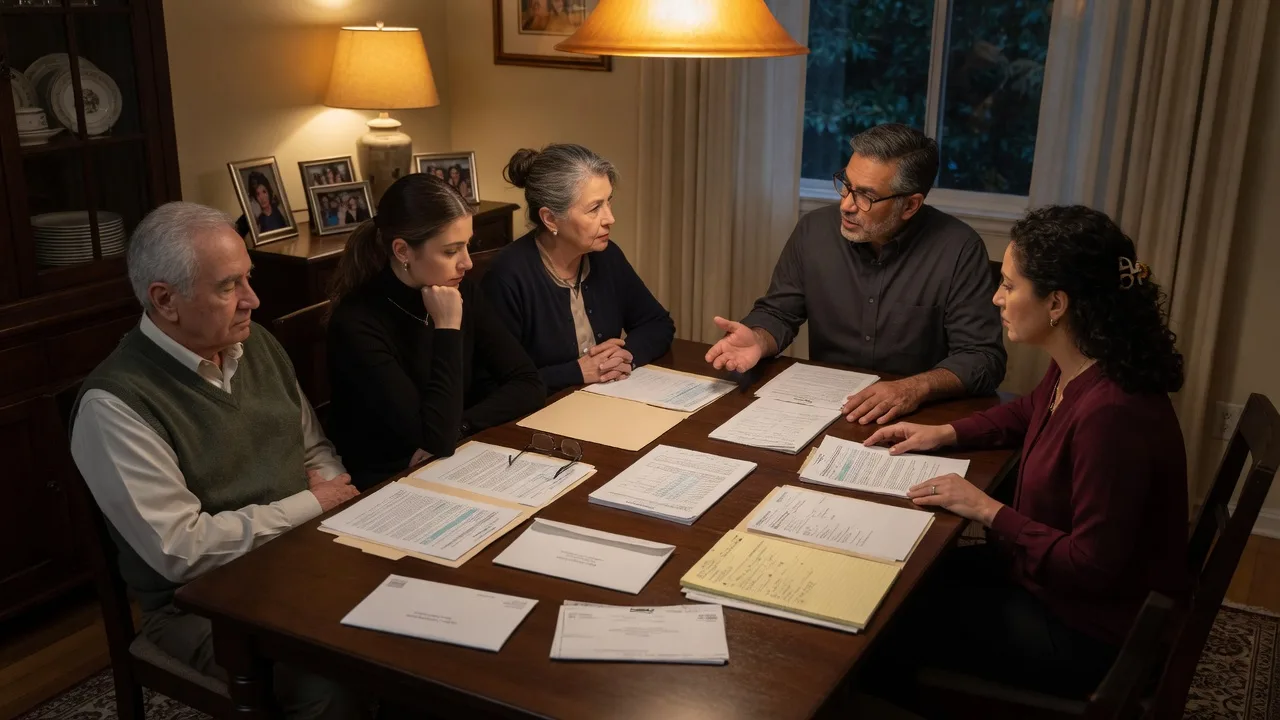
Related-Party Sales: Specific Rules and Risks
A sale to an heir, devisee, beneficiary, or relative who is not acting for or benefiting the personal representative is not automatically a prohibited purchase under §356.651. The representative nevertheless must have authority to sell and must conduct the transaction fairly, in good faith, and for a defensible benefit to the estate.
Do not reduce fairness to a mechanical rule that the price must equal or exceed one appraisal. Price matters, but so do condition, inspection findings, repair exposure, commissions and other avoided costs, financing certainty, closing time, contingencies, occupancy, and the estate's need for cash. A below-appraisal offer may still produce the best net result, while an appraisal-price offer with unusual concessions may not. The representative should document the comparison.
A beneficiary's existing economic interest in the estate also does not automatically determine the cash required at closing. Whether a distributive-share credit can be used depends on the will or intestacy shares, debts, taxes, reserves, title structure, lender requirements, and the probate attorney's advice.
| Safeguard or rule | Correct status |
|---|---|
| Independent valuation | Strongly recommended evidence; not a universal statutory requirement under §§356.651–356.655. |
| Written conflict and terms disclosure | Essential risk management; consent does not replace a statutory exception. |
| Court approval in a dependent administration | Generally required through Chapter 356's supervised-sale process. |
| Representative's purchase in an independent administration | Must fit a statutory exception; ordinary independent-sale authority alone is insufficient. |
| Fair economic result | Required by fiduciary principles; evaluate price with net terms and risks. |
| Buyer's outside financing | Need not mirror another buyer's loan; compare price, contingencies, certainty, and net proceeds. |
| Estate-provided financing | Must be authorized, prudent, and documented. A court-supervised real-property sale made partly on credit must comply with §§356.301–356.302, including the required note and security. An executor acting under a will-authorized power of sale may sell on credit without a court order under §356.002, subject to the will's directions and fiduciary duties. |
| Equalization among beneficiaries | Must follow the actual will or intestacy shares; shares are not always equal. |
| Attorney and title review | Strongly recommended before contract and indispensable for a self-purchase or dispute. |
| Texas Seller's Disclosure Notice | A fiduciary transfer in estate administration is generally exempt under Property Code §5.008(e)(5), but other disclosures and anti-fraud rules remain. |
Do You Still Need a Seller's Disclosure?
Texas Property Code §5.008(e)(5) exempts a transfer by a fiduciary in the course of administering a decedent's estate from the statutory Seller's Disclosure Notice. Section 5.008(e) separately exempts certain transfers to a spouse or to persons in the lineal line of consanguinity of a transferor. The fiduciary exemption (not the mere fact that the buyer is an insider) is normally the relevant estate-sale provision.
Exemption from the form does not eliminate liability for actively concealing known defects or making false statements about the property's condition. The safest approach is to disclose known issues in writing even when the law does not technically require it. The same transparency that protects the executor from fiduciary-duty claims also protects against a later misrepresentation claim.
The §5.008 form exemption is not a blanket exemption from every disclosure or notice. Depending on the property, separate federal, state, or local requirements may address lead-based paint, special taxing or assessment districts, flood matters, water rights, septic systems, and other conditions. A real estate license holder also must not conceal a known material defect. Have the title company, broker, and attorney identify the notices required for the particular property.
Financing the Buyout
If the buyer uses a bank or mortgage lender, the estate does not control the buyer's interest rate or loan terms. The representative should evaluate the offer's price, financing contingency, appraisal risk, closing certainty, timing, and net proceeds just as the representative would with another offer.
Estate-provided financing is different. It turns sale proceeds into a note receivable and creates collection, default, priority, and delayed-distribution risk. If a court-supervised real-property sale is made partly on credit, §§356.301–356.302 govern and require, among other things, a purchase-money note, a vendor's lien, and a deed of trust. An executor acting under a power of sale in an admitted will may sell on credit without a court order under §356.002, subject to the will's directions and fiduciary duties. An independent representative should confirm authority and use commercially reasonable, appropriately secured terms with probate counsel and the title company before offering credit.
Do not describe a price reduction as a “gift” by the estate. The representative must distribute property under the will or intestacy law and may not simply give estate value away. If the buyer is also a beneficiary, a distributive-share credit or equalization payment may sometimes be structured, but only after accounting for debts, taxes, expenses, reserves, the buyer's actual share, title requirements, and lender rules.
When One Beneficiary Receives the House
Beneficiaries do not always inherit equal shares. The controlling shares come from the will, intestacy law, an enforceable settlement, or a court order. If one beneficiary receives the house, the value charged to that person's share and any equalization payment must be calculated under the governing distribution scheme, not under an automatic equality rule.
Also distinguish a sale by the estate from a distribution followed by a buyout among co-owners. Those structures may produce different deeds, financing requirements, creditor protections, closing costs, and tax consequences. An appraisal is important valuation evidence, but it does not by itself dictate the final buyout amount or authorize the structure.
Family Settlement Agreements: Useful, but Not a Blank Check
Texas favors valid family settlement agreements as an alternative means of resolving disputes and changing how estate property is distributed. But an agreement is not automatically valid merely because family members sign it, and it does not necessarily bind creditors, taxing authorities, lienholders, minors, incapacitated persons, unborn or unascertained beneficiaries, surviving-spouse homestead claimants, or other nonparties.
All necessary parties must be identified, the agreement must be supported by the required legal elements, and the parties should receive full information and an opportunity for independent advice. The agreement should state the property, valuation, consideration, releases, tax allocation, closing mechanics, and alternative distribution precisely.
Most importantly, a family settlement agreement is not listed as an exception to the personal-representative purchase prohibition in §§356.651–356.654. It may support an alternative distribution or a transaction among beneficiaries, but it should not be described as automatically authorizing the executor to buy estate property or “insulating” the executor from future liability. Have a Texas probate attorney determine whether the arrangement is a distribution, assignment, beneficiary transaction, or estate sale and make sure any representative purchase independently complies with Subchapter N.
Documentation: Building the Record
Every step of the process must be documented. The representative should retain: the admitted will; appointment order and current letters; title commitment; lien and tax information; conflict disclosures; valuation materials; inspection and repair evidence; competing offers or market-exposure evidence; net sheets; notices and delivery proof; beneficiary communications; court filings and orders; settlement agreement, if any; financing documents; deed; and closing statement.
Detailed records are necessary to support any required accounting and to defend the representative's decisions. Sections 359.001 and 359.002 govern the first and subsequent annual accounts for an estate administered under court order, while §404.001 allows an interested person, after the statutory period, to demand an accounting from an independent executor. Because the accounting mechanisms differ by administration type, the representative should confirm the applicable requirements with probate counsel.
How to Demonstrate That the Transaction Was Fair
An independent appraisal is important evidence, but fairness should be supported by the complete transaction record. Depending on the property and circumstances, that record may include a comparative market analysis, inspection findings, repair estimates, competing offers, limited or full market exposure, estimated seller expenses, net-proceeds comparisons, financing contingencies, closing certainty, and the estate's need for liquidity.
When the buyer obtains outside financing, the buyer's interest rate and lender terms do not have to duplicate another buyer's loan. The representative should compare the offer's price, contingencies, timing, certainty, and expected net proceeds. If the estate provides financing, the interest rate, security, maturity, default provisions, and other terms should be commercially reasonable, properly authorized, and documented.
If a lower price reflects the property's condition or produces a better net result because the estate avoids commissions, repairs, carrying costs, or other expenses, preserve the inspection reports, estimates, net sheets, and other evidence supporting that conclusion. A conclusory statement that the house was sold 'as-is' is not enough to establish fairness.
When the Executor Should Decline to Participate
The safest course may be for the representative to step away from the transaction, seek prior court direction, or use a neutral decision-maker when no statutory self-purchase exception applies; required court approval cannot be obtained; reliable valuation evidence is unavailable; the representative cannot separate personal interests from fiduciary duties; the beneficiaries are actively adversarial; significant creditor claims or insolvency make the estate's best interest uncertain; or the will or a court order restricts the proposed transaction. Insolvency does not automatically prohibit a sale, but it makes creditor rights, notice, valuation, and court guidance especially important.
For a broader discussion of common executor mistakes, see 10 costly probate home-sale mistakes Texas executors make.
Homestead and Surviving-Spouse Rights
Sections 102.005 and 353.051 can protect a surviving spouse's or minor children's use of a probate homestead. A proposed purchase or power of sale does not automatically eliminate homestead, exempt-property, or creditor protections. Before promising possession or a vacant closing, obtain probate-attorney and title-company review of the people entitled to occupy or claim protection in the property.
What the Title Company Will Need
The title company will typically require the admitted will, current letters, appointment order, court orders, recorded affidavits, and possible heir or devisee joinders or other authority proof. Note that §402.053's purchaser safe harbor is framed for a purchaser who is not a devisee or heir, so an heir or devisee buyer may trigger added underwriting scrutiny. Open title before finalizing the structure.
Tax Consequences of a Discount or Distribution
Inherited-property basis is generally tied to fair market value at death under federal law, while a below-market transfer or value shift among living beneficiaries may raise gift-tax, basis, and capital-gain questions. An appraisal or family settlement agreement does not, by itself, determine the federal tax treatment. The representative and affected beneficiaries should consult a CPA or tax attorney before closing.
Decision Guide
Path A: the personal representative wants to buy directly or indirectly.
- Stop and obtain probate counsel before negotiating or signing.
- Determine whether §356.652 applies because the admitted will expressly authorizes the representative's purchase, §356.653 applies because of a decedent-signed executory contract, or prior court approval under §356.654 is required.
- If using §356.654, provide the required notice to distributees and specified unsettled creditors and obtain the court's best-interest determination before purchase.
- Obtain independent valuation and document all material terms, conflicts, net economics, and financing.
- Confirm title-company requirements, homestead rights, claims, liens, taxes, and the estate's cash needs.
- Do not close if no statutory exception applies.
Path B: a relative, heir, devisee, or beneficiary wants to buy and the representative will not benefit.
- Confirm the representative's power to sell and whether the administration is dependent or independent.
- Obtain defensible valuation evidence and compare the offer's net result with reasonable alternatives.
- Disclose the relationship and material terms; address objections in writing.
- Determine whether the transaction is an estate sale, a distribution with equalization, or a later co-owner buyout.
- Clear title, homestead, creditor, lien, occupancy, disclosure, financing, and tax issues.
- Obtain any required court approval and title-company underwriting approval before closing.
Family Dynamics: The Hidden Risk in Every Insider Sale
Even a perfectly executed insider transaction can create lasting family rifts. Executors should communicate early, transparently, and in writing with every beneficiary. Allow beneficiaries time to review the appraisal, ask questions, and consult their own advisors.
For a deeper discussion of how probate home sales become family conflict flashpoints, see our article on family conflict in probate home sales.
Frequently Asked Questions
Can the executor buy the estate house themselves?
Generally prohibited unless a statutory exception applies. Texas Estates Code §§356.651–356.654 allow a representative's purchase only through express authorization in an admitted will, compliance with a written executory contract signed by the decedent, or a prior court determination that the purchase is in the estate's best interest after the required notice. Ordinary independent-executor authority and beneficiary consent alone are not substitutes.
Does the executor need court approval to sell to a family member?
A dependent representative generally needs court approval for the sale. An independent representative may not need routine court approval merely because the buyer is a relative, provided the representative is not buying directly or indirectly and otherwise has authority. If the representative will benefit, the self-purchase rules apply.
Can a beneficiary buy the estate house at a discount?
Possibly, but not simply because the buyer is family. The representative must obtain a defensible result for the estate and follow the will, intestacy law, creditor rights, and any court requirements. A valid settlement or distribution plan may allocate value differently, but it requires attorney and tax review.
What happens if the executor buys without complying with Subchapter N?
An interested person may file a written complaint. After citation, hearing, and proof, §356.655 directs the court to void and set aside the sale, order reconveyance to the estate, and charge the representative with the necessary costs of the sale, protest, and suit.
What if one beneficiary objects?
An objection does not produce the same result in every transaction. Consent alone cannot authorize the representative's purchase, and a representative using §356.654 must obtain the court's determination. In an otherwise authorized independent sale to a relative who is not benefiting the representative, one beneficiary may not have an automatic veto, but the objection raises fiduciary, valuation, title, and litigation concerns that should be addressed before closing.
Can the estate sell before probate is finished?
Often yes, after a qualified personal representative has authority to sell and all required approvals and title requirements are satisfied. The estate does not necessarily have to be closed first. For families wondering can executor sell house without beneficiaries approval Texas, the legal framework requires careful attention to the executor's fiduciary duties and the specific authority granted by the will or court. For families wondering can executor sell house without beneficiaries approval Texas, the legal framework requires careful attention to the executor's fiduciary duties and the specific authority granted by the will or court.
Sources and References
- Texas Estates Code §351.101. Duty of care for personal representatives.
- Austin Trust Co. v. Houren, 664 S.W.3d 35 (Tex. 2023). Executor's duty to the estate and its probate beneficiaries.
- In the Estate of Luisa R. Montemayor, No. 04-15-00397-CV (Tex. App.—San Antonio June 1, 2016, no pet.) (mem. op.). Unauthorized deed by an independent executor to himself.
- Musquiz v. Keesee, No. 07-15-00461-CV (Tex. App.—Amarillo Sept. 28, 2017, pet. denied) (mem. op.). Full disclosure, adequate consideration, independent advice, and fairness in a fiduciary-beneficiary transaction.
- Texas Estates Code §§356.651–356.655. Personal representative's purchase prohibition and statutory exceptions.
- Texas Estates Code §§356.001–356.002, 356.251–356.256, 356.301–356.302, and 356.551–356.556. Court-order rule, will-authorized exception, court-supervised sale procedures, and credit-sale terms.
- Texas Estates Code §§402.002, 402.052, and 402.053. Independent-representative powers and purchaser safe harbor.
- Texas Estates Code §352.051. Reimbursement of necessary and reasonable expenses.
- Texas Estates Code §102.005. Restrictions on partition of a probate homestead.
- Texas Estates Code §353.051. Setting aside a homestead and other exempt property.
- Texas Estates Code §§359.001–359.002. First and subsequent annual accounts for an estate administered under court order.
- Texas Estates Code §404.001. Accounting demands in independent administrations.
- Texas Property Code §5.008(e). Seller's Disclosure Notice exemptions.
This article provides general educational information about Texas probate real estate. It is not legal, tax, title, accounting, appraisal, lending, insurance, or investment advice and does not create an attorney-client, broker-client, fiduciary, or other professional relationship. Authority and procedure depend on the will, court orders, administration type, title, homestead rights, creditor claims, family circumstances, and other facts. Consult the appropriate licensed professionals before acting.
Need guidance on an estate property transaction?
Bill Ross, Certified Probate Expert, helps Texas executors and families navigate estate real estate with clear, practical guidance.
Request a confidential consultationOr call (210) 294-9190