

You live in California, or Colorado, or maybe just Houston. Your parent passed away, and their house is sitting in Boerne, or Fair Oaks Ranch, or somewhere in the Hill Country. You've been named executor. And now you're trying to manage a property you can't physically visit, in a state whose probate rules you've never dealt with, while possibly grieving, working a full-time job, and coordinating with family members who all have opinions about what should happen next.
If that sounds overwhelming, it's because it genuinely is. Being an out-of-state executor managing a Texas property is one of the most common — and most underestimated — challenges in estate administration. I've worked with dozens of families in this exact situation, and the pattern is remarkably consistent: distance turns manageable problems into expensive crises, mostly because the executor didn't know what they didn't know.
This article is about what usually goes wrong — and more importantly, how to prevent it. Think of it as the conversation I'd have with you over coffee if you just told me you'd been named executor of a Texas estate and you live two time zones away.
Important: This article provides general educational information about executor responsibilities in Texas and is not legal, tax, or financial advice. It is written and published by a licensed Texas real estate professional (Bill Ross, Hill Country Homesteads Group, brokered by Keller Williams Boerne) for informational and marketing purposes. Every estate and every property situation is different. The information here may not reflect the most recent changes to Texas law. Consult a licensed Texas estate attorney, your CPA, and other qualified professionals for guidance specific to your circumstances before making any decisions about estate administration, property sales, or financial obligations.
The Legal Requirement Most People Miss
Here's something that surprises nearly every out-of-state executor I talk to: Texas won't let you serve as executor unless you appoint a local resident agent. It's not optional, it's not a suggestion — it's a statutory requirement that can get you disqualified from serving altogether.
Under Texas Estates Code § 304.003, a non-resident of Texas is disqualified from serving as executor or administrator unless they have appointed a resident agent to accept service of process in all actions or proceedings with respect to the estate, and had that appointment filed with the court [1][2]. In plain English: if you don't live in Texas, you must designate someone who does — a Texas resident who can receive legal papers, lawsuits, and official notices on your behalf — and the court has to know about it.
This makes sense when you think about it. Courts need a reliable way to reach the person managing the estate. If you're in another state, they can't just hand papers to someone at the courthouse and assume you'll get them. The resident agent requirement is the legal system's way of making sure there's always a reachable point of contact.
What usually goes wrong: Executors either don't know about this requirement or assume their attorney handles it automatically. Sometimes the appointment is made informally — a friend agrees over the phone but nothing gets filed with the court. If the appointment isn't properly documented and filed, the court can refuse to let you serve. In some cases, executors have been removed from their role after discovery that no valid resident agent was designated [3].
Practical step: Talk to your Texas estate attorney early. The resident agent must be a Texas resident, and the appointment must be formally filed with the probate court. Your attorney can prepare and file the necessary paperwork as part of the probate process. Don't wait until a problem arises.
There's also the question of a surety bond. Under Texas Estates Code Chapter 305, a bond is generally required of executors — but the rules are not based on where the executor lives [4]. In Independent Administration (the most common form, where the will waives bond), the executor typically serves without a bond regardless of whether they live in Texas or out of state. In Dependent Administration, a bond is generally required for all executors, again regardless of residency. The key point: non-resident executors do not face special or differential bonding requirements beyond the general rules that apply to everyone. Your attorney can advise on whether a bond will be required based on the type of administration and the will's terms, not based on where you live.
The real statutory risk for non-resident executors — beyond the resident agent requirement — is the court's broad discretion under Texas Estates Code Chapter 361 to remove an executor who is found to be "unsuitable" [3]. This is a case-by-case determination based on the executor's conduct, not automatic removal for any specific period of absence. An out-of-state executor who is responsive, properly represented by counsel, and meeting their fiduciary obligations has no statutory reason to be removed simply for living in another state.
Independent vs. Dependent Administration: Why This Distinction Matters Most for You
If there's one concept that an out-of-state executor should understand above all others, it's this: the type of administration your estate falls under will largely determine how much time, money, travel, and court involvement is required. And for many Texas estates, the news is genuinely good — because Texas is one of the most executor-friendly states in the country when it comes to how estates are administered.
Texas law provides two fundamentally different paths for administering an estate: Independent Administration and Dependent Administration. The difference between them is dramatic, and for an out-of-state executor, it can be the difference between rarely setting foot in Texas and making multiple court appearances over the course of a year or more.
Independent Administration
Independent administration is the default and most common form of estate administration in Texas [14]. Under this model, the executor (or "independent administrator") operates with minimal court oversight. Once the court issues letters testamentary or letters of administration, the executor can act on behalf of the estate without seeking court approval for most transactions — including selling real property, paying debts, hiring professionals, and distributing assets.
What independent administration typically means in practice:
- No bond required — most wills that provide for independent administration also waive the bond requirement, which means the executor doesn't need to purchase a surety bond (saving $200–$2,000+ depending on estate value).
- No court approval needed for most actions — the executor can sell property, pay creditors, manage estate assets, and make decisions without returning to the judge for permission each time.
- Fewer court appearances — the initial hearing to admit the will and issue letters may be the only required appearance. After that, routine matters can often be handled remotely or by mail, and many Texas courts now allow Zoom appearances for any needed hearings [5].
- Faster administration — without the need for court approval at each step, estates can be administered and closed more quickly, often in 6–12 months for straightforward situations.
How does an estate qualify? The most common path: the decedent's will expressly provides that the executor shall serve independently (most well-drafted Texas wills include this language). If the will doesn't address it, all interested persons (heirs, devisees, and beneficiaries) can agree to independent administration. If they can't agree, the court may appoint an administrator with the authority to act independently if certain conditions are met under Texas Estates Code § 401.001.
Dependent Administration
Dependent administration is the more traditional, court-supervised model. Under this path, the executor or administrator must seek court approval for most significant actions — selling property, paying large debts, making distributions, and entering into contracts on behalf of the estate.
What dependent administration typically requires:
- A surety bond is generally required, protecting beneficiaries and creditors against mismanagement. The premium is typically a percentage of the bond amount (often 1–3% of the estate value annually).
- Court hearings for major decisions — selling property, approving compromises, paying contested claims, and other significant actions need the judge's sign-off.
- More court appearances — the executor may need to appear (in person or remotely) at multiple hearings over the course of administration, increasing both travel costs and time.
- More detailed accounting — the executor must file an inventory and appraisement of estate assets with the court within 90 days of appointment, and may need to file periodic accountings of income and expenses.
When does dependent administration happen? It's typically required when there is no will, when the will doesn't provide for independent administration, when interested parties can't agree to independent administration, or when the court determines it's necessary for the protection of the estate. It's also the default if the estate has complications — contested claims, missing heirs, or disputes among beneficiaries.
| Feature | Independent Administration | Dependent Administration |
|---|---|---|
| Court supervision | Minimal — executor acts independently | Extensive — court approves most major actions |
| Bond requirement | Usually waived by the will | Generally required |
| Court appearances | Minimal — often just the initial hearing | Multiple hearings likely over months |
| Authority to sell property | Broad authority without court approval | Requires court order for each sale |
| Speed of administration | Faster — often 6–12 months | Slower — often 12–18+ months |
| Cost to estate | Lower (no bond premium, fewer hearings) | Higher (bond premiums, more attorney time, more court fees) |
| Travel burden for out-of-state executor | Low — may need only one trip (or none with Zoom) | Moderate to low — heavily mitigated if the court permits Zoom hearings. |
| Best suited for | Most estates, especially where will provides for it | Complex estates, contested situations, no valid will |
Why this matters for out-of-state executors: Independent administration is genuinely transformative for distance executors. In my experience working with families across state lines, independent administration can mean the executor rarely — and in many cases never — needs to physically travel to Texas. The initial probate hearing can often be handled by Zoom, routine decisions are made by the executor without court involvement, and the estate can be administered efficiently from anywhere. Dependent administration, by contrast, creates real logistical challenges: repeated court appearances, more attorney coordination, higher costs, and a longer timeline during which the property is consuming carrying costs.
What this means for you: One of the very first questions to ask your Texas estate attorney is what type of administration the estate will follow. If the will provides for independent administration (most do), you're likely looking at a manageable process even from a distance. If dependent administration is required, your attorney should explain why and what additional steps and costs to expect — and you should factor in the possibility that you may need to designate a co-executor, hire a professional fiduciary, or renounce the role in favor of someone local (more on these alternatives later in this article).
Alternatives When Being the Sole Executor Doesn't Work
Not every out-of-state person named as executor needs to serve alone — or at all. Texas law provides several alternatives that can make the process more manageable. Here are the most common options:
Co-Executors: Appointing a Local Family Member
If the will names you as sole executor, you may be able to request that the court appoint a co-executor — typically a local family member who can handle Texas-specific tasks like property inspections, contractor meetings, mail collection, and in-person court appearances. Both executors share authority, though in practice the local co-executor handles the on-the-ground work while the out-of-state executor manages decisions, finances, and attorney communication.
Pros: Combines your authority and decision-making role with someone who has local presence. Reduces travel requirements. Distributes the workload.
Cons: Requires both executors to agree on decisions, which can create deadlock if the co-executors don't see eye-to-eye. Administrative costs may be slightly higher (two executors, potentially two bonds). Requires a family member who is willing, reliable, and nearby.
When it works best: When there's a trusted local family member who is organized, available, and has a good relationship with the out-of-state executor.
Renouncing the Executor Role
If you've been named executor in the will but don't believe you can serve effectively from out of state, you can renounce (decline) the role before or after the court issues letters testamentary. Under Texas Estates Code § 361.001, an executor may resign by filing a written resignation with the court [3]. The court will then appoint a successor executor — typically the person named as alternate in the will, or another qualified person if the will doesn't name a backup.
Pros: Completely removes the burden and liability from your shoulders. Allows the estate to be managed by someone who can be physically present.
Cons: You lose control over the estate's administration. If the successor executor is a family member you don't fully trust, or if the will doesn't name a capable alternate, the court may need to appoint someone you don't know. There may also be family dynamics issues if other heirs expected you to serve.
When it makes sense: When you genuinely cannot serve effectively from a distance, when the estate is complex and requires hands-on management, or when family conflicts make your role untenable.
Professional Fiduciary or Trust Company
Texas allows the appointment of a professional fiduciary or licensed trust company to serve as executor or administrator. These are businesses that specialize in estate administration and are licensed and regulated by the state. They handle everything from court filings to property management to final distributions for a fee.
Pros: Professional expertise. Local presence. Accountability (they're bonded and regulated). Complete objectivity — no family dynamics issues. Available when no suitable family member can serve.
Cons: Professional fees are typically higher than what a family executor would charge (often 3–6% of estate value, or hourly rates of $100–$250/hour). You lose personal control over the estate's administration. Not all professional fiduciaries have experience with probate real estate, so vet carefully.
When it works best: When the estate is large enough to justify the fees, when there's no suitable family member to serve, when family conflicts make a neutral third party preferable, or when the estate requires specialized expertise (complex assets, contested claims, multi-state properties).
Ancillary Probate: When the Decedent Had Assets in Multiple States
If the decedent lived in another state but owned property in Texas, the estate may need to go through ancillary probate in Texas — a separate probate proceeding specifically for the Texas real property. This happens because each state has jurisdiction over real property within its borders, and Texas courts need to formally authorize the transfer or sale of Texas real estate, even if probate is already underway in the decedent's home state.
Pros: Ancillary probate establishes clear legal authority to deal with the Texas property. Once the Texas court issues letters testamentary (or equivalent), the executor has the same authority as any Texas-based executor.
Cons: Additional cost (separate filing fees, separate attorney engagement in Texas), additional time, and the need to coordinate between two probate proceedings in two states. The out-of-state executor may need to hire a separate Texas attorney in addition to the attorney handling the primary probate.
When it applies: When the decedent was domiciled in another state but owned real property in Texas, when the decedent owned property in multiple states, or when a trust doesn't properly transfer the Texas property during the decedent's lifetime.
There May Be a Shortcut: Probate as a Muniment of Title
Here's something that many out-of-state executors don't learn until they've already started down the full probate path: Texas has a streamlined alternative called "Probate as a Muniment of Title" that can transfer the property without appointing a formal executor or requiring ongoing estate administration [15].
Under Texas Estates Code § 257.001, if the decedent left a valid will and the estate has no debts other than those secured by a lien on real property — typically a home mortgage — the court can admit the will to probate solely as a muniment of title. In plain English: the court recognizes the will, confirms who inherits the property, and files an order that lets the heir(s) clear title and transfer the deed. There is no executor appointment, no ongoing administration, no inventory filings, and no court-supervised accounting [15].
Why this matters for out-of-state families: Full probate administration — even independent administration — involves court filings, potential bond requirements, an inventory and appraisal of estate assets, and periodic accounting. For a family whose only significant estate asset is a single property with a mortgage, that's a lot of process for a straightforward transfer. A muniment of title filing can be completed in a fraction of the time and cost, and it doesn't require the executor to maintain an ongoing relationship with the court [15].
The requirements are specific:
- The decedent must have died with a valid, properly executed will.
- The estate must have no unpaid debts, except for debts secured by a lien on real property (i.e., a mortgage or deed of trust) [15].
- The will must be filed with the probate court in the county where the property is located, and the court must be satisfied that the will should be admitted to probate.
Important nuance: If the estate has other debts — credit cards, medical bills, personal loans, taxes owed — muniment of title is not available, and full administration is required. The decedent's creditors must be addressed through the formal probate process. Your estate attorney can evaluate whether the estate qualifies based on the specific debt picture [15].
For out-of-state executors dealing with a relatively simple estate where the property is the primary asset, muniment of title can be a significant time and cost savings. It's worth raising with your attorney at the very first meeting — before assumptions are made about which probate path the estate will follow.
Typical Timelines and Process: How Long Does All This Take?
One of the first questions every out-of-state executor asks is some version of "How long is this going to take?" The honest answer is that Texas probate timelines vary significantly based on the type of administration, the complexity of the estate, and the county court's schedule. But here's what typical looks like:
| Phase | Typical Duration | Key Actions |
|---|---|---|
| Filing & hearing | 1–4 weeks | File application to probate will, attend initial court hearing, receive Letters Testamentary |
| Creditor notice period | 4 months from first publication | Publish notice to creditors in local newspaper; creditors have 4 months to file claims |
| Inventory filing | 90 days after appointment | File sworn inventory and appraisement of estate assets with the court (independent admin) or obtain court approval (dependent admin) |
| Property management & sale | 3–12 months | Maintain property, prepare for sale, market, negotiate, and close (varies widely based on market and property condition) |
| Closing the estate | 1–3 months after final distribution | File final accounting (if required), distribute remaining assets, file closing documents |
| Total (typical independent admin) | 6–12 months | Straightforward estate, cooperative heirs, responsive attorney |
| Total (dependent admin or complex) | 12–24+ months | Contested estate, court-supervised actions, title issues, or property condition challenges |
An important caveat on timelines: These ranges are general guidelines. Timelines can vary significantly by county and by the specific court’s workload. Some Texas counties process probate filings faster than others, and complex cases or crowded dockets can extend the process well beyond these estimates. Your attorney, who knows the local court’s pace, can give you a more realistic timeline for your specific situation.
Key deadlines to watch:
- Creditor claims period: Texas requires the executor to publish a notice to creditors in a newspaper of general circulation in the county where the probate is pending. Creditors then have four months from the first publication to file their claims against the estate [9]. After that window closes, the executor generally need not worry about late-filed claims (with some exceptions for taxes and secured debts).
- Inventory and appraisement: Under Texas Estates Code § 309.051, the executor must file a sworn inventory, appraisement, and list of claims within 90 days of receiving letters testamentary or letters of administration. In independent administration, this is filed with the court clerk; in dependent administration, the court must review and approve it.
- Closing the estate: There's no hard deadline to close an estate, but prolonged administration increases costs and exposes the executor to ongoing liability. Most straightforward independent administrations are closed within 12 months. Estates that drag beyond 18–24 months often involve complications that should be resolved proactively.
When is court approval needed and when isn't it? In independent administration, the executor generally doesn't need court approval for day-to-day decisions, paying routine debts, hiring professionals, or selling property (especially if the will includes a Power of Sale clause). Court approval is typically needed for: contested matters, actions that affect beneficiaries' rights, and certain extraordinary actions like selling real property at less than fair market value. In dependent administration, court approval is needed for virtually all significant actions.
The Distance Problem: What You Can't See Can Hurt the Estate
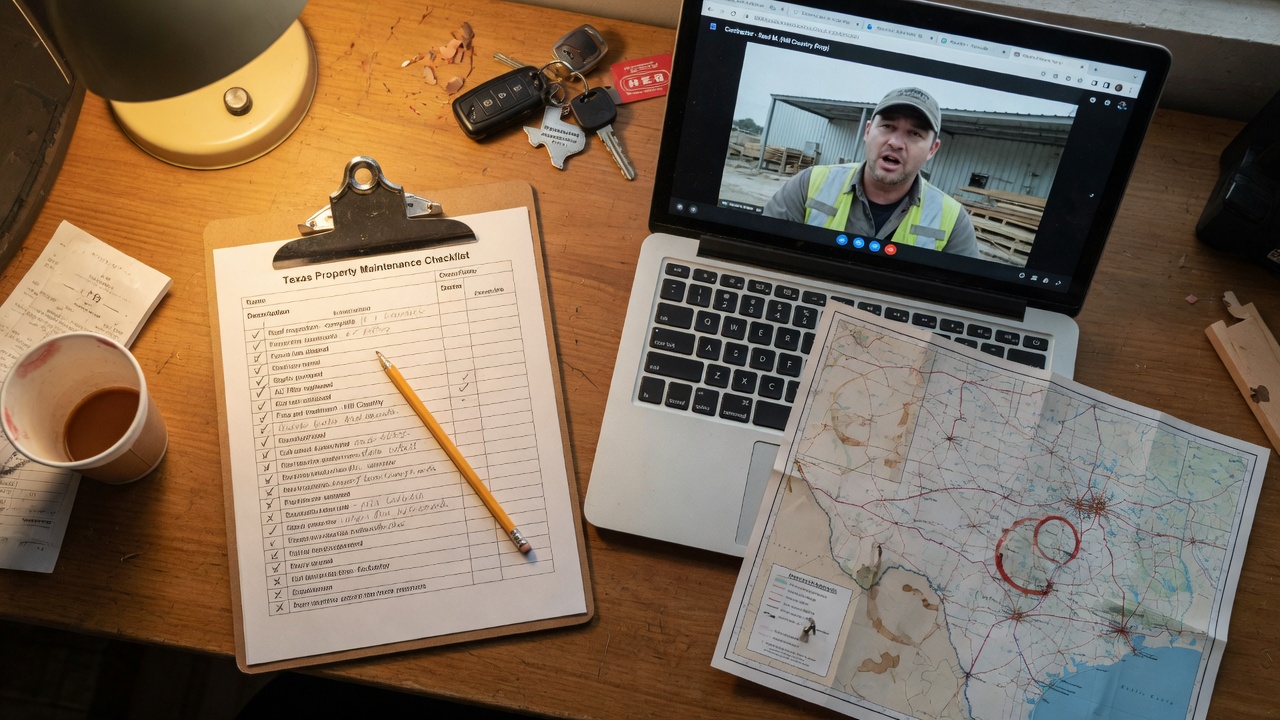
Physical distance doesn't just make property management inconvenient — it fundamentally changes the kind of problems you'll face. When you live in the same city as the property, a dripping faucet is a quick trip and a call to a plumber. When you live 1,500 miles away, that same dripping faucet might go undetected for weeks, turns into water damage behind a wall, becomes a mold problem, and ends up costing the estate $8,000 to remediate.
Here are the specific ways distance creates problems that local executors simply don't face:
| Situation | Local Executor | Out-of-State Executor |
|---|---|---|
| Emergency response | Can be on-site within hours | Relies on phone calls, may not discover issue for days |
| Contractor coordination | Meets contractors in person, walks the property | Coordinates remotely, may never see the work firsthand |
| Property inspections | Can do personal walkthroughs regularly | Must hire someone or travel, both costly |
| Court appearances | Short drive to courthouse | Requires travel or remote appearance (Zoom now common) |
| Mail and documents | Collects mail personally, signs docs at attorney's office | Needs mail forwarding, courier services, or digital copies |
| Trust verification | Can verify work, condition, and access personally | Must trust intermediaries without direct verification |
The good news: many Texas probate courts now allow remote appearances via Zoom for routine hearings, which has significantly reduced the travel burden for out-of-state executors [5]. You may not need to fly to Texas for every court date. But the property management challenges remain, and those require a deliberate system — not just hope.
The Insurance Trap: Coverage You Think You Have
If there's one issue that catches more out-of-state executors off guard than any other, it's insurance. Here's the scenario: your parent passed away, the house is now empty, and you assume the homeowner's insurance policy is still covering the property. After all, you're still paying the premiums.
That assumption can cost the estate tens of thousands of dollars.
Most standard homeowner's insurance policies contain a vacancy clause that limits or eliminates coverage if the property has been unoccupied for a specified period — typically 30 to 60 consecutive days [6][7]. The Texas Department of Insurance confirms that most companies stop coverage if a house is vacant for 60 days or more, though liability coverage usually continues [7].
What this means in practice:
- Fire, flood, or storm damage: If the house suffers a covered loss while the vacancy clause is active, the insurer may deny the claim entirely or pay a fraction of the dwelling coverage — sometimes as low as 10% of the policy limit.
- Theft or vandalism: Vacancy clauses often specifically exclude theft and vandalism coverage on vacant properties. A break-in that costs $15,000 in stolen appliances and damage may not be covered at all.
- Personal liability exposure: As the executor, you have a fiduciary duty to protect estate assets [8]. If the home suffers a loss and the claim is denied because you failed to update the insurance, you may face personal liability for the shortfall.
The fix is simple but time-sensitive: Contact the insurance agent as soon as you know the property will be vacant. Ask specifically whether the current policy covers the property in its vacant or unoccupied state. If it does not, request a vacancy endorsement or a specialized unoccupied dwelling policy. Get confirmation in writing. To obtain vacant home insurance, you'll typically need to provide Letters Testamentary (or Letters of Administration) and a certified copy of the death certificate [6].
The cost of a vacancy endorsement is more than standard coverage — but it's a fraction of what an uninsured loss would cost the estate. This is the single most important phone call you'll make in the first week.
The Maintenance Spiral: Small Problems Become Big Expensive Ones
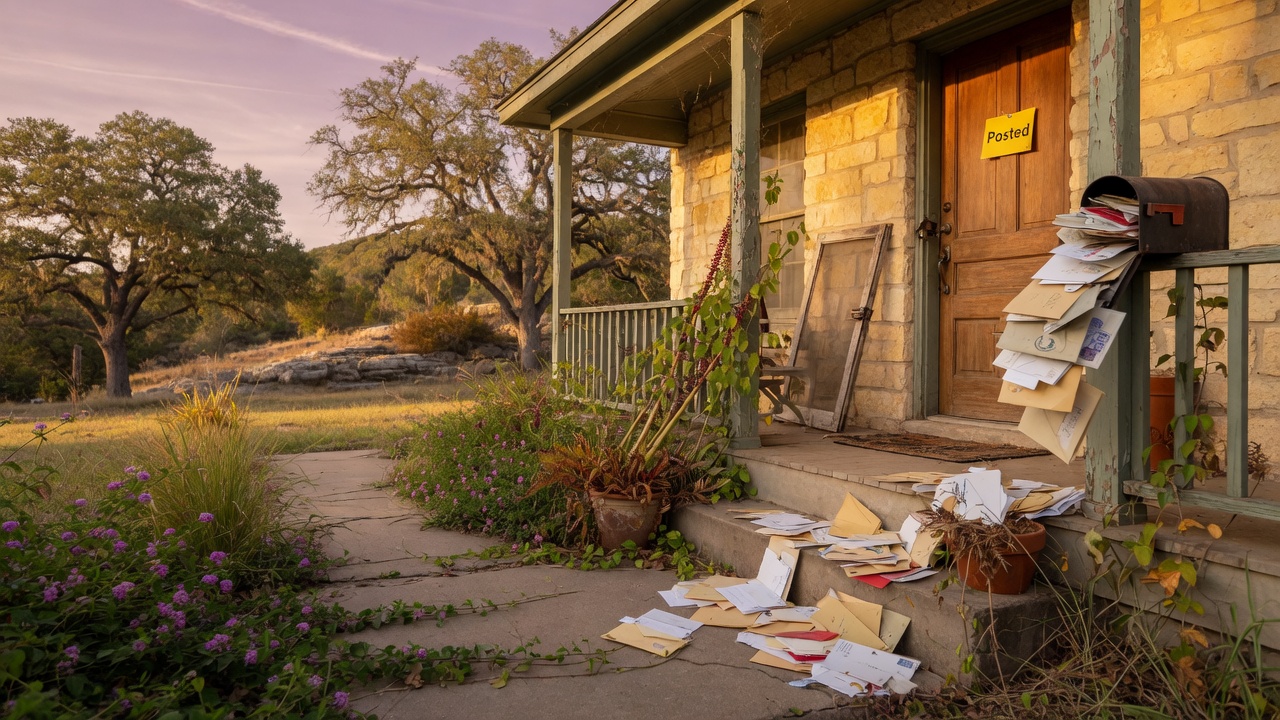
Out-of-state executors consistently underestimate how quickly a Texas property deteriorates without regular attention. Before listing, consider a professional home inspection — our Hill Country inspection checklist covers what to look for. Texas's extreme heat, occasional hard freezes, high humidity in some areas, and active pest environment mean that an unattended property faces threats that properties in milder climates simply don't.
Here's what I typically see in the first six months when an out-of-state executor doesn't have a maintenance plan in place:
| Timeframe | Typical Problem | Estimated Cost to Fix |
|---|---|---|
| Week 2–4 | P-traps dry out, allowing sewer gas into the home. Mail accumulates. Minor pest activity begins. | $200–$500 |
| Month 2–3 | HVAC degrades without cycling. Mold begins in enclosed spaces. Landscaping becomes visibly overgrown. HOA violations may start. | $2,000–$8,000 |
| Month 4–6 | Significant pest infestations. Warped wood and peeling paint from heat. Copper or AC unit theft becomes likely. Possible code violations. | $8,000–$25,000 |
| Month 6–12 | Major structural damage. Extensive mold. HOA liens. Tax delinquency. Property value decline of $50,000–$100,000+. | $25,000–$100,000+ |
The most common specific failures I see with out-of-state executors:
- Cutting utilities to save money. Running minimal HVAC and water on a vacant home costs $150–$300/month. The damage from cutting them entirely can exceed $25,000 in a single Texas summer.
- No lawn care. Many Texas cities and counties have property maintenance ordinances that require owners to keep grass below a certain height (typically 12 inches). Violations can result in fines, liens, and even forced abatement at the owner's expense [9].
- Ignoring HOA requirements. If the property is in an HOA, the association's rules don't stop being enforceable because the owner died. Unpaid HOA assessments accrue, and the HOA can place a lien on the property and eventually pursue foreclosure for unpaid dues [10].
- No pool maintenance. In the Hill Country and San Antonio metro, many homes have pools. An unmaintained pool can become a green, mosquito-breeding hazard within weeks — and a public health nuisance that triggers code enforcement action.
| Approach | Monthly Cost | 6-Month Total | Condition at Sale |
|---|---|---|---|
| Proactive maintenance (utilities on, lawn care, monthly inspections) | $300–$500 | $1,800–$3,000 | Market-ready condition, minimal repairs needed |
| Neglected (no maintenance plan) | $0 | $0 (until repairs) | Deferred repairs, reduced sale price, possible code violations |
| Reactive (fix problems after they escalate) | $0 initially | $15,000–$50,000+ | Significant damage, potential buyer stigmatization, longer time on market |
Communication and Coordination Breakdown
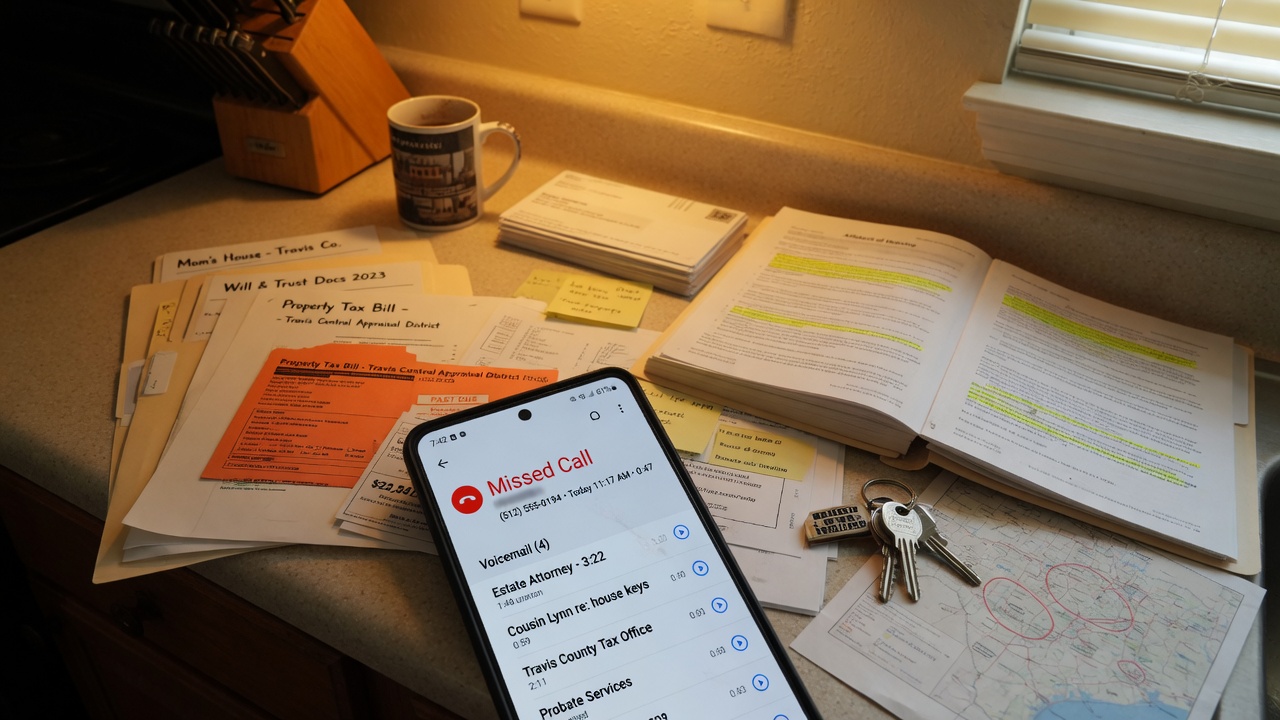
Managing a Texas estate from out of state means you're coordinating with multiple professionals — an estate attorney, a real estate agent, a title company, contractors, the insurance agent, the HOA, utility companies, and possibly a property manager — all of whom are operating in a different time zone, on a different schedule, and often with different communication preferences. For California-based executors managing a Texas estate, our California-to-Texas relocation guide at movetotexas.net covers the logistics of cross-state real estate transactions.
The single biggest coordination failure I see: the out-of-state executor relies on one local person — usually a well-meaning family member, friend, or neighbor — to handle everything. This person becomes the executor's eyes, ears, and hands. And that can work for a while. But here's what typically happens:
- The local contact gets busy with their own life and stops checking regularly.
- Information doesn't flow back to the executor in a timely way — a contractor's estimate sits in someone's email for two weeks.
- The local contact makes decisions without the executor's authorization, sometimes well-intentioned but occasionally in ways that create problems.
- The local contact's knowledge of real estate, construction, or legal processes turns out to be limited, and the executor doesn't realize it until a mistake has already been made.
The better approach: Build a professional team, not a personal favor network. Hire a property management company for regular inspections and maintenance coordination ($100–$200/month for vacant property monitoring). Work with a real estate agent who specializes in probate properties and can serve as a consistent, professional point of contact. Keep your attorney involved for any decisions that carry legal or financial weight. Document everything in writing — emails and texts, not just phone calls.
Remote Technology and Modern Practices: Managing From Anywhere
The good news for out-of-state executors in 2026 is that technology has dramatically reduced the friction of managing a Texas estate from a distance. A decade ago, every signature required a notary visit, every court hearing required a flight, and every property check required a physical trip. That's no longer the case.
Here are the tools and practices that make remote estate management significantly more feasible:
E-Filing for Probate Documents
Texas courts increasingly accept electronic filing for probate documents. Many counties, including Bexar and Kendall, allow attorneys to file applications, inventories, and other required documents through the state's e-filing system. This means your attorney can initiate probate, respond to court requirements, and manage filings without physical trips to the courthouse — and you can review and approve documents digitally.
Zoom and Virtual Court Appearances
Most Texas probate courts now allow remote appearances via Zoom for routine hearings, initial proceedings, and even some contested matters [5]. Your attorney can typically tell you whether your specific court supports virtual appearances. For out-of-state executors, this can eliminate the need for most or all travel to Texas.
Virtual Inspections and Video Walkthroughs
Real estate agents, property managers, and contractors can now provide detailed video walkthroughs of the property using smartphones. This lets you see the property's condition in real time without traveling. Many agents offer live video tours via FaceTime or Zoom, walking through each room and documenting issues. For more formal assessments, third-party inspection companies can provide comprehensive video and photo reports that are almost as informative as being there yourself.
Smart Home and Remote Monitoring Tools
A basic remote monitoring setup for a vacant property is affordable and highly effective: a WiFi-connected security camera with motion alerts ($50–$150), a smart thermostat you can control remotely ($100–$200), water leak detectors in key areas ($20–$50 each), and a smart lock so you can control and audit access remotely ($150–$250). Total investment: $300–$600. Compare that to the cost of a single undetected water leak that goes unaddressed for weeks.
Digital Document Management
Estate administration generates an enormous amount of paperwork — court filings, insurance policies, utility bills, contractor invoices, tax notices, title documents. Use a cloud-based document management system (even a simple shared Google Drive or Dropbox folder) to organize everything in one place. Give your attorney, CPA, and other advisors appropriate access. This creates a single source of truth that everyone can reference, regardless of location.
Digital communication with attorneys and the court: Most estate attorneys now handle the bulk of client communication via email, phone, and video calls. Establish a regular check-in cadence with your attorney — biweekly calls during the active probate period keep you informed and ensure nothing falls through the cracks. Ask your attorney what their preferred communication channels are and how quickly they typically respond. A good estate attorney managing an out-of-state executor relationship will proactively send updates rather than waiting for you to chase information.
One important caveat: While technology reduces friction, it doesn't eliminate the need for local professional support. Virtual tools are a supplement to — not a replacement for — having a property manager, a real estate agent, and a reliable contractor in the area who can physically access the property when needed.
Title, Deeds, and Legal Complications You Didn't Expect
Out-of-state executors frequently encounter title and deed issues that catch them by surprise — partly because these issues often don't surface until the property is being prepared for sale, and partly because the executor may not have been involved in the property's financial life before the death.
Common title issues I see with out-of-state executor situations:
- Undisclosed liens. The decedent may have had a home equity line of credit, a contractor's mechanic's lien, a tax lien, or an HOA lien that the executor didn't know about. These must be resolved before the property can be sold with clear title.
- How title was held. Was the property held in joint tenancy with right of survivorship? As community property? In a living trust? In the decedent's name alone? The answer determines how title passes and what probate proceedings are required. Out-of-state executors often don't know how title was held, and this can delay the entire process.
- Deed transfer requirements. The property must be properly transferred through the probate process before it can be sold. This typically requires the court to issue an order authorizing the sale, and the deed must reflect the estate's authority. Out-of-state executors sometimes try to sell the property before completing these steps, which creates title problems that delay or derail the transaction.
For a deeper look at how probate and property sale timelines intersect, see our guide on whether an executor can sell a house before probate is finished.
The Power of Sale Clause: Why It Matters More Than You Think
This is one of the most overlooked issues in probate real estate, and it can bring a property sale to a grinding halt. Here's the scenario: you've been named independent executor under the will, and you assume that means you have clear authority to sell the property. In many cases, you're right — but not always.
A "Power of Sale" clause is specific language in the will that explicitly authorizes the independent executor to sell real property without court approval. Many well-drafted wills include this clause, and when they do, the executor can proceed with a sale relatively cleanly [17].
But what happens when the will is silent? If the will does not contain a Power of Sale clause, the executor's authority to sell becomes more complicated. Under Texas Estates Code § 401.001(b), when a will doesn't grant the power of sale, all distributees (the heirs or devisees who will receive an interest in the property) must agree to independent administration with a power of sale for the court to include that authority in its appointment order [17]. In practice, this means the executor may need to secure the consent of every person who stands to inherit a share of the property.
For out-of-state executors, this creates a specific and predictable risk. If you have scattered beneficiaries — a sibling in New York, a cousin in Arizona, an elderly aunt who's hard to reach — getting every one of them to agree to the sale and sign the necessary documents can be a logistical and emotional challenge. And if even one beneficiary refuses or is unreachable, the sale can be delayed or blocked entirely until the court intervenes through a different mechanism.
There is a practical safety valve: under Texas Estates Code § 402.053, when an independent executor sells property that is necessary to pay estate expenses, allowances, and claims, the executor can file a recorded affidavit stating that the sale is necessary for those purposes. This affidavit serves as conclusive proof of the executor's authority, and the joinder or signature of a devisee or heir is not required for the sale to be valid as to a good-faith purchaser [17]. However, this affidavit mechanism is typically used when the sale is needed to pay estate debts — not when the executor simply wants to liquidate an asset for distribution.
What this means practically: When your attorney is reviewing the will at the outset, one of the first questions should be whether the will contains a Power of Sale clause. If it does, you're in a much cleaner position to sell. If it doesn't, your attorney needs to assess early whether beneficiary consent can be obtained or whether a court order under § 401.001(b) will be necessary. Waiting until you have a buyer to discover this gap creates unnecessary delay and can cost the estate a deal.
Property Taxes and Financial Pressure
Texas has no state income tax, which is one reason many people love living here. But that tax advantage is offset by some of the highest property tax rates in the country. In the Hill Country and San Antonio metro, effective property tax rates typically range from 1.8% to 2.5% of assessed value [11]. On a $400,000 home, that's $7,200 to $10,000 per year — and those taxes don't pause for probate.
For out-of-state executors, the property tax risk is compounded by distance. Here's how it typically unfolds:
- Mail goes unnoticed. Tax notices arrive at the property address. If mail isn't being forwarded or collected, the notices pile up. The executor may not realize taxes are due until they're delinquent.
- Delinquency escalates quickly. In Texas, if property taxes are not paid, penalties and interest accrue immediately. The county can initiate a tax sale process, and under Texas Tax Code Chapter 33, a property with delinquent taxes can be sold at public auction as early as February of the year following the delinquency [12].
- The estate can lose the property entirely. A tax sale can result in the complete loss of the asset — not just the tax amount owed, but the entire property. While Texas does provide a Right of Redemption (two years for homestead property, 180 days for non-homestead) that allows the estate to repurchase after a tax sale [13], this is a crisis scenario that's entirely preventable with basic diligence.
Use the County Appraisal District Portals — Right Now, From Anywhere
Here's a practical tool that most out-of-state executors don't know exists until someone tells them: every Texas county has a publicly accessible appraisal district website that lets you check property valuations, tax histories, and assessment data online [18][19]. These aren't behind a paywall or limited to attorneys — they're public portals that anyone can use.
In the counties where I work most often, the key portals are:
- Bexar County: The Bexar Central Appraisal District (bcad.org) provides an online portal where you can look up any property by address or owner name, view the current appraised value, check tax statuses, and review the history of assessments [18].
- Kendall County: The Kendall County Appraisal District (portal.kendallad.org) offers a similar taxpayer portal with property details, appraised values, and online protest functionality [19].
Most other Texas counties maintain comparable online systems. Comal, Medina, Bandera, and Kerr counties all have appraisal district websites with property search and tax-status tools.
Why this matters for out-of-state executors: Instead of waiting for paper mail to arrive (and wondering whether a tax notice is sitting in an overflowing mailbox at the property), you can check the property's tax status digitally in real time. You can see whether the current year's taxes have been assessed, whether any exemptions are in place, whether the property's valuation seems reasonable compared to similar properties, and whether there are any pending disputes. If the valuation seems high, you or your attorney can initiate an online protest through the portal before the deadline — potentially saving the estate thousands of dollars in taxes [18][19].
Action step: As soon as you have the property address and the decedent's name, register for an account on the relevant county appraisal district's online portal. It's free, it takes minutes, and it gives you immediate visibility into one of the estate's largest ongoing expenses.
Capital gains considerations: While Texas doesn't have a state capital gains tax, federal capital gains tax may apply when the property is sold. Inherited property typically receives a stepped-up basis to the fair market value at the date of death, which can significantly reduce or eliminate capital gains for the estate. But this requires proper documentation and may require a professional appraisal. For more on this, see our guide to step-up in basis for inherited property.
Key Legal and Financial Details Executors Need to Know
Beyond the big-picture issues like administration type and insurance, there are several specific legal and financial requirements that trip up out-of-state executors because they simply don't know these obligations exist. Here's what you need to be aware of:
Inventory and Appraisement: What You Must File
Within 90 days of receiving letters testamentary (or letters of administration), the executor must file a sworn inventory, appraisement, and list of claims with the court [9]. This document lists every asset the estate owns — bank accounts, real property, vehicles, personal property, investments, and any other assets — along with their estimated fair market value at the date of death.
How is the property valued? For real estate, the executor typically obtains either an independent appraisal from a licensed appraiser or a market value opinion from a qualified real estate professional. The court's primary interest is in accuracy — the inventory must be a fair representation of what the estate owns. In independent administration, this inventory is filed with the clerk; in dependent administration, the court must review and approve it.
What about personal property in the house? Household contents — furniture, appliances, electronics, collectibles, tools, clothing, and other tangibles — must also be inventoried and valued. The executor is responsible for deciding what happens to personal property: it may be distributed to beneficiaries per the will, sold as part of the estate (at an estate sale, for example), donated, or discarded. The key principle: the executor must act in the best interest of the estate and its beneficiaries, not personally. If multiple heirs want the same item, the executor may need to mediate or, in disputed cases, arrange a fair distribution process (such as a lottery or buyout arrangement among heirs).
Penalties for late filing: While courts vary in their enforcement, failure to timely file the inventory can result in the executor being held in contempt, removed from the role, or subjected to court sanctions. Even in independent administration, the inventory must be filed with the clerk — it's not optional.
Creditor Notice and the Publishing Requirement
Texas law requires the executor to publish a notice to creditors in a newspaper of general circulation in the county where probate is pending [9]. This is typically a legal notice published once, informing creditors that the estate has been opened and that they have a limited time to file their claims.
The creditor claims period is four months from the date of the first publication. After that window closes, creditors generally cannot file late claims against the estate (with exceptions for certain secured debts and taxes). This timeline is important for planning — the estate typically cannot distribute assets or close until the creditor period has expired and all valid claims have been addressed.
What if debts exceed assets? If the estate's debts — including the mortgage, medical bills, credit cards, taxes, and other obligations — exceed the value of the estate's assets, the estate is considered insolvent. In this situation, Texas law establishes a priority order for paying claims (typically: administrative expenses first, then secured debts, then priority unsecured debts, then general unsecured debts). If the property is the primary asset and there aren't enough funds to pay all debts, the property may need to be sold to satisfy creditors, and beneficiaries may receive little or nothing. This is an important scenario to discuss with your attorney early, as it affects virtually every decision about the estate.
Homestead Exemption During Probate
One question that comes up frequently: does the homestead property tax exemption survive the owner's death? The short answer is: yes, but it has limits.
In Texas, the homestead exemption reduces the taxable value of a primary residence, saving the owner hundreds to thousands of dollars annually. After the homeowner dies, the surviving spouse or heirs may be able to continue claiming the homestead exemption for the remainder of the calendar year in which the death occurred, and in some cases longer if the property continues to be used as a primary residence by a surviving spouse or dependent.
For a vacant probate property: If the property is no longer occupied as a primary residence (which is common when the owner has died and no one has moved in), the homestead exemption generally cannot be claimed going forward. The executor or heir must notify the county appraisal district of the change in status. Failure to do so can result in the exemption being revoked retroactively, along with penalties and back taxes. This is another reason to register with the county appraisal district portal early — you can verify whether exemptions are in place and whether they need to be adjusted.
Practical impact: Losing the homestead exemption can increase the property's annual tax bill significantly — potentially by $2,000–$5,000 or more, depending on the property's value and the applicable exemption amounts. This should be factored into the estate's carrying cost budget.
Digital Assets: Email, Online Banking, Social Media, and Cryptocurrency
Modern estates increasingly include digital assets that out-of-state executors may not think about until they're deep into the process. These include email accounts, online banking and investment accounts, social media profiles, subscription services, digital photos, and potentially cryptocurrency or NFTs.
Texas has adopted the Revised Uniform Fiduciary Access to Digital Assets Act (Texas Estates Code Chapters 2001–2003), which provides a legal framework for executors to access, manage, and distribute digital assets. Key points:
- If the decedent left instructions in their will, trust, or a separate document about digital asset access, those instructions generally control.
- If the decedent used an online tool (like Google's Inactive Account Manager or Facebook's Legacy Contact), those designations take priority over the will.
- If neither exists, the executor generally has the same access the decedent had — but individual platforms (Apple, Google, Meta) have their own processes and requirements for granting access to a deceased person's accounts.
For out-of-state executors: Digital assets can be particularly challenging because many platforms require specific documentation (death certificate, letters testamentary, court order) and don't accept verbal or informal verification. Start the process of accessing digital accounts early — some platforms take weeks to respond to verification requests. And be aware that cryptocurrency, if it exists, may require technical knowledge to locate and transfer, and its value can fluctuate significantly during the administration period.
Family Dynamics: When Distance Creates Trust Gaps
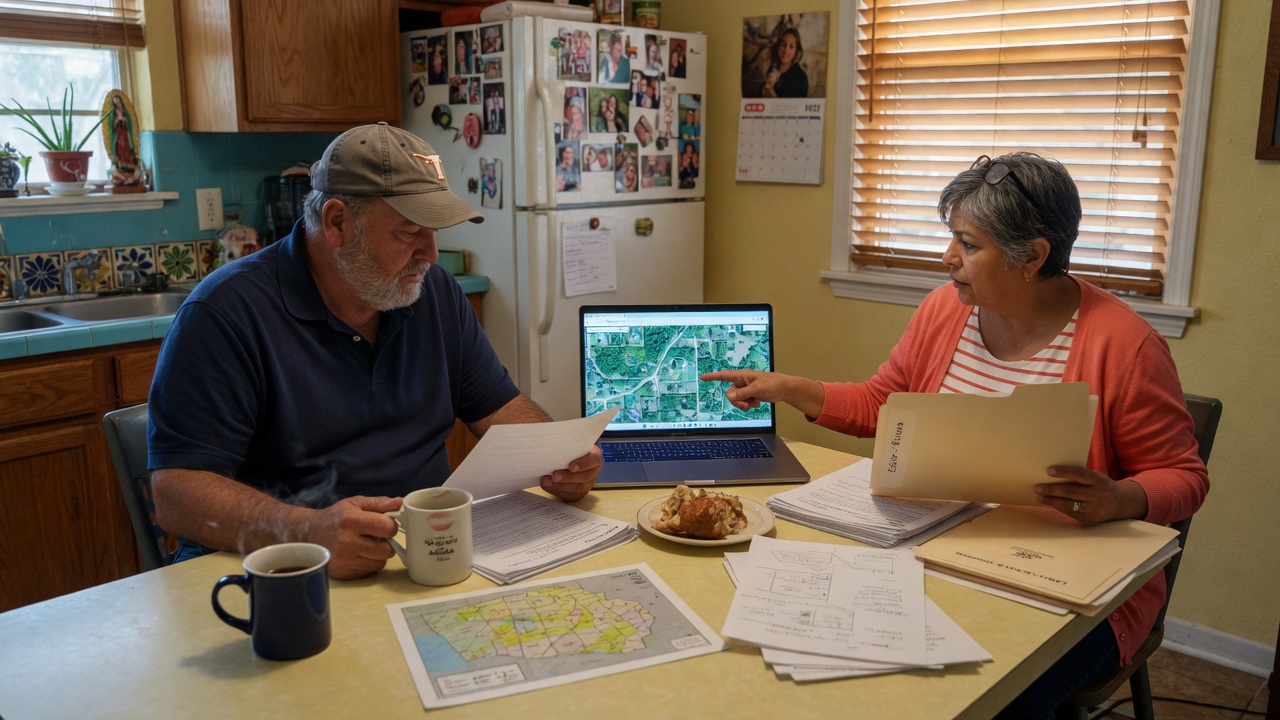
I want to be direct about this because it comes up more often than any technical or legal issue: being an out-of-state executor puts a magnifying glass on family dynamics. When you're managing the estate from a distance, family members who live closer to the property often feel — rightly or wrongly — that they should have more input into decisions. They see the property every day. They have memories tied to it. They may feel that you, as someone who lives far away, don't fully understand the situation.
The most common friction points:
- Differing timelines. One heir wants to sell immediately. Another wants to wait. The executor is caught in the middle, and distance makes it harder to have the face-to-face conversations that resolve disagreements.
- Spending disagreements. The executor wants to hire a property manager; a local heir thinks that's a waste of money. The executor wants to make repairs; another heir thinks the property should be sold as-is. Every dollar spent feels more significant when you're not the one deciding.
- Information asymmetry. The executor knows what the attorney said, but local family members weren't in the room. They fill the information gap with assumptions, which sometimes become grievances.
- Access and control disputes. Who has keys? Who can enter the property? Who decides what happens to personal property? These questions become flashpoints when family members live near the house and the executor doesn't.
What helps: Establish clear communication rules early. Share regular updates with all beneficiaries — even a brief weekly email reduces the feeling that someone is being left out. Put major decisions in writing. Involve the estate attorney in any disputed decisions. And remember that as executor, you have a fiduciary duty to the entire estate [8], not to any individual heir — even the one who is most vocal.
The Emotional Toll on Out-of-State Executors
I think this part of the process is underappreciated: being an out-of-state executor during an already painful grieving period is genuinely hard. You're processing your own loss while fielding calls from attorneys, managing a property you can't visit, making financial decisions under uncertainty, and sometimes navigating family relationships that have become strained by grief. All from a distance.
Here's what I'd want you to know: It's normal to feel overwhelmed, resentful, or even guilty about not being there physically. Many out-of-state executors describe a sense of helplessness that comes from knowing the property needs attention but not being able to provide it personally. That feeling is valid — and it's also a sign that you need more support, not less. This is precisely the time to lean on professional help — property managers, attorneys, and agents who can be your presence on the ground.
When to involve the attorney in family disagreements — and the answer is early. Family disputes that start as casual disagreements over text message can escalate into formal legal challenges that slow down the estate and cost everyone money. If you sense a disagreement is becoming entrenched — particularly around property pricing, repair decisions, or distribution — bring your attorney into the conversation before it becomes adversarial. Your attorney can explain the legal framework, clarify what the executor's authority actually is, and sometimes defuse tension simply by providing an objective, professional perspective.
Consider mediation before litigation. Texas courts generally encourage mediation in estate disputes, and it's almost always faster and cheaper than litigation. A neutral mediator can help family members find common ground on issues like property pricing, timing of the sale, and distribution of proceeds. If your family is heading toward a dispute, suggest mediation before anyone files a motion with the court.
Communication strategies for dispersed families:
- Set a regular update schedule. A biweekly group email or video call keeps everyone informed and reduces the impulse to call you daily for status updates.
- Create a shared document (Google Doc, shared folder) where key decisions, receipts, and status updates are logged. Transparency prevents accusations of hiding information.
- Use video calls for difficult conversations. Tone gets lost in text messages. Important discussions about money, timing, and family property deserve the nuance of face-to-face (even virtual) communication.
- Acknowledge emotions explicitly. Saying "I know this is hard for all of us" goes a long way. People who feel acknowledged are less likely to escalate to conflict.
When Things Go Really Wrong: Worst-Case Scenarios and What the Data Shows
Illustrative hypothetical. The following case scenarios combine common issues and do not describe a specific client or predict an outcome.
I've seen cases where the combination of distance, inaction, and lack of professional support led to truly dire outcomes. These aren't common, but they're not rare either — and they're almost always preventable:
Case scenario: Consider an executor in California who didn't realize their mother's Bexar County home needed a new roof. The property sat unattended for 18 months while probate dragged on. Water intrusion damaged the ceiling in three rooms, mold spread through the attic, and the HVAC system failed without anyone noticing. By the time the property was listed, the cumulative damage had reduced its market value by roughly 40% — turning what would have been a $425,000 sale into a $255,000 as-is transaction. The executor's attorney estimated that a $12,000 roof repair at the outset would have prevented the entire cascade.
Case scenario: An executor in Denver inherited a home in Kendall County with a $320,000 mortgage and $18,000 in credit card debt. She assumed the property would sell quickly and the debts would be paid from the proceeds. Eight months later, the property still hadn't sold because of deferred maintenance issues she hadn't addressed, the estate's bank account was depleted from carrying costs, and two creditors had filed claims that exceeded the remaining equity. The attorney fees for sorting out the mess nearly doubled what a clean, well-managed sale would have cost.
The worst-case scenarios I see in practice:
- Abandoned property with code violations. The city or county issues citations for unmowed grass, accumulated trash, or structural disrepair. Fines accrue daily. Liens are placed on the property. The executor doesn't find out until a neighbor calls or the title company flags the liens during a sale attempt.
- HOA foreclosure. Unpaid HOA assessments have escalated to the point where the homeowners association initiates foreclosure proceedings. In Texas, HOAs have the legal right to foreclose on properties for unpaid assessments [10]. The estate could lose the property to the HOA for a fraction of its value.
- Tax sale. Property taxes have gone unpaid for so long that the county sells the property at auction. While the estate has a Right of Redemption [13], the window is limited and the costs to redeem are substantial.
- Insurance denial after a loss. A pipe bursts, a storm damages the roof, or a fire breaks out — and the insurance claim is denied because the vacancy clause was triggered and the executor never updated the policy. The estate absorbs the full cost of repairs, or the property is sold at a steep discount in damaged condition.
- Executor removal. In extreme cases, a beneficiary can petition the court to remove the executor for failure to perform their duties. Texas Estates Code Chapter 361 provides grounds for removal, including failure to properly manage estate property [3]. An out-of-state executor who has been absent, unresponsive, or negligent is a realistic candidate for removal.
Common Grounds for Executor Removal Under Chapter 361
Under Texas Estates Code § 361.051, the court may remove an executor for "cause" — and the statute provides several specific grounds that are commonly invoked in contested proceedings [3]:
- Neglect or mismanagement of estate property — failing to maintain, insure, or protect estate assets
- Failure to account — not providing required inventories, accountings, or reports to the court or beneficiaries
- Self-dealing — using estate assets for personal benefit, or making decisions that primarily benefit the executor rather than the estate
- Failure to perform duties — not filing required documents, not paying estate debts, not communicating with beneficiaries, or not taking reasonable steps to administer the estate
- Incapacity or unfitness — physical or mental inability to serve, or circumstances that make the executor unsuitable
The practical reality: Removal is not automatic for out-of-state executors. Courts recognize that serving from a distance is perfectly legal. Removal happens when the executor fails to perform their duties — regardless of whether they live next door or across the country. The distance itself is never the issue; the failure to act is.
What To Do: A Practical Strategy for Out-of-State Executors
None of the problems above are inevitable. They happen because executors don't know what's coming or try to manage everything themselves from a distance. Here's what I recommend based on what I've seen work — and what I've seen fail:
Hire a Texas estate attorney immediately
Not "when things get complicated." From day one. They'll handle the resident agent requirement, advise on court procedures, and ensure you're meeting your fiduciary obligations.
Contact the insurance agent within the first week
Update the policy for vacancy. Get a vacancy endorsement if needed. Get everything in writing. This is non-negotiable.
Build a local professional team
Property manager or maintenance service, estate-experienced real estate agent, reliable contractor. Don't rely on a single family member or friend to do everything.
Set up remote monitoring and communication systems
Smart thermostat with remote access. Security cameras with phone alerts. Leak detectors. Mail forwarding. Weekly or biweekly status reports from your local team.
Establish a communication protocol with beneficiaries
Regular updates to all heirs. Written records of significant decisions. This reduces disputes and protects you from claims that you acted without transparency.
Set up a dedicated estate bank account
Keep estate finances separate from personal finances. Track every expense. Document every payment. This protects you and satisfies the court's accounting requirements.
Don't delay decisions hoping the situation will improve on its own
The property's condition will not improve without action. The carrying costs will not decrease with time. The family dynamics will not simplify with silence. Make decisions, document them, and move forward.
For a complete step-by-step guide to executor responsibilities, see our Texas Executor Estate Home Sale Checklist. For an overview of the entire probate process, visit the Probate Process overview.
Costs, Fees, and Official Resources
Understanding the costs involved helps you budget realistically and avoid surprises. Here are typical cost ranges for Texas probate and estate administration in the Hill Country and San Antonio area:
| Cost Category | Typical Range | Notes |
|---|---|---|
| Attorney fees (independent admin) | $2,500–$7,500 | Many attorneys offer flat fees for simple independent administrations; more complex estates may be billed hourly ($200–$400/hr) |
| Attorney fees (dependent admin) | $5,000–$15,000+ | Court-supervised administration requires more attorney time for hearings, filings, and accounting |
| Bond premium (if required) | 1–3% of estate value/year | Required in dependent administration; usually waived in independent administration |
| Court filing fees | $300–$800 | Varies by county; covers application, probate, and order issuance |
| Newspaper publication (creditor notice) | $100–$300 | Required by Texas Estates Code; published once in local newspaper |
| Property management (vacant) | $100–$200/month | Regular inspections, maintenance coordination, emergency response |
| Appraisal (real estate) | $400–$600 | Licensed appraiser; may be required for inventory or lending purposes |
| Estate sale services | 25–40% of proceeds | Professional estate sale companies handle sorting, pricing, staging, and selling household contents |
Official resources for out-of-state executors:
- Texas Estates Code (full text): statutes.capitol.texas.gov — the complete Texas Estates Code, covering probate procedures, executor duties, and administration requirements.
- TexasLawHelp.org: Free self-help guide to estate administration in Texas — plain-language explanations of the probate process, forms, and practical guidance [9].
- Texas Department of Insurance: Homeowner's insurance guidance — information about coverage, vacancy issues, and your rights as a policyholder [7].
- County Probate Courts in Bill's service area:
- Bexar County: Bexar County Probate Court — bexar.org/1298/Probate-Court
- Kendall County: Kendall County Probate — kendallcountytx.gov/183/Probate
- Comal County: Comal County Courts — co.comal.tx.gov
- Bandera County: Bandera County Clerk — co.bandera.tx.us
- Gillespie County: Gillespie County Clerk — co.gillespie.tx.us
- Kerr County: Kerr County Clerk — co.kerr.tx.us
- Medina County: Medina County Clerk — co.medina.tx.us
Frequently Asked Questions
Do I have to be in Texas to serve as executor?
No. Under Texas law, a non-resident can serve as executor of a Texas estate, but with conditions. Under Texas Estates Code § 304.003, a non-resident must appoint a Texas resident agent to accept service of process and have that appointment formally filed with the court [1][2]. Without this, the court can disqualify you. Regarding bonding: a surety bond is governed by the type of administration and the will's terms, not the executor's residency [4]. In Independent Administration (where the will waives bond), the executor typically serves without a bond. In Dependent Administration, bond is generally required for all executors. Many Texas probate courts now allow remote appearances via Zoom [5], so you may be able to handle most or all court matters without traveling to Texas.
What happens to the homeowner's insurance when the property becomes vacant?
Most standard homeowner's policies contain a vacancy clause that limits or eliminates coverage after 30 to 60 consecutive days of vacancy [6][7]. The Texas Department of Insurance advises property owners to notify their insurer when a property will be unoccupied and inquire about coverage modifications [7]. If the policy isn't updated and a loss occurs, the claim may be denied or significantly reduced. As executor, this can create personal liability for you under your fiduciary duty [8]. Contact the insurance agent immediately and request a vacancy endorsement or unoccupied dwelling policy in writing.
How long does Texas probate take?
It depends on the type of administration and the estate's complexity. For a straightforward independent administration with a valid will, cooperative heirs, and no complications, probate typically takes 6–12 months. Dependent administration, contested estates, title issues, or properties requiring significant preparation before sale can extend the timeline to 12–24+ months. Key milestones include the creditor claims period (4 months from first publication), inventory filing (90 days after appointment), and the time needed to market and sell the property. Your attorney can give you a realistic timeline estimate based on the specific facts of your estate.
Do I need a Texas attorney?
Yes. Under Texas law, an executor can technically proceed without an attorney in some limited situations — particularly in independent administration, where many actions (including selling real property) do not require prior court approval. But that independence is precisely why having local counsel is so important for an out-of-state executor: without the court’s built-in oversight catching mistakes at each step, you need an experienced attorney to ensure filings are correct, title issues are resolved, and real property transactions are handled properly. The probate process involves legal requirements and fiduciary obligations that vary by county and by type of administration. An attorney ensures you meet those obligations, protects you from personal liability, and handles the legal mechanics that you simply cannot manage from another state. This is not the time to try to save money by going it alone.
Do I need to travel to Texas for court hearings?
It depends on the court and the specific hearing. Many Texas probate courts now allow remote appearances via Zoom for routine matters, which has significantly reduced the need for travel [5]. However, certain proceedings — particularly initial hearings, contested matters, or final accountings — may require your physical presence. Your attorney can advise on which appearances can be handled remotely in your specific court. Even if you never need to appear in person, you'll likely need to travel at some point to handle physical property tasks unless you have a reliable local team.
What if beneficiaries disagree about selling the property?
This is one of the most common and challenging situations in probate. If multiple beneficiaries have an ownership interest in the property and they disagree about whether or when to sell, the options include: negotiation and mediation (usually the fastest and cheapest approach), a partition action (where any co-owner can ask the court to force a sale), or, in some cases, one beneficiary buying out the others. As executor, your fiduciary duty is to the estate as a whole, not to any individual heir. Involve your attorney early if you sense a disagreement is developing — proactive mediation is almost always less expensive and less damaging to family relationships than litigation.
How do I handle property taxes from another state?
Texas property taxes don't pause for probate and must be paid on time to avoid penalties, interest, and potential tax sale [11][12]. As an out-of-state executor, your best tools are: (1) register with the county appraisal district's online portal to monitor tax status digitally, (2) set up mail forwarding from the property address so you receive tax notices, (3) include property taxes in the estate's monthly carrying cost budget, and (4) work with your attorney and CPA to determine whether the estate or individual beneficiaries are responsible for the tax obligation. If the property had a homestead exemption during the owner's lifetime, you'll need to notify the appraisal district that the exemption may no longer apply.
What if the property needs major repairs and I'm not there?
This is where your local professional team earns its keep. Get a video walkthrough from your real estate agent or property manager to assess the scope of work. Obtain at least two written contractor bids (your agent can coordinate this). Review bids with your attorney if the amounts are significant. Make decisions promptly — deferred repairs on a vacant property tend to compound quickly, especially in the Texas climate. For major repairs, consider whether the cost will be recouped in the sale price or whether it makes more sense to sell the property as-is. A probate-experienced real estate agent can help you make that calculation.
Can I use a power of attorney instead of probate?
Generally, no. A power of attorney is a document that authorizes someone to act on another person's behalf during their lifetime. Once the person dies, the power of attorney typically becomes invalid. The authority to manage and distribute a deceased person's estate comes through the probate process — either through a will admitted to probate or through appointment as administrator if there is no will. There is no legal substitute for probate when it comes to transferring title to real property in Texas, though some very limited exceptions exist (such as muniment of title for simple estates, or small estate affidavits for estates under $75,000 in value, which still require a court proceeding).
What happens if I just ignore the property?
Nothing good. A neglected vacant property in Texas will deteriorate rapidly. Within weeks, you'll face pest issues and dry P-traps. Within months, you'll likely have code violations, HOA liens, possible HVAC failure, and potential theft of copper or appliances. If taxes go unpaid, the county can initiate a tax sale process [12]. If the property becomes uninhabitable or is condemned, the estate's value drops dramatically. And as executor, ignoring your duties exposes you to personal liability and potential removal by the court [3]. The property will not take care of itself. Even doing the bare minimum — keeping utilities on, maintaining the lawn, and having someone check monthly — is infinitely better than doing nothing.
How much does it cost to maintain a vacant property in Texas during probate?
A realistic budget for maintaining a vacant property during probate includes: utilities ($150–$300/month), lawn care and basic exterior maintenance ($100–$200/month), property management or regular check-ins ($100–$200/month), insurance updates (variable), and property taxes (which vary by county and assessed value but typically range from 1.8% to 2.5% annually in the Hill Country). The total carrying cost for a typical property can range from $1,500 to $4,000 per month depending on the property's size, location, and condition. Proactive maintenance spending of $300–$500/month is almost always less expensive than the cost of deferred repairs.
Can the property be sold while probate is still in process?
In many cases, yes. Under Texas's independent administration process (the most common form), the executor typically has broad authority to sell estate property without court approval, as long as the will authorizes independent administration or all interested parties consent [14]. Under dependent administration, court approval is required for most sales. The property must generally be properly transferred into the estate before a sale can occur. For a detailed explanation, see our article on selling a house before probate is finished in Texas.
What if I don't want to serve as executor anymore?
You can resign. Under Texas Estates Code § 361.001, an executor may resign by filing a written resignation with the court [3]. The court will then typically appoint a successor executor or administrator. However, you remain responsible for the estate's affairs until the court formally accepts your resignation and a successor is in place. You can't simply walk away — you need to ensure a proper transition. Talk to your attorney about the process and any potential obligations that survive your resignation.
Is there a simpler alternative to full probate if the estate just has a house with a mortgage?
Possibly. Texas allows a streamlined process called "Probate as a Muniment of Title" under Texas Estates Code § 257.001 [15]. If the decedent left a valid will and the estate has no unpaid debts other than those secured by a lien on real property (typically a mortgage), the court can admit the will to probate solely to transfer the deed — without appointing a formal executor or requiring ongoing estate administration. This means no inventory filings, no periodic accounting, and no bond requirement. For out-of-state families with a straightforward property-only estate, muniment of title can save significant time and cost. However, if the estate has other debts (credit cards, medical bills, taxes), full administration is required. Your attorney can evaluate whether the estate qualifies.
Being named executor of a Texas estate when you live out of state is genuinely difficult — not because the law makes it impossible, but because distance amplifies every challenge that any executor faces. The legal requirements are manageable with good professional support. The property maintenance is manageable with a plan and a budget. The family dynamics are manageable with communication and transparency.
What makes it unmanageable is trying to do it alone, without local support, without professional guidance, and without a clear understanding of what's at stake. The out-of-state executors who do this well are the ones who build a team early, stay in regular communication, and make decisions rather than deferring them.
If you're an out-of-state executor managing a Texas property and you're not sure where to start, that's exactly what we're here for. Reach out for a conversation — no pressure, no sales pitch, just a clear discussion about your situation and what your options are.
Disclaimer
This article is published by Bill Ross, a licensed Texas real estate agent (License #778434), as part of the educational content provided by Texas Probate Home Sales and Hill Country Homesteads Group, brokered by Keller Williams Boerne (116 Herff Rd, Suite 203, Boerne, TX 78006, (830) 816-3500).
This content is provided for general educational and informational purposes only and does not constitute legal advice, tax advice, financial advice, or any other professional advice. The information in this article reflects general principles of Texas probate law as of the date of publication and may not reflect subsequent changes in the law, court rules, or local practices.
Every estate, every property, and every family situation is different. The information presented here is not a substitute for consultation with a licensed Texas estate attorney who can advise you based on the specific facts of your situation. Probate laws, procedures, timelines, and costs vary by county and by individual case.
Bill Ross and Hill Country Homesteads Group are real estate professionals, not attorneys, CPAs, or tax professionals. Nothing in this article should be construed as legal representation, tax planning, or financial planning. Readers should consult a licensed Texas probate attorney, a qualified CPA, and other appropriate professionals before making any decisions about estate administration, property transactions, or financial obligations.
Property values, market conditions, cost estimates, and timelines referenced in this article are approximate and based on general market knowledge in the Texas Hill Country and Greater San Antonio area as of the date of publication. Actual costs and timelines may vary significantly based on specific property characteristics, market conditions, and individual circumstances.
© 2026 Hill Country Homesteads Group. All rights reserved.
Sources
- Texas Estates Code § 304.003 — Persons Disqualified to Serve (FindLaw)
- Texas Estates Code § 304.003 (Justia, 2024 Texas Statutes)
- Texas Estates Code § 361.051 / § 361.052 — Removal of Executor (statutes.capitol.texas.gov)
- Texas Estates Code Chapter 305 — Bond Requirements (statutes.capitol.texas.gov)
- Can Probate Be Handled Online in Texas? — Law Offices of Debbie Irving
- Vacant Home Insurance During Probate in Texas: Coverage Tips
- Home Insurance Guide — Texas Department of Insurance
- Texas Estates Code § 351.101 — Duty of Care (statutes.capitol.texas.gov)
- Estate Administration in Texas — TexasLawHelp.org
- Texas Property Code § 209.0091 / § 209.0092 — HOA Lien and Foreclosure Authority (TRPA, Texas Property Code Chapter 209)
- What Happens If I Don't Pay Property Taxes in Texas? — Nolo
- Texas Tax Code Chapter 33 — Delinquent Property Taxes and Tax Sales
- Texas Property Tax Redemption Periods — LienSuite
- Texas Estates Code Chapter 401 — Independent Administration (statutes.capitol.texas.gov)
- Texas Estates Code § 257.001 — Probate as Muniment of Title (statutes.capitol.texas.gov)
- Texas Estates Code § 401.001(b) — Independent Administration; Agreement of Distributees (statutes.capitol.texas.gov)
- Texas Estates Code § 402.053 — Protection of Third-Party Purchasers; Affidavit of Necessity (statutes.capitol.texas.gov)
- Bexar Central Appraisal District — Online Property Search and Tax Portal (bcad.org)
- Kendall County Appraisal District — Taxpayer Online Portal (portal.kendallad.org)
Navigating probate from out of state?
You don't have to figure this out alone. I work with out-of-state executors every day — let's talk about your specific situation and build a plan that protects the estate and your peace of mind.