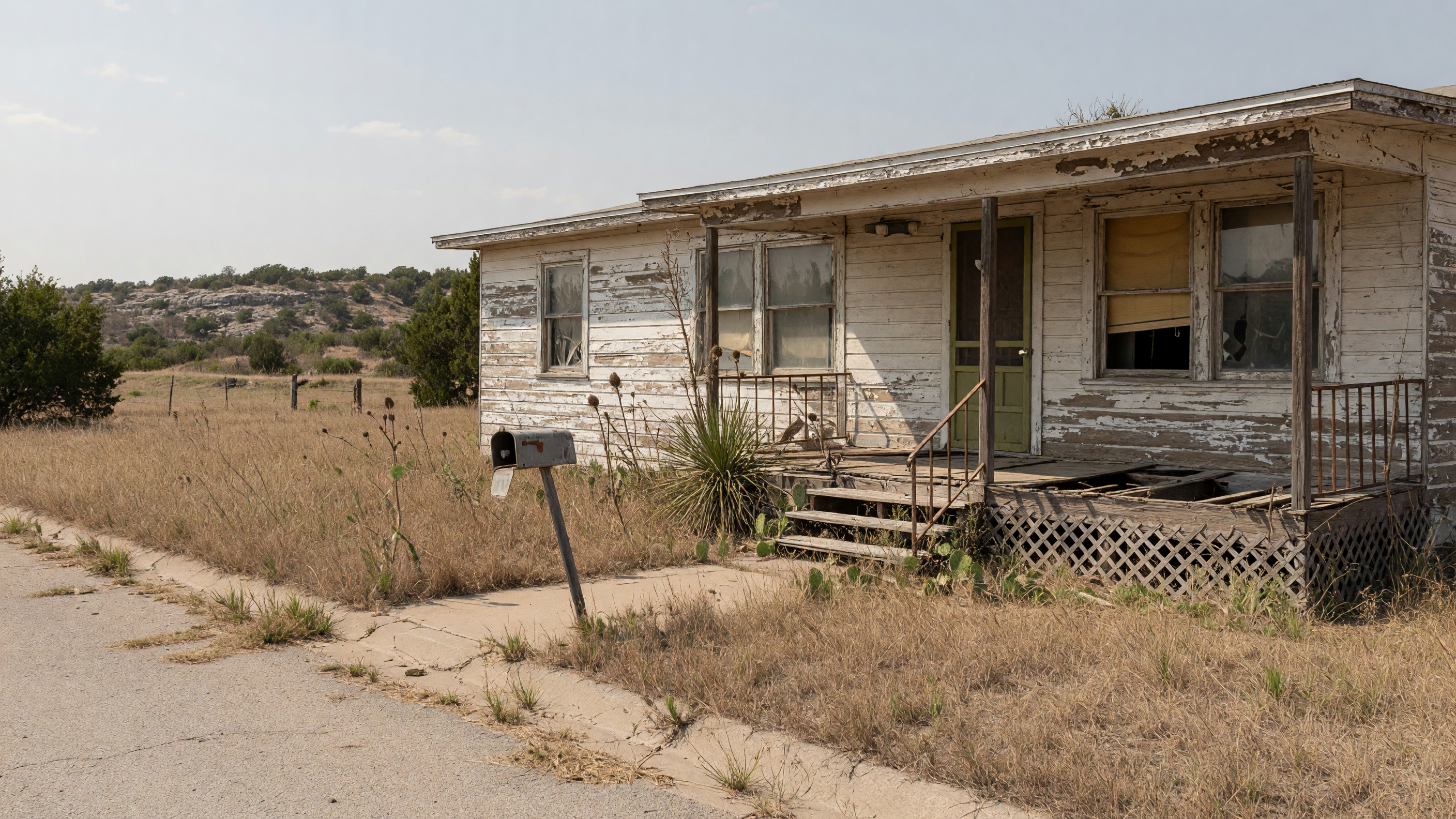

Someone you loved has passed away, and their house is still sitting there — full of their things, their smell, their life. You haven't moved in. Nobody has. The family is grieving, the paperwork is overwhelming, and the probate process feels like it moves at its own pace.
That paralysis is well-documented among executors — probate professionals see it regularly. But here's what matters: every single day that house sits vacant, the estate is quietly accumulating risk — financial risk, legal risk, and physical damage that gets worse the longer it goes unaddressed.
This isn't meant to scare you. It's meant to help you understand what's actually happening so you can make informed decisions. A vacant probate property in Texas faces a unique combination of threats — extreme heat, winter freeze damage, insurance gaps, squatter exposure, and carrying costs that don't pause for grief. The good news is that almost all of them are manageable with early, deliberate action.
Let's walk through exactly what can go wrong, and what you can do about it.
This article provides general educational information about property risks in Texas and is not legal, insurance, or tax advice. Every estate and every property is different. Consult a licensed Texas estate attorney, your insurance agent, and other qualified professionals for guidance specific to your situation.
The Clock Starts Ticking the Day the House Goes Empty
Most families don't realize how quickly a vacant property can deteriorate. Our home maintenance calendar covers seasonal care for Hill Country homes. A home that was perfectly functional when someone lived in it begins a surprisingly rapid decline the moment it goes empty — and in Texas, that decline is accelerated by one of the harshest climates in the country.
Texas regularly sees temperatures exceeding 100°F for months at a time. In the Hill Country and San Antonio metro, summer heat indices can push past 110°F. That kind of heat doesn't just make a house uncomfortable — it actively attacks building materials, mechanical systems, and the structural integrity of the home [1].
Here's a realistic timeline of what can go wrong:
| Timeframe | What Can Happen | Risk Level | Remediation Action Required |
|---|---|---|---|
| 30 Days | Insurance vacancy clause may activate. Minor plumbing issues begin. Dust and pest activity increase. Mail accumulates unnoticed. | Moderate | Bind a vacancy endorsement on the insurance policy before the 30-day trigger. Confirm coverage terms in writing. Begin a weekly property check-in schedule. |
| 60 Days | HVAC system degrades without cycling. Mold begins in enclosed spaces. P-traps dry out, allowing sewer gas entry. Property becomes a visible vacancy target. | High | Run water through all drains to reset P-traps and restore the sewer-gas seal. Cycle the HVAC system. Flush the water heater. Inspect for early mold or moisture signs. |
| 90 Days | Significant pest infestations. Warped wood, peeling paint, drywall damage from heat cycles. Copper theft and AC unit theft become likely. HOA liens may accrue. | Severe | Perform a full mechanical inspection — HVAC operation, plumbing under all sinks, roof and attic, and exterior security. Address any HOA violations before liens accrue. Install motion-activated lighting and security cameras if not already in place. |
| 180 Days | Major structural damage possible. Extensive mold remediation may be needed. Property value can decline $50,000–$100,000+. Tax delinquency leads toward forced sale. Title issues multiply. | Critical | Conduct a comprehensive property inspection by a licensed inspector. Check for squatter activity. Verify insurance coverage is still active and valid. Bring property taxes current. Engage a real estate professional to begin preparing for sale. |
HVAC systems are especially vulnerable. When an air conditioning system sits idle in Texas summer heat, the compressor can seize, refrigerant can develop leaks at fitting joints, and the capacitor — one of the most common failure points — can degrade. A system that was working perfectly when the homeowner was alive can fail within weeks of inactivity. Once the HVAC fails, interior temperatures in a sealed Texas home can exceed 130°F within days, accelerating damage to flooring, cabinetry, and every surface in the house.
Plumbing issues compound quickly. Water heaters that aren't periodically flushed can develop sediment buildup and fail. P-traps under sinks and toilets dry out within weeks, allowing sewer gas to enter the home. In older homes, corroded pipes that were held in check by regular water flow can begin leaking. A slow leak in an unoccupied house can go undetected for weeks, causing thousands of dollars in water damage, mold growth, and structural compromise before anyone notices.
The lesson is simple: a vacant home doesn't stay the way you remember it. The question isn't whether things will change — it's how much damage accumulates before someone addresses it.
Your Insurance May Not Cover What Happens Next
If there is one section in this article that deserves especially careful attention, it's this one. This is the risk most executors don't know about until it's too late — and it can turn a manageable situation into a financial disaster for the estate and potentially for them personally.
Most standard homeowner's insurance policies contain what's called a vacancy clause. Our property insurance guide covers vacant-property coverage requirements. This clause typically limits or eliminates coverage if the property has been unoccupied for a specified period — commonly 30 to 60 consecutive days [2]. The exact threshold depends on the policy language, but the concept is consistent across the industry: if nobody is living in the home, the insurer's obligation changes.
Here's what that means in practical terms:
- Claims can be denied. If the property suffers fire, vandalism, water damage, or theft while it sits vacant and the policy wasn't updated, the insurance company may deny the claim entirely based on the vacancy clause.
- Coverage may be reduced. Even if the claim isn't fully denied, many policies reduce the payout for vacant-property losses to a fraction of the dwelling coverage — sometimes as low as 10% of the policy limit.
- The estate bears the gap. If a covered loss occurs and the insurance company denies or reduces the claim, the cost of repairs falls on the estate — reducing proceeds available to heirs and potentially creating executor liability.
The fix is straightforward but time-sensitive: Contact the insurance agent as soon as you know the property will be vacant. Ask specifically whether the current policy provides adequate coverage for an unoccupied property, and whether a vacancy endorsement or unoccupied dwelling policy is needed. The Texas Department of Insurance recommends that property owners notify their insurer when a property will be unoccupied for an extended period and inquire about what coverage modifications may be necessary [2].
A vacancy endorsement typically costs more than standard coverage — but it costs a tiny fraction of what an uninsured loss would cost the estate. And the cost of no coverage at all is potentially unlimited.
Critical point for executors: If you fail to update the insurance and a loss occurs, you may face personal exposure. As the estate's fiduciary, you have a duty to protect estate assets [3][8]. Texas Estates Code Section 351.051 establishes the core fiduciary standard: an executor must take care of estate property "as a prudent man would take care of his own property" — a standard that applies across both dependent and independent administrations [8]. An insurance gap that you knew about (or should have known about) and failed to address can be viewed as a breach of that duty. This isn't theoretical — it's the kind of claim that creates real personal liability for executors.
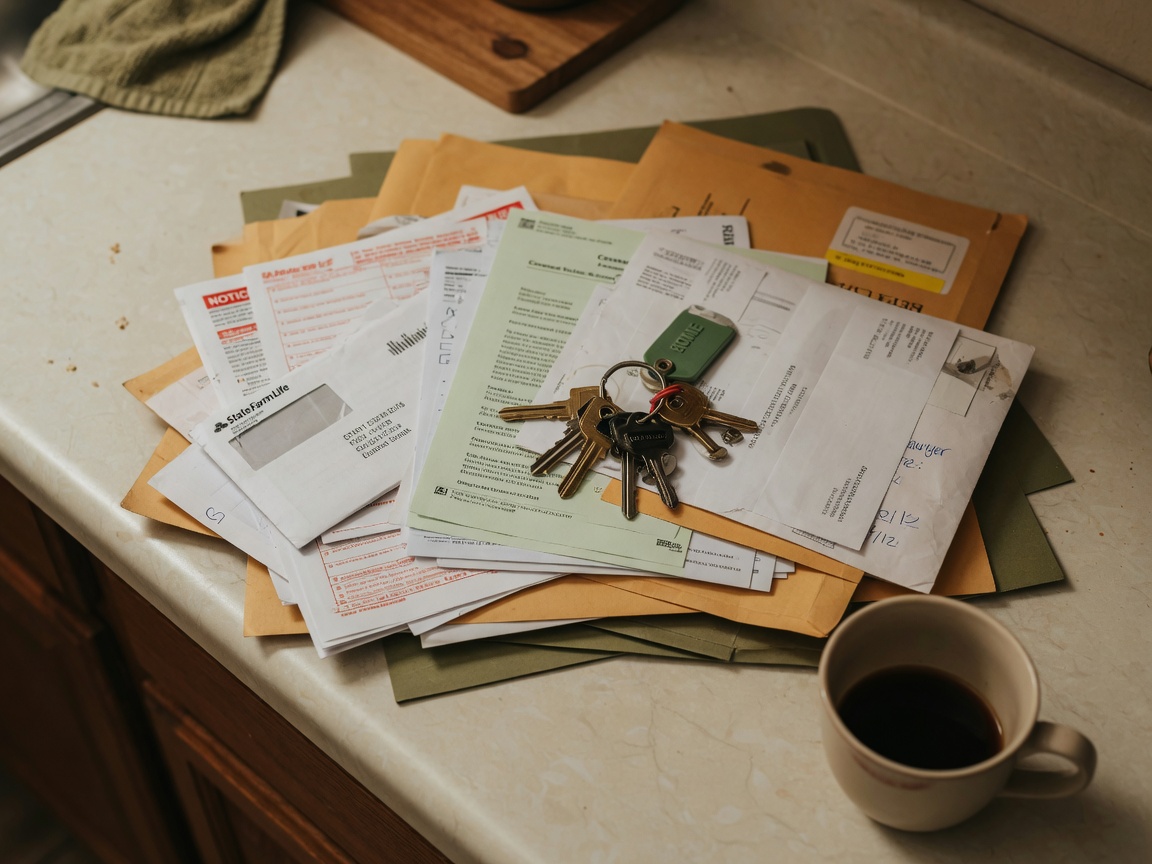
Fiduciary Warning
This is not a scare tactic — it is a legal reality. As an executor, you are personally responsible for maintaining the estate's property in a reasonably safe and insurable condition. If the house burns down without valid insurance coverage, or if a covered loss occurs and the claim is denied due to a vacancy clause you failed to address, the consequences can fall directly on you.
Under Texas Estates Code § 351.051, an executor has a fiduciary duty to manage estate property with the same care that a "prudent man would take care of his own property." This is not a vague aspiration — it is a statutory standard that courts use to measure whether an executor has acted properly. Failure to maintain adequate insurance on estate property can constitute a breach of that duty.
Here's what that means in concrete terms: if the home suffers a catastrophic loss (fire, flood, severe weather) and the insurance claim is denied because you didn't secure a vacancy endorsement, didn't update the policy for unoccupied status, or allowed the coverage to lapse entirely, a disgruntled heir or beneficiary can sue you personally — not just the estate. That means the claim can extend to your own bank account, your own assets, and your own financial future.
An executor's fiduciary duty is not passive. It requires active, documented steps to protect the property. Ignorance of the policy's vacancy clause, the failure to check on insurance status, or the assumption that "it's fine for now" does not provide legal protection. The standard is what a reasonable, prudent person would do — and a reasonable person would ensure the property is insured.
Protect yourself: Contact the insurance agent as soon as you assume your role as executor. Ask whether the current policy covers the property in its vacant or unoccupied state. If it does not, request a vacancy endorsement or unoccupied dwelling policy immediately. Get confirmation in writing. Document every step you take. This is the single most important action you can take to avoid personal liability.
Break-Ins, Squatters, and Vandalism
A vacant house in Texas is a target. It's that simple. Properties that sit empty — especially in suburban and semi-rural areas — attract copper theft, appliance theft, air conditioning unit theft, and general vandalism. The copper wiring alone in a typical home can be worth several hundred dollars to scrap metal thieves, and a stolen AC condenser unit can cost $3,000–$7,000 to replace.
But the bigger legal issue that most people don't think about is squatting. Texas law addresses this through its adverse possession statutes, found in the Texas Civil Practice and Remedies Code, Chapter 16 (Sections 16.021–16.030) [4]. While adverse possession in Texas requires specific conditions to be met over extended periods (ranging from 3 to 25 years depending on the circumstances), the practical reality is that a squatter who occupies a property and establishes a pattern of use can create significant legal complications for the estate. (Note: the separate eviction process for removing squatters falls under Texas Property Code, Chapter 24 — Forcible Entry and Detainer — which governs the legal procedure to regain possession of the property.)
Here's what executors need to understand:
- "No Trespassing" signs are important but not sufficient on their own. They establish notice, which is one element of adverse possession defense, but they must be posted at all entry points and maintained. They are one piece of a broader security strategy.
- Change the locks immediately. Former occupants, tenants, estranged family members who believe they have a right to enter — all of these people have keys. Until locks are changed, you don't actually control who has access to the property.
- Install visible security measures. At minimum, motion-activated lights and cameras at entry points. A monitored security system is better. The goal is both detection and deterrence — a property that looks actively monitored is far less likely to be targeted.
- Document everything. If unauthorized entry does occur, the estate needs a record. Photos, video, police reports — all of it matters for insurance claims, legal proceedings, and potential adverse possession defenses.
Without security, the property's market value can be destroyed before it's ever listed. Probate real estate professionals have documented cases where a $400,000 home lost $60,000 in value because vandals stripped the copper wiring, broke windows, and tagged the walls — all within the first few months of vacancy. That damage didn't have to happen. It happened because no one was watching.
Utilities — Don't Turn Them Off
This sounds counterintuitive. The house is empty, nobody's using anything, and every month those utility bills feel like wasted money. But turning off the utilities in a Texas home — in summer or winter — is one of the most expensive mistakes an executor can make.
HVAC must stay running — or at minimum, be set to a reasonable temperature like 78–80°F. Here's why:
- Mold growth. Texas humidity combined with a sealed, uncooled house creates ideal conditions for mold. Water damage, mold remediation, theft, vandalism, or storm damage can easily turn into a five-figure estate expense if the property is uninsured, underinsured, or not inspected regularly.
- Warped wood and peeling paint. Extreme heat cycles cause hardwood floors to cup and buckle, door frames to swell and stick, cabinets to warp, and paint to peel and bubble. These are cosmetic issues that become buyer-facing condition problems that directly reduce sale price.
- Pest infestations. Heat plus stillness is paradise for insects and rodents. Without the normal activity of a lived-in home, wasps, spiders, mice, and rats move in. Once established, pest remediation is expensive and disruptive.
Water should remain active (even if the main is partially shut or reduced) to prevent:
- Dry P-traps. The water seal in P-traps under sinks, tubs, and toilets evaporates within weeks without use, allowing sewer gas to enter the home. This is both a health hazard and a smell that can permeate the entire house.
- Pipe damage. Water sitting stagnant in pipes can develop issues, and complete shutdown followed by restart can stress older plumbing systems.
The math is simple: running minimal utilities on a vacant home typically costs $150–$300 per month. The cost of repairing a home where utilities were cut for six months can easily turn into a five-figure estate expense. This is not an area to save money.
Winter Weather Is Just as Dangerous as Summer Heat
Texas summers dominate the conversation about vacant-property risk, but winter freeze events can cause even more catastrophic damage in a shorter period of time. When temperatures drop below 32°F for an extended period — which happens regularly across the Texas Hill Country and San Antonio metro — any water left in unprotected pipes will freeze, expand, and burst the pipe. The resulting flood can destroy drywall, flooring, cabinetry, and structural materials throughout the home before anyone notices.
Winter Storm Uri (February 2021) is the most vivid recent example. That storm brought sustained freezing temperatures across Texas for nearly a week, causing widespread catastrophic damage. Homes that had been vacated or left without active heat were among the hardest hit. Burst pipes turned empty houses into flooded shells, with damage often exceeding $50,000–$100,000 per property. Insurance claims from Uri topped $10 billion statewide [9]. An unoccupied home with no heat is precisely the scenario that produces the worst outcomes during a hard freeze.
This is why the recommendation to keep utilities on — especially HVAC and heat — applies year-round, not just in summer. During winter months, the thermostat should be set no lower than 65°F. In older homes or homes with known plumbing vulnerabilities, 68–70°F is safer. The cost of keeping the heat running is a few hundred dollars a month; the cost of remediating burst pipes and flood damage can be five figures or more.
The Texas Department of Insurance recommends that property owners with vacant or unoccupied homes take specific precautions before winter weather events, including maintaining heat, insulating exposed pipes, and ensuring the property is checked regularly during freeze warnings [9].
| Scenario | Estimated Monthly Cost | 6-Month Total |
|---|---|---|
| Running minimal utilities (HVAC at 78°F, water on) | $150–$300/month | $900–$1,800 |
| Utilities off — mold remediation alone | N/A (lump sum) | $10,000–$30,000+ |
| Utilities off — full system repairs (HVAC, plumbing, flooring) | N/A (lump sum) | $25,000–$60,000+ |
Legal Liability — Someone Gets Hurt on a Vacant Property
This is the risk that keeps estate attorneys up at night. If someone enters the property — even a trespasser — and is injured, the estate can be sued. And under certain circumstances, the executor can face personal liability.
Under Texas law, property owners (and by extension, estate executors managing property) owe a duty of care to maintain the premises in a reasonably safe condition [5]. The specifics depend on the status of the person on the property:
- Invited persons (real estate agents, appraisers, inspectors, contractors) are owed the highest duty of care. If someone is on the property for estate business and is injured, the estate is almost certainly liable.
- Trespassers are generally owed a lower duty, but the estate still cannot willfully or wantonly cause injury, and must warn of known dangerous conditions.
- Child trespassers trigger the attractive nuisance doctrine — if features of the property (a pool, a play structure, an accessible garage) could draw children and pose a danger, the property owner may owe a heightened duty of care even to trespassing minors.
Executor personal liability is real. As an executor, you have a fiduciary duty to protect estate assets [3][8]. Texas Estates Code Section 351.051 establishes the core standard: an executor must take care of estate property "as a prudent man would take care of his own property" — a standard that applies broadly across both dependent and independent administrations [8]. If you fail to secure a property — don't change the locks, don't post warning signs, don't address known hazards — and someone is injured as a result, you could face a lawsuit that extends beyond the estate's assets to your personal finances. The fiduciary duty doesn't disappear because the property is vacant. In many ways, it becomes more important.
Practical protection: Change locks, post "No Trespassing" and "Posted" signs at all entry points, secure all known hazards (unfenced pools, loose boards, broken steps), maintain basic lighting, and document your efforts. The goal isn't to make the property impregnable — it's to demonstrate that you acted reasonably to protect people and property.
The Financial Domino Effect
When a house sits vacant during probate, the carrying costs don't stop — they continue regardless of whether anyone is living there, and some of them increase because of the vacancy.
What continues to accrue:
- Mortgage or HELOC payments — These don't pause for probate. Missed payments can trigger default, late fees, and eventually foreclosure proceedings.
- Property taxes — Texas property taxes are among the highest in the nation. In Bexar County, the average effective rate is approximately 1.8%–2.2% of assessed value. On a $400,000 home, that's $7,200–$8,800 per year — and it doesn't stop during probate [6].
- HOA dues — If the property is in a homeowners association, dues continue to accrue. Unpaid HOA dues can result in a lien against the property, which must be resolved before the home can be sold. In some cases, HOAs can pursue foreclosure for unpaid assessments.
- Insurance premiums — As discussed above, insurance needs to be maintained (and potentially upgraded). The cost of a vacancy endorsement is an additional carrying cost on top of the existing premium.
Property tax delinquency is the most dangerous domino. In Texas, if property taxes are not paid, the county can initiate a tax sale process. Under Texas Tax Code Chapter 33, a property with delinquent taxes can be sold at a public auction as early as February of the year following the delinquency [6]. The tax sale process can result in the complete loss of the property — meaning the estate could lose the asset entirely, not just the tax amount owed.
Deferred maintenance compounds. A home that needs $5,000 in maintenance today will need $15,000 in repairs in a year. Problems that are cheap to fix when caught early become expensive structural issues when ignored. A minor roof leak becomes a ceiling collapse. A small foundation crack becomes a structural failure. A $400,000 home that receives no maintenance for 12 months can realistically lose $50,000–$100,000 in market value — and the cost of reactive repair far exceeds what proactive maintenance would have been.
The First 72 Hours — Your Action Checklist
If you've just gained access to the property and haven't done anything yet, here are the actions to take within the first three days. These aren't optional. They're the minimum steps to protect the estate, the property, and yourself.
Change all locks and garage remotes
Whoever lived there may have given keys to neighbors, cleaners, or family members. You need controlled access, period.
Contact the insurance agent immediately
Update the policy for vacancy or non-occupied status. Ask about a vacancy endorsement. Get it in writing. Do not skip this step.
Keep utilities on
Set HVAC to 78–80°F in summer or no lower than 65°F in winter. Keep water service active. This is the cheapest insurance you'll buy for the property's condition.
Install "No Trespassing" signs at all entry points
Gates, front door, back door, garage entry, side gates. This establishes legal notice and supports any future trespass or adverse possession defense.
Document the property's current condition
Photograph and video every room, every exterior angle, every system. This is your baseline record for insurance, estate accounting, and eventual sale.
Secure all entry points
Check every door, window, garage door, attic access, and crawl space entry. Lock or reinforce anything that could be compromised.
Remove or secure valuables and personal documents
Jewelry, firearms, electronics, important documents (wills, deeds, insurance policies, Social Security cards), medications. If it's valuable or sensitive, get it out of the house.
Set up mail forwarding or collection
USPS mail forwarding or a trusted person collecting mail regularly. Missing mortgage notices, tax bills, or insurance correspondence creates compounding problems.
Notify the HOA (if applicable)
Inform the HOA of the change in occupancy. Ask about maintenance requirements, violation protocols, and any fees that may apply during vacancy.
Schedule regular check-ins
Weekly at minimum. Walk the property, check for signs of tampering, verify utilities are functioning, look for water leaks or pest activity. If you live out of town, arrange for someone local to do this.
Consider a property management company
Especially for out-of-area executors. A local property management company can handle regular inspections, coordinate maintenance, and serve as the estate's eyes and hands on the ground.
Install smart leak detectors (cellular-based)
Place cellular-connected water sensors near water heaters, washing machine connections, under sinks, and at the main water line. These don't rely on local Wi-Fi, so they alert you even if the internet is down. A burst pipe in an unoccupied home can cause tens of thousands in damage before anyone notices.
Set up a remote monitoring thermostat
A smart or programmable thermostat with remote access lets you verify HVAC operation from anywhere. If temperatures spike or drop unexpectedly, you'll know immediately — before the damage is done.
When the Executor Lives Far Away
This is more common than you might think. In Texas, families scatter. The executor may live in Houston, Denver, California, or anywhere else. Distance makes every one of the risks above more likely — and every one of the solutions above harder to implement.
But here's the critical legal point: remote neglect is not a legal defense. The executor's fiduciary duty to protect estate assets [3][8] does not diminish because the executor lives 500 miles away. If anything, the duty becomes more demanding, because the executor has fewer opportunities to discover and address problems.
If you're an out-of-area executor, you need:
- A trusted local person — a family member, friend, or professional — who can check on the property regularly, handle emergencies, and coordinate with contractors.
- A property management company if the estate can support the cost. Many charge $100–$200/month for vacant property monitoring, which is a fraction of the cost of a single unaddressed emergency.
- Remote security monitoring — cameras with phone alerts, smart locks with access logs, and smart utility monitors that can detect water leaks or unusual energy usage.
- A local real estate professional who understands probate properties and can provide regular updates on market conditions and property status.
The cost of remote property management is predictable and budgetable. The cost of a crisis you can't respond to because you're 1,000 miles away is neither.
Vacant vs. Unoccupied — Why the Distinction Matters for Your Insurance
This is one of those details that seems like a minor semantic argument until it costs the estate tens of thousands of dollars. In insurance underwriting, the words "vacant" and "unoccupied" are not interchangeable — they describe two distinct property states, and your homeowner's policy may treat them very differently [10].
Unoccupied means the structure is empty of people, but still contains the deceased's furniture, personal belongings, clothing, kitchenware, and other contents. Someone lived there recently. The home still looks lived in — there are beds, dishes in the cabinets, pictures on the walls. The house is empty of life, but not of property.
Vacant means the structure is entirely empty of both people and personal property. The furniture is gone. The closets are bare. The garage is empty. It's a shell — nothing inside but built-in fixtures.
Why does this matter? Because many standard homeowner's policies contain vacancy clauses that are triggered by the vacant condition, not merely the unoccupied one. Some policies will completely void vandalism or theft coverage after 30 consecutive days of vacancy, while preserving a broader set of coverages if the home is merely unoccupied with contents still inside [10]. The reasoning is straightforward: a home full of furniture and personal property looks occupied from the outside and is less likely to attract break-ins or vandalism. An empty shell is a visible target.
What this means for executors: the order in which you handle the estate's personal property directly affects your insurance exposure. If you remove all the contents immediately — clearing out furniture, clothing, and household items for estate sale or distribution to heirs — you may inadvertently push the property from "unoccupied" to "vacant" status, triggering more restrictive coverage terms. Conversely, keeping furnishings in place while the estate is pending may preserve broader coverage for a longer window.
Practical recommendation: Before moving anything out of the house, talk to the insurance agent. Ask specifically whether the policy treats occupied, unoccupied, and vacant properties differently — and at what point contents removal triggers a change in coverage. This is a 10-minute phone call that could save the estate a significant amount of money. Document the property's contents status with dated photographs so there is no ambiguity about the state of the home if a claim arises.
The Right of Redemption — Texas's Safety Net After a Tax Sale
If you've read this far, you understand that delinquent property taxes can lead to a forced sale of the estate's property. But Texas law provides one critical safety net that many executors don't know about: the Right of Redemption.
Under Texas Tax Code § 34.21, if a property is sold at a tax foreclosure sale, the former owner — or in the case of a probate estate, the estate's representative — has a statutory right to redeem (repurchase) the property from the purchaser within a defined window after the sale [11]. Here's how it works:
- Homestead or agricultural property: The estate has a two-year statutory redemption period from the date of the tax sale. During those two years, the estate can buy the property back from the tax-sale purchaser by paying the purchase price, plus interest, costs, and any subsequent taxes the purchaser paid on the property.
- Non-homestead and commercial property: The redemption window is shorter — 180 days from the date of sale. The same buyback terms apply, but the timeline is significantly compressed.
Why this matters for executors: A tax sale doesn't always mean the estate has permanently lost the property. If the tax sale occurs before the estate has had a chance to address delinquent taxes — which is common when probate is moving slowly and the property has been sitting vacant — the Right of Redemption gives the estate a second chance to recover the asset. But that window is finite, and missing it means the property is gone for good.
Important: The Right of Redemption applies only to properties sold through the tax foreclosure process — it does not apply to properties sold through regular probate proceedings, HOA foreclosures, or mortgage foreclosures. If you're navigating a tax sale, consult the estate attorney immediately to understand the redemption timeline and the costs involved.
The practical takeaway is this: even in a worst-case scenario where delinquent taxes have led to a public sale, the estate may still have time and legal standing to recover the property — but only if the executor acts within the statutory window. Don't assume a tax sale is irreversible, and don't assume it's someone else's problem to solve.
Critical Warning for Dependent Administrators
If the probate court has ordered a Dependent Administration for the estate, the restrictions below apply to you. They limit what you can do with estate funds — and violating them can result in personal financial liability.
Dependent Administration — What You Can and Cannot Do Without Court Approval
Most executors assume they have broad authority to spend estate money on whatever the property needs. For independent executors under an independent administration, that's generally true — you can make reasonable decisions about maintenance, repairs, insurance, and other property expenses without going back to the court for approval [3][7].
But if the court has ordered a Dependent Administration, the rules change dramatically. Under dependent administration, the administrator's powers are significantly more restricted, and many actions that would be routine in an independent administration require prior court approval [12].
Here's what this means in practical terms for a vacant probate property:
- Significant repairs. A dependent administrator generally cannot spend estate funds on major repairs — new roof, HVAC replacement, foundation work — without first obtaining court authorization. Even if the repair is clearly necessary to prevent further damage to the estate asset, the administrator must petition the court and receive approval before proceeding.
- Insurance policies. Purchasing or modifying insurance coverage — including obtaining a vacancy endorsement or unoccupied dwelling policy — may require court approval in a dependent administration. This is particularly dangerous because the window to update insurance is time-sensitive, and waiting for court authorization can mean a gap in coverage.
- Leasing the property. Entering into a lease agreement with a tenant requires court approval. You cannot rent the property to offset carrying costs without first getting the court's permission.
The reimbursement risk is real. If you spend your own money on property repairs, insurance, or other expenses without first obtaining court authorization in a dependent administration, there is no guarantee the court will reimburse you from estate funds. You may be left bearing those costs personally. Always get written court approval before spending estate money — or your own money on estate property — in a dependent administration.
What you can usually do: Routine, reasonable actions to preserve the property — such as keeping utilities on, performing minor maintenance, and taking basic security measures — are generally permissible under the fiduciary duty of care outlined in Texas Estates Code § 351.051 [8]. But the line between "routine preservation" and "significant expenditure" can be blurry, and the safest course is always to consult the estate attorney before making any expense that could be questioned.
The practical lesson: if the estate is under dependent administration, do not assume you have the same freedom to act as an independent executor would. Move deliberately, communicate with the estate attorney, and get court approval for anything beyond basic property preservation. The short time saved by skipping court approval is not worth the risk of personal liability.
Smart Technology for Vacant Property Risk Mitigation
If you're managing a vacant probate property from a distance — or even from across town — there are now affordable technology solutions that can alert you to problems in real time, before they become catastrophic. These aren't luxury gadgets. They're practical risk-management tools that can prevent tens of thousands of dollars in damage for a one-time investment of $50–$200.
Cellular smart leak detectors are the single most valuable piece of technology for a vacant property. Unlike traditional Wi-Fi-connected sensors, cellular-based models (such as those using LTE-M or similar low-power cellular networks) operate independently of the home's internet connection. This is a critical distinction for probate properties: if the Wi-Fi goes out — which it will, the moment the internet bill goes unpaid or the router fails — a Wi-Fi-based sensor becomes a paperweight. A cellular sensor keeps working.
Place them at:
- The water heater (the most common source of catastrophic water damage in vacant homes)
- Washing machine supply connections
- Under kitchen and bathroom sinks
- Near the main water shut-off valve
- Near the HVAC condensate drain line (a common source of slow, undetected leaks)
A burst pipe in an unoccupied home can go undetected for days or weeks, causing extensive water damage before anyone notices. A cellular leak sensor that sends an instant alert to your phone can reduce that response time to minutes. The cost: roughly $30–$80 per sensor, plus a modest monthly cellular data plan.
Remote monitoring thermostats serve a dual purpose. First, they let you verify remotely that the HVAC system is still running and maintaining the target temperature — if the system fails during a heatwave or freeze event, you'll know within hours instead of discovering it weeks later during a physical check-in. Second, many models log temperature and humidity data over time, which can serve as documentation that the property was maintained in reasonable condition — useful evidence if an insurance dispute ever arises.
During a Texas summer, interior temperatures in a sealed home with a failed HVAC system can exceed 130°F within days. During a winter freeze like the one that struck during Winter Storm Uri, a failed heating system can lead to burst pipes and total flooding. A remote thermostat alert gives you the lead time to dispatch a repair technician or a local contact before the damage compounds [9].
| Technology | One-Time Cost | What It Prevents |
|---|---|---|
| Cellular leak sensors (2-4 units) | $100–$300 | $20,000–$50,000+ in undetected water damage |
| Remote monitoring thermostat | $100–$250 | HVAC failure, mold, burst pipes from extreme temperatures |
| Smart locks with access logs | $150–$300 | Unauthorized entry, key mismanagement, access disputes |
The bottom line: for roughly $300–$800 in total investment, you can install a monitoring ecosystem that gives you real-time visibility into the most common and most expensive threats facing a vacant property. Compare that to the cost of a single unaddressed water leak or HVAC failure, and the math is clear. If the estate has the funds, this is some of the best money it will spend.
Frequently Asked Questions
How long can a probate house sit vacant before insurance is affected?
Can I be sued as executor if someone is injured on a vacant probate property?
Do I have to keep the utilities running if nobody is living there?
What are squatter's rights in Texas and how do I prevent them?
Who pays for maintenance on a vacant probate property?
Can the estate be forced to sell quickly if the house is deteriorating?
What if I can't afford to maintain the vacant property?
Should I rent out the probate property while waiting for probate to close?
What's the difference between "vacant" and "unoccupied" for insurance purposes?
Can I get reimbursed for maintenance costs if I'm a dependent administrator?
What is the Texas Right of Redemption for tax sales?
Take action today, not next week
If you're reading this and the house is already sitting empty, the most important thing you can do is start the checklist above right now. Every day of delay adds risk. And if you're not sure where to begin, the team at Texas Probate Home Sales is here to help you think through it — no pressure, no obligation, just practical guidance grounded in experience helping families navigate exactly this situation.
Bill Ross — Hill Country Homesteads Group, brokered by KW Boerne
Disclaimer: This article is for educational purposes only and does not constitute legal, insurance, tax, or financial advice. Property risks, insurance policies, and legal obligations vary by individual circumstances. Consult a qualified Texas estate attorney, your insurance agent, and other licensed professionals for guidance specific to your situation. Information is current as of the date of publication and may be subject to change.
Sources
- Heat Index Forecast and Texas Climate Data — National Weather Service, San Antonio/New Braunfels Office
- Homeowner Insurance Consumer Guide — Vacancy and Unoccupied Property Coverage — Texas Department of Insurance
- Texas Estates Code, Chapter 401 — Independent Executor: Powers and Duties — Texas Legislature
- Texas Civil Practice & Remedies Code, Chapter 16 (Sections 16.021–16.030) — Adverse Possession — Texas Legislature
- Texas Civil Practice & Remedies Code, Chapter 75 — Liability of Property Owners — Texas Legislature
- Texas Tax Code, Chapter 33 — Delinquent Property Taxes and Tax Sales — Texas Legislature
- Texas Estates Code, Chapter 406 — Duties of Independent Executor — Texas Legislature
- Texas Estates Code, Section 351.051 — Fiduciary Standard of Care for Executors — Texas Legislature
- Winter Storm & Freeze Damage — Texas Department of Insurance Consumer Guide — Texas Department of Insurance
- Homeowner Insurance — Vacancy Clauses, Unoccupied vs. Vacant Property Coverage — Texas Department of Insurance
- Texas Tax Code, Section 34.21 — Right of Redemption After Tax Sale — Texas Legislature
- Texas Estates Code, Chapter 352 — Dependent Administration: Powers and Restrictions — Texas Legislature
Legal Disclaimer: The information provided in this article is for general informational and educational purposes only. It does not constitute legal, tax, insurance, financial, or professional advice. Every estate, probate proceeding, and real property transaction is unique, and the laws governing Texas probate, insurance, and property liability are subject to change. The author and Hill Country Homesteads Group are not law firms, insurance agencies, or CPA firms and do not provide legal, insurance, or tax representation. Readers should consult a licensed Texas probate attorney, insurance agent, CPA, or other qualified professional for advice specific to their individual circumstances. Reliance on any information in this article is solely at your own risk.