
When a family loses a loved one, the practical responsibilities that follow can feel overwhelming. Among the most consequential — and most easily delayed — is deciding what to do with the family home. The property is often the largest single asset in the estate, and the decisions made (or not made) in the weeks and months after a loss have a direct financial impact on every heir, creditor, and beneficiary involved.
The patterns are remarkably consistent. Across Texas estate-home sales, the same five delay patterns show up repeatedly — and each one can quietly drain value from the estate. None of them require sophisticated financial knowledge to avoid. What they require is awareness, timely action, and a willingness to address uncomfortable decisions before they become expensive ones. Here is a detailed look at each delay, what the data shows about its cost, and what families can do differently.
This article provides general educational information about estate home sales in Texas and is not legal, tax, or financial advice. Every estate, property, and family situation is different. Consult a licensed Texas estate attorney, CPA, and other qualified professionals for guidance specific to your circumstances.
In this article, "estate home" means a house owned by a deceased person's estate, trust, heirs, beneficiaries, or other authorized seller after a death. It does not refer to an estate sale of furniture, personal property, or household contents.
30-Day Estate-Home Protection Checklist
The first 30 days after a loved one passes are critical for protecting the property and preserving its value. These steps are low-cost, high-impact actions that prevent the compounding damage of inaction — and they should happen before any larger decisions about selling are made.
Secure all exterior doors and windows — change locks or add deadbolts if keys may be unaccounted for.
Check homeowner's insurance vacancy and unoccupancy rules immediately — many policies limit, reduce, or exclude coverage after a property has been vacant or unoccupied for a specified period. Ask the carrier what the policy requires, how long the property can remain vacant or unoccupied before coverage changes, and whether a vacant-property endorsement or separate vacant-home policy is needed.[3]
Keep utilities active — at minimum maintain heating/cooling to prevent pipe bursts, mold, or HVAC damage (set thermostat to 65–75 °F).
Maintain HVAC system — change filters; schedule a tune-up if the system hasn't been serviced recently.
Confirm lawn care and HOA requirements — mow, trim, clear debris; HOA fines accrue quickly and become estate debts.
Remove perishables — clean out refrigerator and pantry to prevent pests and odors.
Photograph the home's condition — document everything for insurance, heir discussions, and future listing photos.
Locate keys, remotes, garage door openers, and any survey or property documents.
Check mortgage, HOA, tax, and insurance balances — identify any automatic payments that may lapse.
Schedule a title-company and probate-attorney consultation within the first 30 days to understand timeline and authority.
This checklist is not legal advice. An estate attorney and title company can advise on the specific requirements for each situation.
Title-Readiness Checklist: Documents You'll Need
Having these documents gathered early prevents delays at closing. Many of them take time to obtain — certified death certificates, court orders, and HOA resale packages can each add days or weeks if not requested promptly.
Death certificate (certified copies — order 10–12 from the vital records office)
Original will (if one exists)
Letters Testamentary or Letters of Administration (court-issued documents confirming the executor's or administrator's authority to act — include the order admitting the will to probate if the title company requests it)
Trust documents (if the property is held in a trust)
Prior deed to the property (establishes chain of title)
Survey or T-47 affidavit (if available — many title companies request these)
HOA resale certificate (if applicable — can take weeks to obtain)
Mortgage payoff statement and lien search results (the lender provides the payoff with per-diem interest; the title company typically runs the lien search, but the executor should be aware of all debts and encumbrances against the property)
Tax certificate (confirm current year and any delinquent taxes)
Medicaid Estate Recovery notice or inquiry (if the decedent received Medicaid benefits — this can affect estate assets)
Names, addresses, and contact information for all heirs or beneficiaries
A probate attorney and title company can advise on which documents apply to each specific estate.
Net-Proceeds Worksheet: What You Actually Take Home
Gross sale price is not the same as estate value preserved. Every deduction — repairs, carrying costs, brokerage compensation, closing costs, buyer concessions, and legal fees — reduces what the heirs ultimately receive. The formula below helps executors estimate real net proceeds before committing to a sale strategy.
The Formula
Expected Net = Likely Sale Price
− Repairs and Renovations
− Preparation Costs (cleaning, staging, landscaping)
− Carrying Costs (taxes, insurance, HOA, utilities, mortgage) × months of delay
− Brokerage Compensation, Closing Costs, and Transaction Fees (amounts vary; brokerage compensation is negotiable and not set by law)
− Buyer Concessions (contributions, closing cost credits)
− Legal and Title Delay Costs (attorney fees, court costs, additional title work)
Comparison Example
A $425,000 Texas Hill Country estate home — two scenarios.
Scenario A: Quick Action — Sold in 60 Days
- Likely sale price: $425,000
- Repairs and renovations: −$3,500
- Preparation costs: −$2,000
- Carrying costs: −$4,240 (2 months at $2,120/month)
- Assumed brokerage compensation / closing costs: −$23,375
- Buyer concessions: −$2,000
- Legal and title delay costs: −$2,500
- Estimated net to estate: $387,385
Scenario B: Delayed — 9 Months Before Listing
- Likely sale price: $415,000
- Repairs and renovations: −$12,000
- Preparation costs: −$4,500
- Carrying costs: −$19,080 (9 months at $2,120/month)
- Assumed brokerage compensation / closing costs: −$22,825
- Buyer concessions: −$6,000
- Legal and title delay costs: −$5,500
- Estimated net to estate: $345,095
Delay cost: approximately $42,290 in lost estate value.
Selling an Estate Home vs. Transferring to Heirs
Key factors families and fiduciaries should evaluate before choosing a path.
Time to resolve
- Selling the estate home: Probate or other sale authority may need to be confirmed first. After authority is clear, marketing, negotiation, and closing add additional time. Carrying costs accrue until closing.
- Transferring directly to heirs: The timeline depends on the title path. Transfer-on-death deeds, Lady Bird deeds, trusts, survivorship agreements, affidavits of heirship, muniment of title, small estate affidavits, or probate administration each have different requirements and title-company review issues.
Cost to the estate
- Selling the estate home: May include brokerage compensation, title and escrow fees, repair and preparation costs, buyer concessions, legal fees, and carrying costs during the marketing period.
- Transferring directly to heirs: May involve lower immediate transaction costs, but heirs may assume taxes, insurance, HOA dues, repairs, maintenance, title issues, and eventual sale costs if the property is later sold.
Tax implications
- Selling the estate home: Inherited property may receive a date-of-death basis adjustment, subject to exceptions and special rules. If the property sells near that value, federal capital gain may be limited, but heirs and fiduciaries should confirm the result with a CPA or tax professional.
- Transferring directly to heirs: Heirs may receive the same inherited-property basis treatment, but later tax consequences can be affected by post-death appreciation or depreciation, improvements, selling costs, ownership structure, and each heir's individual tax situation.
Control and flexibility
- Selling the estate home: The authorized seller can convert a physical asset into liquid proceeds for distribution, subject to the will, court orders, title requirements, creditor issues, and fiduciary duties.
- Transferring directly to heirs: Heirs may gain direct ownership and control, but co-ownership can create conflict over occupancy, rent, repairs, financing, maintenance, or later sale decisions.
Carrying-cost exposure
- Selling the estate home: The estate bears carrying costs until closing. A timely sale can limit exposure; delay increases taxes, insurance, utilities, maintenance, HOA dues, and deterioration risk.
- Transferring directly to heirs: Heirs assume ongoing carrying costs after transfer. If the home remains vacant or unmanaged, costs and deterioration can continue indefinitely.
Family complexity
- Selling the estate home: A sale produces liquid proceeds that can be divided according to the will, court order, trust, or applicable law. It can reduce long-term co-ownership conflict.
- Transferring directly to heirs: Transferring the home to multiple heirs can create co-ownership complications. Disputes may require buyout agreements, mediation, partition, or litigation.
This comparison is for illustration only. The best path depends on the estate's financial position, the property's condition, local market conditions, family dynamics, title requirements, and the will's instructions. Consult a probate attorney, CPA, and real estate professional for specific guidance.
Do Not Assume Full Probate Is Always Required
Many families assume that every estate must go through the full probate process before a home can be sold. In Texas, that is not necessarily true. Several simplified paths exist that can transfer title more quickly and at lower cost, depending on the estate's circumstances.
Muniment of Title
Muniment of title is a simplified Texas probate procedure available in some situations when the decedent left a valid will and there is no need for full administration. Under Texas Estates Code Chapter 257 (§257.001), a court may admit a will to probate as a muniment of title if the estate does not owe unpaid debts other than debts secured by liens on real estate, or if the court finds there is otherwise no necessity for administration.[1] The court order can serve as evidence of title, but no executor is appointed and no Letters Testamentary are issued.
Affidavit of Heirship
When someone dies without a will and the estate consists primarily of real property, an Affidavit of Heirship may be recorded in the county real-property records to identify the decedent's heirs.[11] It is not a court order, and it does not provide the same level of authority as probate or a judicial determination of heirship. Whether it will be sufficient for a sale depends on the family history, the age and contents of the affidavit, whether all heirs are correctly identified, whether disputes or creditors exist, and the title company's underwriting requirements.
Transfer-on-Death Deed (TODD)
Texas allows a Transfer-on-Death Deed that names a beneficiary to receive real property at the owner's death without full probate, provided the deed was properly executed and recorded before the owner's death.[12] After death, the beneficiary may need to record an affidavit of death and provide documentation acceptable to the title company before selling or borrowing against the property. Liens, taxes, title defects, creditor issues, and Medicaid Estate Recovery concerns may still need to be addressed.
Lady Bird Deed (Enhanced Life Estate Deed)
A Lady Bird deed, also called an enhanced life estate deed, can allow real property to pass outside probate while allowing the original owner to retain broad control during life. Whether it works for a later sale depends on the deed language, recording history, title-company requirements, liens, taxes, Medicaid Estate Recovery issues, and the identity of the remaindermen. A title company should review the deed before anyone assumes the property can be sold without further documentation.[10]
Small Estate Affidavit
A Small Estate Affidavit is available only in limited Texas intestacy situations.[13] It generally applies when the decedent died without a will, the estate meets the statutory value and debt requirements, no administration is pending or needed, and all required heirs and witnesses sign. For real property, a Small Estate Affidavit is especially limited: it generally can transfer only the decedent's homestead, and only in qualifying circumstances involving a surviving spouse or minor child. It should not be presented as a general solution for selling inherited real estate.
Trust Ownership and Survivorship Rights
Property held in a properly created and funded revocable living trust may avoid probate because the successor trustee can usually act under the trust document. Similarly, property with a valid survivorship agreement may pass to the surviving owner outside probate. The title company will still review the trust, deed, survivorship language, death certificate, and any other documents needed to insure the transaction.[15]
Do not assume full probate is always required. A Texas probate attorney and title company can identify which authority path the transaction actually needs — and choosing the right path can save months of delay and thousands of dollars in carrying costs.
Delay #1: Waiting Too Long to Start the Probate Process

Grief is real, and no one should feel pressured to make major life decisions in the first days or weeks after a loss. But there is a meaningful difference between taking a reasonable period to process and allowing months — or even years — to pass before taking any practical steps toward managing the estate home. That gap between grief and action has a quantifiable price, and it compounds faster than most families expect.
The costs begin immediately. Property taxes in Texas do not pause for probate. Depending on the county, school district, and applicable special taxing districts, combined annual property-tax rates in the Hill Country can range from roughly 1.8% to over 2.5% of assessed value [2]. On a $400,000 home without a homestead exemption, that translates to roughly $600 to $850 per month in property taxes alone. Add homeowner's insurance — which may need to be converted to a vacant or unoccupied policy at higher premiums [3] — routine maintenance, lawn care, pest control, HOA dues, and basic utilities, and the estate may easily spend $2,000 or more every month just to keep the property standing.
Tax treatment can vary depending on the property, the deceased owner's exemptions, surviving-spouse issues, heir-property status, and county appraisal-district rules. The estate should verify the current tax bill, exemptions, and any pending delinquency or penalty issues with the county appraisal district and tax office rather than assuming the prior owner's tax treatment will continue unchanged.
Tax estimates should be verified with the county appraisal district, as several exemptions can materially change the picture. Homestead, over-65, disabled-person, surviving-spouse, and heir-property rules can significantly reduce the tax burden [4]. A surviving spouse age 55 or older may be eligible to continue a deceased spouse's over-65 exemption if the deceased spouse qualified and the surviving spouse lives in the home as a primary residence. These exemptions do not automatically transfer — they require timely application — but they can mean the difference between hundreds and thousands of dollars per month in carrying costs while the estate is being settled.
Cumulative Carrying Costs of Delay
Estimated monthly carrying costs for a $400,000 Hill Country home (no mortgage)
Illustrative estimate at $2,120/month (property taxes at ~$670/mo, insurance ~$350/mo, maintenance ~$400/mo, utilities ~$200/mo, HOA ~$300/mo, misc ~$200/mo). Actual costs vary by county, property condition, tax district, and market conditions.
To see a complete line-item breakdown of where these monthly losses go, read our companion guide: The Hidden Carrying Costs of Keeping an Estate Home Too Long.
Vacant-Home Insurance Can Become a Serious Problem
One cost families often overlook is insurance. A standard homeowner policy may not treat a vacant or unoccupied house the same way it treats an owner-occupied home. That distinction matters. Many homeowner policies contain vacancy or unoccupancy provisions that can limit, reduce, or exclude coverage after a home has been vacant or unoccupied for a specified period. Some policies use 30 days, others use 60 days, and the exact policy language controls.
This is not a small technicality. If a vacant estate home suffers water damage, vandalism, theft, fire damage, or another loss, the estate may discover too late that the existing policy does not provide the protection the family assumed was in place.
Before leaving an inherited or estate home sitting empty, the executor, administrator, trustee, or heirs should contact the insurance carrier and ask specific questions:
- Is the home considered vacant or merely unoccupied?
- How long can it remain vacant before coverage changes?
- Are vandalism, theft, water damage, fire, liability, and weather-related claims still covered?
- Is a vacant-home endorsement or separate vacant-property policy needed?
- Are regular inspections, utility settings, or maintenance steps required to preserve coverage?
A vacant home is not just a real estate issue. It is also an insurance-risk issue. The longer the home sits empty, the more important it becomes to confirm that the estate is properly protected.[3]
What makes this delay particularly expensive is that it is not just the carrying costs. Property deterioration accelerates in unoccupied homes, especially in the Texas climate. HVAC systems that are not properly maintained can develop mold in ductwork. Plumbing traps dry out, allowing sewer gases into the home. Landscaping goes wild. Pest issues multiply. Buyers and buyer's agents discount visible neglect quickly. A house that looks poorly maintained invites lower offers, longer inspection lists, larger repair requests, and more skepticism about problems the buyer cannot see. What might be a $2,000 landscaping fix in the first month can become a $15,000 to $25,000 remediation project after 18 months of neglect.
The probate process itself also has timing consequences. In Texas, a will generally may not be admitted to probate after the fourth anniversary of the testator's death unless the applicant proves they were not in default for failing to present the will sooner [1]. Waiting that long can also create title complications, missed deadlines, and increased legal costs. Filing sooner gives the executor or administrator more options and reduces the risk of procedural problems that slow the eventual sale.
Letters Testamentary: The Legal Bottleneck
One common misunderstanding in estate home sales is when someone has authority to act for the estate. In a typical probate administration, the named executor does not have full legal authority to sell estate property until the court admits the will to probate, appoints the executor, and issues Letters Testamentary. If there is no will, the court may need to appoint an administrator and issue Letters of Administration. Trusts, transfer-on-death deeds, survivorship arrangements, and other non-probate transfers can follow different authority paths. In an uncontested Texas probate matter, Letters Testamentary may be issued after the required notice period, hearing, appointment, and qualification steps are completed. The practical timeline varies by county, court schedule, attorney preparation, family cooperation, and whether anyone contests the application. Contested estates or situations requiring additional hearings can take significantly longer.
This is precisely why establishing the correct authority path early is so important. In a typical probate administration, the legal authority to manage, maintain, and ultimately sell the property is often the single biggest bottleneck in the timeline. Families who assume they can begin marketing the home right away — or who allow a well-meaning family member to start showing it before authority is confirmed — may hit a wall at the title company or closing table. A title company generally will not insure a deed unless the seller's authority is clear from probate documents, trust documents, recorded deeds, court orders, heirship documentation, or another acceptable title path. A buyer's attorney or title underwriter may also require additional documentation before closing. Establishing the correct authority path early does not mean selling early; it means the authorized seller will be better positioned to act when the time is right.
The practical takeaway is straightforward: families do not need to rush into selling the home, but they do need to take basic protective steps early. Securing the property, confirming insurance coverage, notifying the HOA, and establishing a working timeline with an estate attorney should happen within the first 30 days. These actions cost very little and prevent the kind of compounding damage that turns a manageable estate task into a financial emergency.
Delay #2: Disagreements Among Heirs

Few things slow an estate home sale down faster than family conflict. When multiple heirs or beneficiaries are involved, the property often becomes the most emotionally charged asset in the estate — and the one where disagreements cause the most financial damage. The reasons are deeply human: one sibling has an emotional attachment to the home, another needs the cash to settle their own financial obligations, a third believes the property is worth more than the market supports, and a fourth lives out of state and simply wants the process to move forward.
Family disputes are a common source of estate friction, and real property often becomes the focal point because it combines money, memories, control, and unequal financial needs among heirs or beneficiaries. These conflicts rarely resolve quickly. They involve competing interests, emotional reasoning, and sometimes long-standing family dynamics that predate the estate. The result is months — sometimes years — of delay while the family argues, negotiates, or simply avoids making a decision.
The financial cost is significant and measurable. During the period of dispute, the carrying costs described in Delay #1 continue to accumulate with no offsetting action. But the costs go beyond the monthly carrying burden. Properties caught in family disputes tend to deteriorate because no one takes ownership of maintenance. The home may sit vacant with no plan for upkeep. Neighbors notice. Potential buyers notice. The property's market position weakens with each passing month.
Timeline Comparison: Smooth Sale vs. Disputed Sale
Estimated total timeline and cost for a $400,000 estate home in the Texas Hill Country
Coordinated Sale
Disputed Sale
Estimates based on $2,120/month in combined carrying costs. Disputed-sale timelines are conservative; some family disputes extend well beyond 24 months.
One common dispute pattern involves an heir who wants to keep the house while others want to sell. If title has passed to multiple heirs or beneficiaries as co-owners, a joint owner or claimant of real property may generally seek partition under Texas Property Code §23.001 if agreement cannot be reached [5]. Partition litigation can be expensive, slow, and adversarial, and the final result may produce lower net proceeds than a cooperative sale.
Mediation is often far less expensive than litigation. A qualified mediator — often a probate attorney, real estate attorney, or other neutral with estate experience — can help family members reach agreement on pricing, timeline, buyout terms, maintenance responsibilities, or distribution of proceeds. In contested matters, the estate attorney can advise whether the court is likely to order or encourage mediation before trial.
The families that navigate this successfully tend to do three things early: they establish clear communication rules at the outset, they agree on a decision-making process (even if they do not agree on every outcome), and they document every decision in writing. This does not eliminate emotion, but it creates structure that prevents the kind of open-ended drift that turns a manageable disagreement into a years-long stalemate.
Delay #3: Skipping the Property Inspection

There is a persistent assumption in estate home sales that inspections are a buyer's problem — something to worry about after an offer is accepted. In practice, this assumption is one of the most expensive shortcuts an executor can take. When the seller has no knowledge of the property's true condition, the risk does not disappear. It shifts to deal-breaking moments when buyers discover problems, demand credits, or walk away entirely.
A standard home inspection in Texas costs between $300 and $600, depending on the size and age of the property [6]. A termite inspection adds $75 to $150. A foundation assessment — particularly important in the Texas Hill Country, where expansive clay soils and limestone substrates create unique foundation challenges — runs $300 to $500. A sewer scope, which can reveal cracked or collapsed drain lines, costs $150 to $400. For a total investment of $800 to $1,700, an estate can identify the exact issues that will surface during buyer due diligence and address them proactively.
The alternative — discovering these problems after the home is under contract — is dramatically more expensive. When a buyer's inspector finds a foundation issue, a failing HVAC system, a roof in disrepair, or termite damage, the buyer has significant leverage. They can demand a price reduction, request a full repair, or simply terminate the contract and walk away. In the Texas market, a buyer who purchases a termination option under the standard TREC residential contract generally has an unrestricted right to terminate during the option period [7]. That makes surprise inspection results especially dangerous for a seller who has already gone under contract.
The executor's disclosure advantage — and why it demands a pre-listing inspection. Texas law provides a helpful but often misunderstood protection for estate sales. Under Texas Property Code §5.008, executors and administrators of a probate estate are generally exempt from completing the standard Seller's Disclosure Notice that typical home sellers must provide [8]. This makes practical sense: the executor often never lived in the home and cannot honestly answer questions about leaking pipes, HVAC history, or whether the upstairs bathroom has a slow drain.
But this exemption is a double-edged sword. While it removes the legal obligation to fill out a disclosure form, it does not remove the buyer's right to ask questions — and buyers absolutely will. During due diligence, the buyer's agent and inspector will probe for information about the property's condition, history, and any known defects. An executor who cannot answer those questions — because they genuinely do not know — creates uncertainty that drives buyers away or gives them leverage to renegotiate aggressively. This is exactly why a pre-listing inspection is so critical for estate sales. It replaces guesswork with facts. Armed with a professional inspection report, the executor can provide meaningful responses to buyer inquiries, price the property realistically, and demonstrate transparency that builds buyer confidence. Without one, the executor may be forced to answer important buyer questions with "I don't know," which can increase buyer uncertainty and weaken the estate's negotiating position.
Cost Comparison: Pre-Listing Inspection vs. Buyer-Discovered Surprises
Typical costs for a $400,000 Hill Country estate home.
Foundation settling
- Pre-list fix: $2,000 to $5,000 for monitoring and minor repair.
- Buyer-surprise cost: $8,000 to $25,000 if the buyer demands full repair or a large credit.
Roof deterioration
- Pre-list fix: $1,500 to $4,000 for targeted repairs.
- Buyer-surprise cost: $8,000 to $20,000 if the buyer demands full replacement or terminates the deal.
HVAC failure
- Pre-list fix: $500 to $2,500 for service and tune-up.
- Buyer-surprise cost: $5,000 to $12,000 if the buyer demands replacement or a credit.
Termite or pest damage
- Pre-list fix: $800 to $3,000 for treatment and localized repair.
- Buyer-surprise cost: $4,000 to $15,000 if the buyer demands full treatment, repair, and re-inspection.
Plumbing or sewer issues
- Pre-list fix: $1,000 to $3,500 for targeted repair.
- Buyer-surprise cost: $5,000 to $15,000 for line replacement and deal renegotiation.
Typical total
- Pre-list fix: $1,800 to $8,000.
- Buyer-surprise cost: $15,000 to $50,000+.
Costs are illustrative and vary by property size, age, condition, and local contractor pricing. Buyer-surprise costs include both direct repair costs and negotiating leverage the buyer gains.
There is also a subtler cost. When a deal falls through after inspection, the home may re-enter the market with more days on market, visible price history, and buyer skepticism. Even if the problem has been corrected, buyers may assume there is a reason the prior contract failed.
A pre-listing inspection does not require the estate to fix everything it finds. The value is in knowing what exists, so the estate can decide what to repair, what to price for, and what to disclose. Known material issues should be discussed with the estate attorney, broker, and title company so the estate can decide how to handle them appropriately.
An executor who knows about a $5,000 roof repair and addresses it before listing is in a fundamentally different negotiating position than an executor who learns about it during a buyer's inspection, when the buyer has stronger leverage and the deal may be at risk.
Delay #4: Holding Out for the Wrong Price
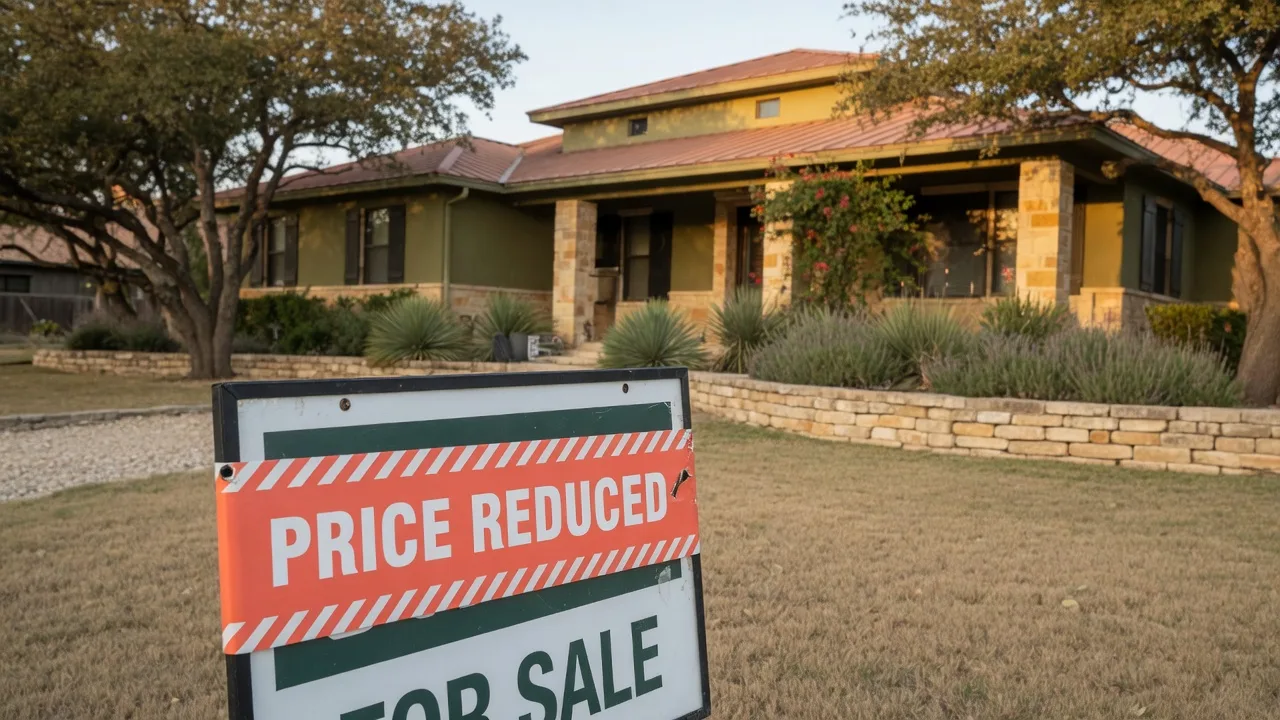
Overpricing is the most psychologically understandable and financially damaging delay in estate home sales. The family remembers the home at its best — the holidays, the gardens, the renovations that were planned but never completed. Those memories are valuable to the family, but they are not the same as a buyer's assessment of the property's current market position. When a home is priced above what the market will bear, the consequences are predictable, measurable, and entirely avoidable.
The mechanism is straightforward. According to NAR's May 2026 existing-home sales data, the national median time on market was 29 days, down from 32 days the prior month and up from 27 days one year earlier [9]. National data is only context; local days on market in Bexar, Kendall, Comal, Bandera, and surrounding Hill Country submarkets can differ materially by price point, condition, school district, inventory, and buyer demand. In many Hill Country communities, well-priced homes in good condition sell faster than the national median — while overpriced or deferred-maintenance properties can linger for months. The key insight holds regardless of the specific number: properties that are priced correctly from the start typically receive the strongest buyer interest in the first two to three weeks on market — the period when the listing is new, featured on search portals, and generating the most online views and showing requests. An overpriced home misses that window entirely. Buyers' agents run comparative market analyses, see that the home is priced above comparable sales, and steer their clients elsewhere.
The Overpricing Cascade: Days on Market, Price Reductions, and Carrying Costs
A $400,000 Hill Country home listed at $448,000 (12% above market) — cumulative financial impact
First price reduction: $448K → $430K
Buyer interest is lukewarm. Few showings. Agent recommends further adjustment.
Second reduction: $430K → $415K
Home is now "stale." Buyers perceive problems. Showings drop further.
Third reduction: $415K → $400K (at market)
Now finally at market price — but with 90+ DOM stigma and accumulated costs.
Sale closes at ~$390K–$395K (below market)
After 4 months of carrying costs and three reductions, the estate nets less than it would have at $400K from day one.
Net difference from overpricing vs. correct pricing from day one:
~$25,440 in carrying costs + $5,000–$10,000 in price concessions = $30,000–$35,000 in lost estate value
The pattern is common across markets, though the exact numbers vary by property type, price point, condition, inventory, and buyer demand. Homes that start materially above defensible market value often require price reductions before generating serious buyer interest. Each reduction may help reposition the property, but it does not erase buyer perception, accumulated days on market, or the carrying costs incurred while the listing sat overpriced.
In practice, the initial list price sets the tone for the entire marketing period. A price close to defensible market value attracts serious buyers quickly, while an aspirational price often leads to weak showings, price reductions, longer carrying costs, and a stale listing.
The challenge for estate executors is that pricing decisions are often driven by family dynamics rather than market data. One heir insists the home is worth more than the comparable sales support. Another remembers a neighbor's sale price from three years ago. A third wants to price high "just in case." A qualified comparative market analysis — based on recent closed sales, current competition, and the property's actual condition — should be the starting point for every pricing decision. When the estate's priority is net proceeds rather than aspirational pricing, accurate pricing from day one is usually the stronger strategy.
Delay #5: Choosing the Wrong Type of Sale

Not every estate home sale should follow the same path. The property's condition, the estate's financial position, the local market, and the family's timeline all influence which sale method will produce the best outcome. The mistake is not in choosing any particular method — it is in choosing one without understanding the tradeoffs, or defaulting to a method that does not fit the estate's actual circumstances.
In Texas, estate homes are most commonly sold through one of three approaches: a traditional MLS listing with a licensed agent, a live or online auction, or an as-is cash sale to an investor or buying company. Each approach has distinct advantages and limitations, and the right choice depends on facts that vary from property to property. Families that understand these differences before committing to a strategy tend to achieve better outcomes than those that stumble into one approach by default.
Sale Type Comparison for Estate Homes
How the three primary sale methods compare for a $400,000 estate home in the Texas Hill Country.
Traditional MLS Listing
- Typical timeline: 60 to 120 days, including marketing and closing.
- Expected sale price: 95% to 105% of market value, depending on condition.
- Preparation required: Cleaning, repairs, staging, photography, and disclosures.
- Buyer pool: Broadest — retail buyers, investors, and relocation buyers.
- Deal certainty: Moderate — buyer financing contingencies, inspection, and appraisal issues may apply.
- Carrying-cost exposure: Higher because of the longer marketing and closing period.
- Best suited for: Properties in good-to-fair condition where maximizing price is the priority and the estate can absorb the marketing timeline.
Auction
- Typical timeline: 30 to 60 days, including auction and closing.
- Expected sale price: 80% to 100% of market value; competitive bidding can surprise.
- Preparation required: Minimal to moderate; the property may be shown as-is or lightly prepared.
- Buyer pool: Investors, flippers, and some retail buyers comfortable with the auction format.
- Deal certainty: Higher because the winning bidder typically commits with a non-refundable deposit.
- Carrying-cost exposure: Lower because the timeline is compressed.
- Best suited for: Properties with unique characteristics, investor appeal, or situations where speed and certainty matter more than top-of-market pricing.
As-Is Cash Sale
- Typical timeline: 7 to 30 days from offer to close.
- Expected sale price: 65% to 85% of market value.
- Preparation required: None; the property is sold strictly as-is.
- Buyer pool: Narrowest — primarily investors and buying companies.
- Deal certainty: Highest because there is no financing contingency.
- Carrying-cost exposure: Lowest because this is usually the fastest closing path.
- Best suited for: Properties needing significant repair, estates under financial pressure, or situations where speed and certainty are the overriding priority.
Price ranges are illustrative and vary significantly by local market, property condition, and market conditions. Broker compensation is negotiable and not set by law.
The most common mismatch is an estate that lists the property on the open market when its condition, timeline, or financial position would have been better served by an alternative approach — and vice versa. A property in excellent condition with no urgency can typically achieve the highest price through traditional marketing. A property that needs $50,000 in repairs, with an estate that has no cash reserves and mounting creditor pressure, may be better served by an as-is cash sale, even at a lower price, because the net proceeds after avoiding months of carrying costs, repair expenses, and deal-fallthrough risk may actually be comparable.
The key is to evaluate the options based on net proceeds — not just gross sale price. A $400,000 traditional sale that takes 120 days and requires $15,000 in preparation, $8,500 in carrying costs, and an assumed $24,000 in total brokerage compensation produces a different net than a $330,000 as-is cash sale that closes in 14 days with no preparation costs and lower carrying-cost exposure. Brokerage compensation is negotiable and not set by law; this example is only a net-proceeds illustration.
Families should be cautious about companies that pressure them into quick cash sales without exploring alternatives. A reputable buyer or buying company will present their offer transparently, explain the tradeoffs, and allow the executor time to consider other options. If the estate's attorney and real estate professional agree that a cash sale is the best path, that is a different situation than a family being pressured into one before they understand their alternatives.
Date-of-Death Value and Tax Basis Should Not Be Ignored
Sale timing is not only a real estate decision. Inherited property may also involve tax-basis issues.
In general, the basis of inherited property is the fair market value of the property at the date of the decedent's death, subject to exceptions and special rules.[14] That date-of-death value can matter when heirs later sell the property.
A prompt sale near the date-of-death value may produce little or no federal capital gain, but families should not assume that result automatically applies. The outcome can be affected by the final sale price, selling costs, post-death appreciation or depreciation, improvements, community-property issues, alternate valuation rules, prior ownership structure, and the heirs' specific tax situations.
The practical point is simple: heirs and fiduciaries should not guess. Before assuming the tax consequences of selling, waiting, repairing, or distributing an inherited home, the estate should consult a CPA or tax professional familiar with inherited real estate.
When Waiting May Be the Right Decision
The point is not that every estate home should be sold immediately. Speed helps only when the estate has legal authority, clear direction, and a realistic sale plan.
In some situations, waiting is not only reasonable — it may be necessary.
Delay may be justified when:
- No executor, administrator, trustee, or authorized seller has clear legal authority yet.
- Title is clouded or the title company has not confirmed what it will require.
- A surviving spouse, minor child, heir, beneficiary, creditor, or lienholder has rights that must be addressed first.
- The family is in active disagreement and needs legal guidance, mediation, or court direction.
- Repairs are limited, targeted, and likely to produce a meaningful return.
- Market timing, seasonality, or local inventory conditions make a short delay financially rational.
- The estate attorney, CPA, or title company recommends resolving a legal, tax, or documentation issue before listing.
The problem is not thoughtful delay. The problem is passive delay.
A few weeks spent resolving title, confirming authority, securing the property, reviewing insurance, or preparing the home properly can protect the estate. Months of indecision, unclear responsibility, deferred maintenance, and unrealistic pricing usually do the opposite.
The better question is not simply, "How fast can we sell?"
The better question is, "What needs to be resolved before the estate can sell safely, legally, and for the best realistic net result?"
Frequently Asked Questions
How long should I wait after a loved one passes before taking action on the home?
There is no single right answer, but practical steps like securing the property, confirming insurance, and consulting with an estate attorney should happen within the first two to four weeks. These early actions cost very little and prevent the compounding costs of inaction. The actual decision about when to list or sell can come later — what matters early is protecting the asset and establishing a timeline.
What is the average monthly cost of holding a vacant estate home in Texas?
For a typical Hill Country home valued around $400,000, combined monthly carrying costs — property taxes, insurance, maintenance, utilities, and HOA dues — generally range from $1,800 to $2,500. Costs vary significantly based on the county tax rate, the property's insurance requirements, whether an HOA is involved, and the level of maintenance needed to prevent deterioration. These costs accumulate regardless of whether anyone is living in or actively managing the property.
Can one heir prevent the others from selling the home?
In many cases, one heir cannot permanently block a sale if a duly appointed executor, administrator, trustee, or other authorized seller has legal authority to sell the property. But the answer depends on title, the will, the type of administration, court orders, surviving-spouse rights, creditor issues, and whether the property has already passed to heirs or beneficiaries as co-owners. A single heir may not be able to stop the sale forever, but they can create delay by challenging authority, objecting in probate court, refusing to sign documents when their signature is required, or forcing the family toward mediation or partition. Practically speaking, title-company requirements depend on the authority path. If a properly appointed independent executor has clear power of sale, unanimous heir signatures may not be required. In heirship, co-owner, non-probate transfer, unclear-title, or disputed situations, however, a title company may require additional signatures, affidavits, releases, court orders, or other documentation before it will insure the transaction. The safe approach is to confirm title-company requirements early rather than assume either unanimous consent or unilateral authority.
Is it worth paying for a pre-listing inspection on an estate home?
In most situations, yes. A pre-listing inspection typically costs $300 to $600 and can identify issues that, if left undiscovered, become negotiation leverage for buyers — or deal-breakers that kill the sale entirely. When an estate knows about a problem in advance, it can choose to repair, price accordingly, or disclose transparently. That control is worth far more than the cost of the inspection.
How does overpricing affect the final sale price of an estate home?
Homes listed above market value typically experience reduced buyer interest, extended time on market, and eventual price reductions that bring them to or below where they should have been priced initially. The extended marketing period adds carrying costs, and the property's "stale" status on search portals reduces subsequent buyer interest. The final price depends on market conditions, property condition, buyer demand, and how well the listing is positioned relative to comparable homes.
When does an as-is cash sale make more sense than a traditional listing?
A cash sale may be appropriate when the property needs significant repairs the estate cannot fund, when the estate faces financial pressure from creditors or tax deadlines, when the property is in an area with limited buyer demand, or when the family's priority is speed and certainty over maximum price. The best way to evaluate this is to estimate net proceeds under each scenario — accounting for carrying costs, preparation costs, and deal-closing probability — rather than comparing gross sale prices alone.
What should families do first when they disagree about selling the home?
Start by establishing communication ground rules and agreeing on a decision-making process. If the family cannot resolve the disagreement informally, mediation with a qualified neutral third party — often a probate attorney or real estate mediator — is the most cost-effective next step. Mediation typically costs a fraction of litigation and preserves family relationships that court battles often damage. Documenting all decisions in writing helps prevent misunderstandings and provides a clear trail if further resolution is needed.
What is the difference between independent and dependent administration in Texas, and how does it affect the sale?
In Texas, independent administration is common, especially when the will authorizes it or the court approves it. Under independent administration, an executor or administrator may have broad authority to manage, maintain, and sell estate property without seeking court approval for each routine transaction, but the will, court orders, title-company requirements, creditor issues, and any limits on power of sale still matter.
Dependent administration works differently. In a dependent administration, the court retains closer oversight over major decisions, and the executor or administrator may need court approval before selling estate property. This can add time because the sale may require notice, court review, and an opportunity for interested parties to object.
The distinction matters because it affects how quickly an estate can sell a home and what documentation the title company will require. Families should confirm early whether the estate is proceeding independently or dependently, and whether any heir, beneficiary, creditor, or title issue could slow the sale.
Sources
- Texas Estates Code — §256.003, four-year deadline to admit a will to probate; §402.052, independent administration and executor/administrator power of sale; Chapter 257 (§257.001), muniment of title; Chapter 356, sale of estate property in administration; Chapter 205, small estate affidavits; Chapter 114, transfer-on-death deeds; and related provisions governing dependent administration, Letters Testamentary, Letters of Administration, and estate proceedings.
- Texas Comptroller of Public Accounts — Property Tax Rates and Levies; combined tax rates by county, school district, and special taxing districts. comptroller.texas.gov
- Texas Department of Insurance — Home Insurance Guide; vacancy and homeowner policy coverage limitations, unoccupied property provisions. tdi.texas.gov; Texas Real Estate Research Center — "A Tale of Two Homes" on vacant-property insurance risks and estate-home considerations. trerc.tamu.edu
- Texas Comptroller of Public Accounts / County Appraisal Districts — Property tax exemptions including homestead, over-65, disabled-person, surviving-spouse, and heir-property provisions. comptroller.texas.gov
- Texas Property Code §23.001 and Chapter 23A — Right to compel partition of co-owned property; heirs' property provisions for partition sales involving inherited real estate. statutes.capitol.texas.gov
- HomeAdvisor — Home inspection cost data; national average range and Texas market pricing for standard home inspections. homeadvisor.com
- Texas Real Estate Research Center — "Option Period Basics"; buyer's unrestricted right to terminate during the option period. trerc.tamu.edu
- Texas Property Code §5.008 — Seller's Disclosure Notice; exemptions for transfers by a fiduciary in the course of administering a decedent's estate, guardianship, conservatorship, or trust. statutes.capitol.texas.gov
- National Association of REALTORS — Existing-Home Sales, May 2026; median time on market and housing market activity. nar.realtor
- Texas State Law Library — "What Is a Lady Bird Deed?"; enhanced life estate deeds, probate avoidance, and Texas title considerations for Lady Bird deeds. sll.texas.gov
- Texas State Law Library — Informal Methods; affidavits of heirship, transfer of property after death, and simplified title-transfer options outside full probate. sll.texas.gov
- Texas State Law Library — Transfer on Death Deeds (TODDs); Texas Estates Code Chapter 114 provisions for transferring real property at death without probate. sll.texas.gov; Texas Estates Code Chapter 114. statutes.capitol.texas.gov
- Texas Estates Code — Small Estate Affidavits; Texas Estates Code Chapter 205 provisions for transferring limited estate property, including homestead restrictions for real property. statutes.capitol.texas.gov
- IRS Publication 551 — Basis of Assets; fair market value at date of death as the general tax basis for inherited property, with exceptions and special rules. irs.gov
- Texas State Law Library — Nonprobate Property; revocable living trusts, joint tenancy with right of survivorship, and other nonprobate transfer methods that allow property to pass outside probate. guides.sll.texas.gov
- Internal Revenue Code §1014 — Basis of property acquired from a decedent; statutory basis rule for inherited property. law.cornell.edu

About Hill Country Homesteads Group
Brokered by Keller Williams Boerne
Hill Country Homesteads Group has extensive experience helping families across the Texas Hill Country navigate estate home sales — from first conversations through closing. With a Certified Probate Expert designation and deep knowledge of the probate courts in Bexar, Kendall, Comal, Medina, and Bandera Counties, the team provides practical, data-driven guidance for executors, administrators, trustees, and heirs managing estate real estate. For a confidential consultation about a specific property or situation, contact Bill Ross at (210) 294-9190 or Bill@HillCountryHomesteads.com.
Navigating an Estate Home Sale?
Every estate situation is unique. Getting the right guidance early can help avoid costly delays and protect the estate's value for the people who depend on it.
Related Articles
Carrying Costs
The Hidden Carrying Costs of Keeping an Estate Home Too Long
Every month an estate home sits unsold quietly costs the estate thousands. A data-driven look at where the money goes.
Executor Guidance
7 Mistakes Executors Make With a Probate House
Common errors that cost estates time, money, and equity — and practical steps to avoid them.