
When someone is named executor, administrator, or other personal representative of an estate in Texas, they are usually not thinking about real estate strategy. They are thinking about grief, paperwork, and a long list of responsibilities nobody prepared them for. The family home — often one of the estate's largest assets — becomes the centerpiece of a process that blends legal obligation, financial management, and family coordination.
The real estate decisions an executor, administrator, or other personal representative makes during a probate house sale in Texas carry real consequences. A rushed sale can leave tens of thousands of dollars below the property's market value. A delayed sale can drain the estate through carrying costs. And a series of small procedural mistakes — the kind that seem harmless in the moment — can snowball into legal exposure, family conflict, and financial loss. Out-of-state executors face additional challenges — our guide covers the most common pitfalls. Having the Texas executor checklist as a reference can help you spot pitfalls before they become costly.
This article walks through the ten most consequential real estate mistakes executors, administrators, and other personal representatives make during probate in Texas. For each one, you will see what the mistake looks like in practice, why it happens, what it may cost, and how to reduce the risk.
This article provides general educational information about Texas probate real estate. It is not legal, tax, appraisal, insurance, accounting, or investment advice and does not create an attorney-client, broker-client, fiduciary, or other professional relationship. Texas probate procedures and sale authority depend on the will, court orders, type of administration, title, creditor issues, family circumstances, and other facts. Consult qualified Texas probate counsel and the appropriate tax, appraisal, insurance, title, and real estate professionals before acting.
A note about the financial examples in this article. The figures below are hypothetical illustrations only. They are not an appraisal, contractor estimate, insurance quote, tax calculation, or prediction of the result for a particular property. Actual results depend on property condition, location, appraisal-district records, insurance status, financing conditions, market absorption, contractor pricing, commissions, concessions, closing costs, and the time required to complete the administration.
Mistake 1: Acting Before Authority, Title, and Insurance Are Confirmed
One of the first risks may arise before the house is ever listed. After a death, keys may be circulating among relatives, the property may become vacant, mail may accumulate, utilities may be interrupted, and the existing homeowner's policy may no longer operate exactly as the family assumes.
This mistake is not about speed. Speed, when paired with accurate information, can protect estate value. The problem is speed without understanding — listing a home before authority, insurance, title, and a documented strategy are in place. An executor who lists a property without confirming Letters Testamentary or Letters of Administration [1], without reviewing the title chain [13], or without verifying that insurance remains effective [8] is building on a foundation that may collapse during the transaction.

Failing to Secure the Property and Confirm Insurance Immediately
As soon as lawful access is established, the responsible party should photograph the property, inventory keys and access devices, rekey or secure exterior doors when appropriate, protect vehicles and valuables, arrange lawn and pool service, manage mail, maintain safe interior temperatures, and document who enters the home. Vacant properties deteriorate faster than families think. Small maintenance neglect can quickly become buyer-facing condition stigma.
The insurance carrier or agent should be notified promptly of the owner's death and any vacancy or change in occupancy. Ask for written confirmation of the named insured, policy status, vacancy or unoccupancy restrictions, liability coverage, water-damage protection, theft and vandalism coverage, and any required endorsement or replacement policy. Do not assume that paying the premium means every loss remains covered [8]. Many homeowner policies limit or exclude certain losses after the home has been vacant for the number of days specified in the policy. The Texas Department of Insurance notes that most companies stop coverage if a house is vacant for 60 days or more, though liability coverage may be treated differently [8].
Immediate Checklist
Personal Property and Access Protocol
Before relatives, contractors, estate-sale companies, or haulers enter the home, create a dated photographic or video record of rooms, fixtures, valuables, documents, and personal property. Clarify who may remove items and distinguish personal property from fixtures that will convey with the real estate. Keep receipts for storage, disposal, donation, sale, and contractor work.
An executor should not allow an informal cleanout to destroy records, remove disputed property, create insurance problems, or leave the home materially different from what later buyers are told they are purchasing.
Title and Lien Precheck — Before Listing
Before the property goes active, send the deed, death certificate, will, appointment order, Letters Testamentary or Letters of Administration, and any relevant marital or trust documents to the title company for a preliminary review. Ask the title company and estate attorney to identify:
A title company can identify underwriting and closing requirements, but it does not replace the estate attorney's legal advice [13]. Discovering a title problem after accepting an offer can cause extensions, failed financing, or termination.
Understanding Texas Claim Priorities at Closing
Under Texas Estates Code § 355.102, estate sale proceeds must be prioritized in this strict order: 1) Funeral/last illness ($15k limit each), 2) Administration expenses/court fees, 3) Secured debts (mortgages/liens), 4) Taxes, 5) Child support arrears, and 6) General unsecured creditors [1].
Do not impose an automatic waiting period. Begin the authority, title, insurance, valuation, condition, and document-review work immediately. List the property when the personal representative's authority is confirmed and the home is genuinely ready for the market — not merely because a certain number of days has passed. The problem is not speed itself; it is proceeding without authority, valuation, insurance review, title work, or a documented strategy.
Mistake 2: Pricing Without a Defensible Valuation
Pricing an inherited home correctly requires more than gut instinct or a quick glance at online estimates. Understanding local property tax obligations is critical — see our Boerne property tax guide. In Texas, a comparative market analysis (CMA) from a licensed real estate agent examines recent sales of similar properties in the same neighborhood and price range to establish a defensible market-value range [11]. A formal appraisal, conducted by a licensed appraiser, goes further with an interior inspection and detailed valuation methodology [10].
Executors skip this step for several reasons. Some assume online price estimates are accurate enough to guide pricing. Others do not realize that a CMA or appraisal is available and simply never ask for one. The result is a home that is either overpriced — leading to extended time on market, stigma, and eventual price reductions — or underpriced, leaving estate net proceeds below the property's true market position [2].
CMA and BPO Disclaimer: Texas TREC Rule § 535.17 and Texas Occupations Code § 1101.0055 mandate that CMAs and BPOs explicitly state they are not appraisals compliant with USPAP standards.
Automated Valuation Models — Useful Starting Points, Not Final Answers
Automated valuation models can be useful starting points, but accuracy varies substantially by property type, data quality, neighborhood turnover, condition, acreage, improvements, and whether the property is currently listed [11]. A published median error rate for an AVM does not predict the likely error for a particular estate property, and an AVM is not an appraisal.
Illustrative Pricing Impact
Hypothetical comparison: a rushed sale versus an informed, prepared sale
Rushed Sale (No Valuation, No Preparation)
Illustrative example only. The $38,500 figure is before any difference in commissions, seller concessions, carrying costs, repair credits, taxes, or other closing expenses. Actual results depend on property condition, location, appraisal-district records, insurance status, financing conditions, market absorption, contractor pricing, commissions, concessions, closing costs, and the time required to complete the administration.
Pricing materially below a defensible value range can reduce estate net proceeds. However, a deliberately competitive list price may also increase showing activity and multiple-offer potential. The personal representative should compare expected net proceeds, market absorption, carrying costs, appraisal risk, and offer terms rather than treating every below-market list price as automatically harmful.
Listing Value vs. Date-of-Death Valuation
The Capital Gains Tax-Basis Reset
For federal income tax purposes, inherited homes generally receive a "stepped-up" basis equal to the fair market value of the property exactly on the decedent's date of death (IRS Publication 551).
- • The Valuation Flaw: Executors often rely on the county appraisal district's (CAD) property assessment as their tax-basis baseline. In Texas, CAD values are notoriously unaligned with true fair market value.
- • The Consequence: If you sell the home six months after the date of death for an amount significantly higher than an artificially low CAD value, the IRS may look at that differential as a taxable capital gain. A formal, retrospective appraisal pinning down the precise date-of-death value is the only defensible shield against this exposure.
Ask the estate's CPA or attorney whether a retrospective appraisal is appropriate. Preserve the appraisal, settlement statement, repair invoices, capital-improvement records, and selling-expense documentation for the estate and beneficiaries [10].
How to avoid this mistake
- Request a CMA from a probate-experienced agent early. A good CMA uses recent comparable sales within a defined radius, adjusts for condition and features, and produces a defensible price range [2].
- Consider a formal appraisal when the estate's stakes are high. If the estate has multiple beneficiaries, potential disputes, or the property is unusual, a licensed appraisal provides an independent, documented valuation that can help resolve disagreements [10].
- Document the pricing rationale. Record the data supporting the list price, the condition assessment, and any professional guidance obtained. This protects the representative if a beneficiary later questions the outcome [1].
Mistake 3: Treating the Sale as a Family Decision Instead of a Fiduciary Decision
A Texas personal representative must protect and manage estate property with the care required by the Estates Code and the governing court orders [3][4]. A decision that is careless, conflicted, unauthorized, or inadequately documented may expose the representative to objections, surcharge claims, removal proceedings, or other remedies depending on the facts. A disappointing sale result, by itself, does not automatically prove a breach.
Fiduciary duty requires the personal representative to act with loyalty, prudence, and good faith. It means documenting decisions, obtaining professional input when the stakes are high, and being able to explain why every major choice was made. A personal representative who prices a home based on what they feel it is worth, rather than on market data, may be exposed to objections — even if they are acting with the best of intentions.

Related-Party Transactions and Conflicts
Exercise particular caution when the proposed buyer is the personal representative, an heir, a relative, a business associate, or an entity controlled by any of them. A related-party transaction can create allegations that the property was steered away from the open market or sold below value.
Before proceeding, obtain independent valuation evidence, disclose the conflict to estate counsel, document the marketing and decision process, and determine whether beneficiary consent or court approval is required. Do not rely on an informal family understanding as a substitute for legal review and a defensible record.
Whether a related-party sale requires court approval depends on the type of administration, governing documents, and facts — it is not a blanket rule for every estate.
Why this happens
Most personal representatives have never served in this role before and do not realize the legal weight attached to it. They may think of themselves as "just selling Mom's house" rather than acting as a court-appointed fiduciary managing a legal obligation. Some also conflate their role with that of an heir — they feel personally entitled to make decisions about the property because they stand to inherit a share of it, not understanding that their duty is to the estate as a whole [3].
How to avoid this mistake
- Make decisions based on documented evidence, not personal feelings. Pricing should be supported by a CMA or appraisal. Repair decisions should be based on cost-benefit analysis. Timeline decisions should account for carrying costs and market conditions [2].
- Establish communication rules at the outset. Set expectations with beneficiaries early about how decisions will be made, what information will be shared, and who has authority to act [1].
- Keep a clear decision trail. Document why each significant decision was made, what professional advice was obtained, and what data supported the choice [1].
Mistake 4: Spending on Repairs Without a Net-Proceeds Analysis
The correct scope of work is property-specific. Prioritize conditions affecting safety, active water intrusion, insurability, lender eligibility, structural integrity, sanitation, security, and the ability to show the home responsibly. Cosmetic projects should be approved only when the expected increase in net proceeds or marketability reasonably exceeds their cost, delay, and execution risk.
Before spending estate funds, confirm legal authority, obtain written bids, evaluate available cash, preserve invoices, and document why the work was approved [1]. A buyer credit, price adjustment, repair, replacement, or as-is sale can each be rational depending on market conditions and the estate's constraints.
The goal is not to renovate the home. It is to remove conditions that narrow the buyer pool or create negotiating leverage, so the property can compete on its actual merits. Over-improving — investing more in repairs than the market will return — is a common trap when the work is driven by emotion rather than analysis.
How to avoid this mistake
- Walk the property with a real estate agent before listing. An agent experienced with estate sales can identify the items that will have the biggest impact on buyer perception and sale price — and distinguish between cosmetic issues and serious problems [2].
- Separate safety and financeability from cosmetics. A broken HVAC system or a roof in disrepair can make the home difficult to finance through conventional lending. These issues should be addressed or priced accordingly [2].
- Obtain current written bids. Do not rely on general cost ranges. Get actual contractor bids for the specific property before approving any work.
Mistake 5: Misunderstanding Independent and Dependent Administration

Texas probate law is different from most other states, and the distinctions matter. The two primary forms of administration — independent and dependent — give the personal representative very different levels of authority, speed, and court involvement [1][2].
Independent administration may be authorized by the will or created by court order when the statutory requirements and required agreements are satisfied [15]. A will that is silent — and even an intestate estate — does not automatically require dependent administration. Under independent administration, the personal representative can manage, maintain, and sell estate property without ongoing court supervision [15]. The representative generally does not need a judge's approval for routine decisions like hiring a contractor, paying the property tax bill, or listing the home for sale [16].
Dependent administration, by contrast, requires court oversight for many significant decisions — including the sale of real property. In a dependent administration, selling estate real property generally requires formal court involvement under Texas Estates Code Chapter 356: an application to sell, an order of sale, a report of sale, and a court order approving the sale [13]. The exact procedure can vary by county, court practice, sale method, objections, and the facts of the estate.
The mistake is not just failing to understand the difference. It is acting before understanding which form applies. A personal representative who lists a property, accepts an offer, or signs a contract without knowing whether court approval is required may create a deal that cannot close — or may expose the estate to challenges [1].
Independent vs. Dependent Administration
Independent Administration
- Representative acts without court approval for most decisions
- Property can generally be listed and sold without a court order for each transaction
- May be authorized by the will or created by court order under statutory requirements
- Generally faster timeline, lower legal costs
- No public court record of asset sale prices
Dependent Administration
- Many decisions require court approval
- Real property sales generally require application to sell, order of sale, report of sale, and court approval
- May apply when the will does not authorize independent administration, disputes exist, or the court determines supervision is necessary
- Generally slower timeline, higher legal costs, added court filings
- Public court record of the final gross sale price
How to avoid this mistake
- Consult Texas probate counsel early. Understanding the form of administration, the court requirements, and the personal representative's authority should be among the first steps [1].
- Confirm the type of administration in writing. Ask the attorney to explain what the representative can and cannot do without court approval.
- Get title company involvement early. A title company experienced with probate transactions can identify what documents are needed and flag potential title issues before the home is listed [13].
Mistake 5.1: The "Power of Sale" Trap in Independent Administrations
Independent executors often mistake their authority, as selling real estate without a will's specific "Power of Sale" clause requires either court authorization or formal consent from all beneficiaries.
How to avoid this mistake
- Verify the Power of Sale: Have counsel check the will for an independent power of sale.
- Secure Beneficiary Joinder Early: If the power is missing and the estate is solvent, obtain written consents from all heirs before contracting.
Mistake 6: Ignoring Carrying Costs and Property Deterioration
Every month an estate home sits unsold costs the estate real money. These costs do not pause because the estate is in probate. They accumulate month after month, reducing the net proceeds that eventually flow to the beneficiaries [6].
Common carrying costs include mortgage or home-equity payments (if any), property taxes based on the appraisal district's current exemption status, homeowner's insurance, HOA dues, utilities, lawn and pest service, pool maintenance, security, and a reserve for routine maintenance and unexpected repairs.
Cumulative Carrying Cost Over Time
Hypothetical illustration at an average of $1,800 per month
Illustrative estimate only. Actual costs depend on the property, county tax rates, insurance status, HOA dues, and market conditions. Carrying costs are in addition to any appreciation or depreciation in property value during the holding period.
Property Taxes and Homestead Exemptions
Do not assume that a residence exemption automatically disappears or automatically continues after the owner's death. Property taxes are based on the appraisal district's current exemption status. Eligibility for residence-homestead exemptions depends on ownership, occupancy, surviving-spouse status, age, disability, and other facts [6].
A qualifying surviving spouse or other qualifying owner may retain or obtain certain residence-homestead exemptions. Verify the account directly with the county appraisal district and obtain probate or tax advice when ownership is changing [6].
The Medicaid Estate Recovery Program (MERP) Claim Trap
If the deceased received long-term care Medicaid benefits (such as nursing home care) on or after the age of 55, the State of Texas may file a post-death claim against the estate home under the Medicaid Estate Recovery Program (MERP).
- • The Risk: A MERP claim operates as an estate debt. Selling the property and distributing the net cash proceeds to beneficiaries before resolving an open MERP claim can result in personal fiduciary liability for the executor.
- • The Strategy: Before listing the property, have your probate attorney submit a MERP verification request to confirm if a claim exists or if the estate qualifies for an exemption (e.g., a surviving spouse or a disabled child occupying the home).
How to avoid this mistake
- Build a monthly burn-rate estimate in the first 30 days. Add up actual mortgage or equity payments, property taxes (based on current exemption status), insurance, utilities, lawn care, HOA dues, and a maintenance reserve. Multiply by 12 to see the annual carrying cost [6].
- Factor carrying costs into the pricing and timeline strategy. If the estate can sell correctly priced and prepared in a shorter window versus overpriced in a longer window, the carrying-cost savings alone may justify the preparation investment [2].
- Update the calculation whenever the policy, appraisal-district account, or loan status changes.
Mistake 7: Failing to Separate and Document Estate Money
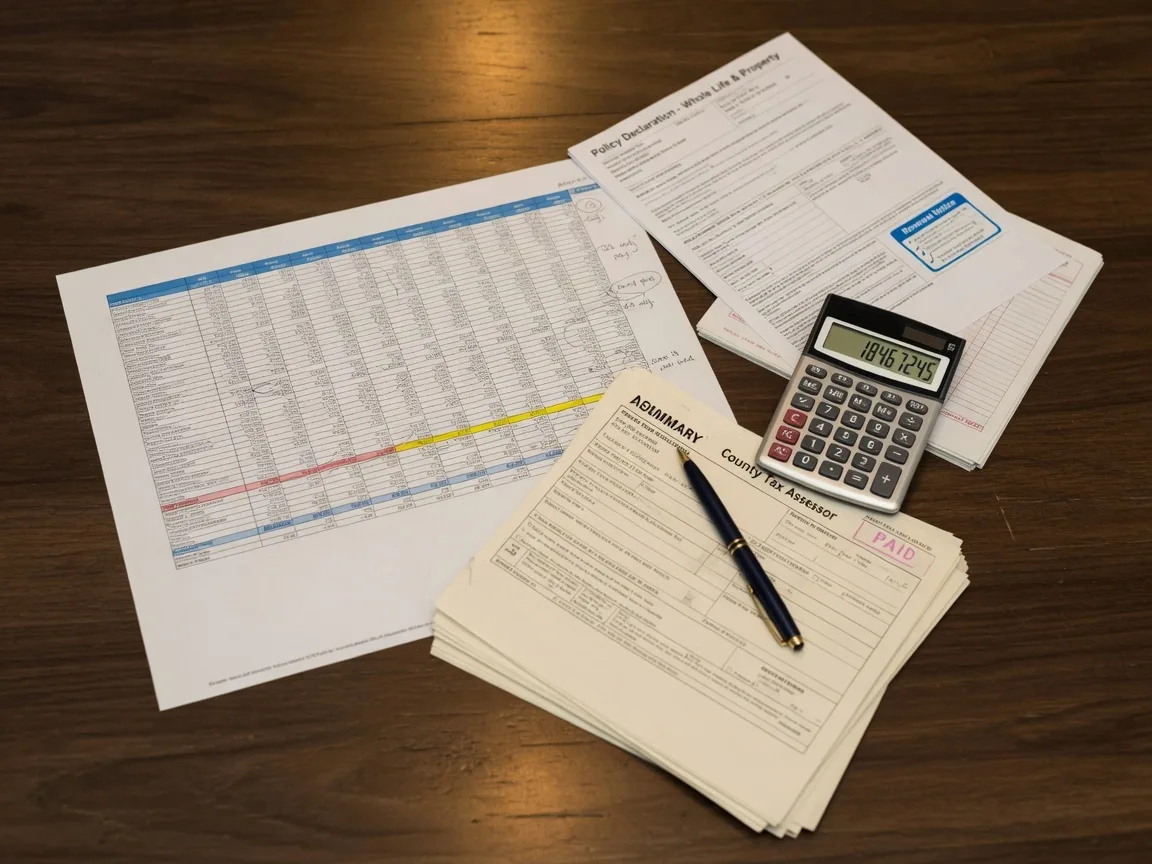
Separating estate funds from personal funds is one of the most fundamental obligations of estate administration. When an executor, administrator, or other personal representative uses their personal bank account to pay estate expenses, or uses estate funds to pay personal bills, or commingles the two in any way, they create a financial record that is extremely difficult to untangle and that may result in personal liability [3][4].
Do not casually pay estate expenses from a personal account or treat undocumented advances as informal loans. When an urgent expense must be advanced personally, retain the invoice and proof of payment, record the amount as a potential reimbursement due from the estate, and follow the attorney's and accountant's procedures before reimbursing yourself.
What Commingling Looks Like in Practice
How to avoid this mistake
- After qualification, obtain the estate EIN and the bank's required appointment documents, then open an estate account promptly. All estate income (including sale proceeds) should flow into this account, and all estate expenses should be paid from it [1].
- Keep receipts for every estate transaction. Document what was paid, when, to whom, and why [1].
- If a personal advance is necessary, follow counsel's and the estate accountant's reimbursement procedure. Undocumented transfers between personal and estate funds create avoidable accounting and fiduciary problems.
Mistake 8: Mishandling Condition Information and Buyer Disclosures
A fiduciary selling property in the administration of a decedent's estate may fall within an exemption from the statutory Seller's Disclosure Notice in Texas Property Code §5.008 [4]. That exemption removes the statutory form requirement; it does not authorize affirmative misrepresentation, active concealment, or misleading partial statements.
Separate duties may apply to the brokers and license holders involved. The personal representative should preserve prior reports and repair records, identify known condition issues to estate counsel and the listing broker, and follow written legal guidance regarding what should be communicated to prospective buyers.
When the legal obligation is uncertain, document the issue and obtain written guidance from estate counsel and the listing broker rather than guessing.
Practical Steps
- Preserve prior reports and repair records. Gather any past inspection reports, repair invoices, insurance claims, or maintenance records [1].
- Identify known condition issues to estate counsel and the listing broker. Do not wait for the buyer's inspection to surface problems that the estate already knows about [4].
- Follow written legal guidance regarding what to communicate to buyers. Do not assume the exemption from the statutory form eliminates all duties.
Mistake 8.1: Ignoring Surviving Spouse Homestead Occupancy Rights
Under Texas Constitution Art. XVI, § 52, a surviving spouse has a legal right to occupy the marital homestead, limiting an executor's ability to sell the property without the spouse's waiver.
How to avoid this mistake
- Identify Occupancy Status: Determine if a surviving spouse intends to exercise homestead rights.
- Execute Proper Releases: If the spouse moves, ensure a formal, legal waiver of occupancy is signed by counsel.
Mistake 9: Delaying Probate and Tax Advice
Consult Texas probate counsel as soon as estate administration appears necessary — ordinarily before filing the probate application and before appointment, listing, contracting, distributing property, or spending material estate funds [1]. The attorney commonly helps obtain the appointment and Letters Testamentary or Letters of Administration, so waiting until afterward is procedurally backward.
The personal representative should also involve a CPA or tax adviser early. Inherited property generally takes a basis tied to fair market value at the decedent's date of death [10]. The estate may have income-tax obligations, capital-gains considerations, and reporting requirements that affect the timing and structure of the sale. Delaying tax advice can result in missed elections, incorrect basis calculations, or avoidable tax exposure.
Estate Inventory and Filing Requirements
A Texas personal representative generally must satisfy the estate-inventory requirement within 90 days after qualification unless the court extends the deadline [9]. In a qualifying independent administration, the representative may be able to file an affidavit in lieu of the detailed inventory when the statutory conditions are met (Texas Estates Code §309.056) [9]. The detailed inventory still must be prepared and furnished as required. A will provision or informal beneficiary agreement should not be described as a blanket waiver of the statutory requirement.
Creditor Notice Deadlines
Executors must strictly follow statutory deadlines for creditor notification:
- General Creditors: Publish in local newspaper within 1 month of receiving letters (§ 308.051) [1].
- Secured Creditors: Notify via certified mail within 2 months of receiving letters (§ 308.053) [1].
- Optional Unsecured Notice: Sending optional notice (§ 308.054) restricts claims to 4 months from receipt, reducing liability time [1].
- Known Unsecured Creditors: Send notice via certified mail within 1 month of receiving letters if the executor has actual knowledge of the debt (§ 308.052).
Proceeding Without Counsel
Whether a nonlawyer personal representative may appear without counsel is narrow and fact-specific. Most estates involve legal interests belonging to beneficiaries, creditors, or others. Texas courts may require counsel, and the Texas Supreme Court's decision in Suday v. Suday addressed only a narrow sole-beneficiary situation rather than creating a broad right for all executors to proceed pro se [1].
Mistake 10: Accepting an Offer Without Comparing Net Proceeds and Execution Risk
The highest stated price is not always the strongest offer. Compare expected net proceeds, financing and appraisal risk, option-period length, requested concessions, repair exposure, proof of funds, closing date, sale-of-other-property contingencies, title or probate contingencies, and the buyer's likelihood of performing. Document why the selected offer was reasonably expected to serve the estate better than the alternatives.
In many price bands, the first two to three weeks on market produce the highest buyer attention. But speed of acceptance matters less than the quality and certainty of the offer. An executor who accepts the first offer without comparing it to the property's true market position — or without understanding the buyer's financing, timeline, and contingency structure — may be trading estate net proceeds for the illusion of certainty.
Offer Evaluation Framework
Navigating Probate-Specific Title Contingencies
Executors frequently accept high-priced offers without recognizing conditional language that ties the closing date to the resolution of complex title issues. When reviewing a purchase contract, look for these specific, high-risk contingencies:
- • Heirship Verification Addenda: Language allowing the buyer to back out or extend indefinitely if the title company uncovers an un-notified heir during their abstract search.
- • Open Court-Order Windows: Provisions that fail to penalize the buyer for delays caused by waiting on a signed Order of Sale or Decree of Distribution in dependent administrations.
How to avoid this mistake
- Evaluate every offer on expected net proceeds and execution risk, not headline price alone.
- Document why the selected offer was reasonably expected to serve the estate better than the alternatives. This creates the decision trail the representative needs if the choice is later questioned [1].
- Work with an experienced agent who can compare offer structures and flag terms that create closing risk for probate transactions.
Mistake 10.1: Overlooking Agricultural (Ag) Exemptions and Rollback Taxes
If the estate property is a ranch or larger parcel in the Texas Hill Country utilizing an Agricultural Appraisal (Ag Exemption), a change in use or a failure to file timely paperwork after a transfer can trigger severe financial consequences.
- • The Rollback Risk: Under Texas Tax Code § 23.55, if the land use changes or eligibility is lost, the county can assess "rollback taxes" for the previous three years, plus interest.
- • The Strategy: Executors should immediately consult the county appraisal district to ensure the application remains compliant during the probate period, preventing an unexpected five-figure tax lien at the closing table.
Illustrative Workflow — Not a Statutory Timeline
The following five-phase workflow is a general illustration of how a probate home sale may progress. It is not a statutory timeline, and the sequence and duration vary with the type of administration, title condition, creditor issues, tax matters, beneficiary disputes, and court requirements.
Phase 1: Secure and Protect
Secure the property, confirm insurance, preserve records, and obtain legal advice.
Phase 2: Establish Authority and Review
Establish authority, review the will and court orders, open the estate account, begin notices and inventory work, and send ownership documents to the title company.
Phase 3: Value and Strategy
Obtain the appropriate valuation, inspect condition, verify liens and carrying costs, and approve a documented sale strategy.
Phase 4: Market and Negotiate
Prepare, list, evaluate offers by expected net proceeds and risk, and complete any required court or title steps.
Phase 5: Close and Account
Close, retain the settlement statement and supporting records, account for the proceeds, resolve remaining estate obligations, and distribute only when legally appropriate.
Who Should Be on the Team?
A probate home sale may require several distinct professionals:
No one professional should be presented as replacing the others.
Key Takeaways
Frequently Asked Questions
Can an executor sell a house below market value?
An executor may have authority to accept an offer below an appraised or estimated value, but the decision should be supported by the property's condition, exposure to the market, carrying costs, offer terms, financing risk, and expected net proceeds. A below-value sale to the executor, an heir, a relative, or another related party requires heightened conflict review. Estate counsel should review any transaction that could appear preferential or inadequately marketed.
Does an executor have to complete a Seller's Disclosure Notice?
A fiduciary transfer made in the administration of a decedent's estate may be exempt from the statutory Texas Seller's Disclosure Notice. The exemption does not permit misrepresentation or concealment. The executor should preserve known reports and condition records and obtain guidance from estate counsel and the listing broker about communications to buyers [4].
How much does it cost each month to hold a probate property?
There is no reliable universal monthly figure. Add the property's actual mortgage or home-equity payment, property taxes based on current exemption status, insurance, HOA dues, utilities, lawn and pool service, security, maintenance, and expected deterioration or repair costs. Divide annual expenses by 12 where appropriate and update the calculation whenever the policy, appraisal-district account, or loan status changes [6].
Can an executor be personally liable?
Potentially. Personal exposure depends on the act, authority, resulting loss, available defenses, court findings, and type of administration. Unauthorized distributions, self-dealing, misuse of funds, failure to protect property, or disregard of court requirements can create serious risk [4]. Not every pricing error or delayed sale automatically produces personal liability.
Can the executor use personal money for estate expenses?
An executor should use the estate account whenever possible. If a legitimate urgent expense is advanced personally, the executor should preserve proof, record it accurately, and follow counsel's and the estate accountant's reimbursement procedure. Undocumented transfers between personal and estate funds create avoidable accounting and fiduciary problems [1].
What happens if the house is worth less than the debts?
If the estate is insolvent, do not allow foreclosure without counsel. An executor can work with the probate attorney to execute an estate short sale (Texas Estates Code Chapter 355).
Can I sell the house if the deceased died intestate (without a will)?
Yes, but the process requires extra steps, including an Application to Determine Heirship and appointing an administrator, rather than relying solely on an Affidavit of Heirship.
What happens if an heir refuses to sign the contract when there is no Power of Sale in the will?
If the will lacks a Power of Sale clause and an independent administration is active, all beneficiaries must join in the deed. If a single heir refuses to sign out of spite or disagreement, the executor cannot force the sale through standard real estate channels. The executor must work with their probate attorney to file a partition lawsuit or request that the court convert the file into a court-supervised dependent administration to secure an official Order of Sale.
Can a title company block the sale if there are outstanding municipal code violations?
Yes. Municipal liens (such as un-mowed weed violations, structural safety fines, or utility water liens) are recorded public encumbrances. The title company will flag these during their abstract search. They must be paid off directly from the estate's gross proceeds at the closing table before title can be cleared and transferred to the buyer.
A Personal Note
If you are navigating the sale of an estate home in Texas, I want you to know that the complexity you are feeling is real. These transactions involve legal, financial, and family dimensions that most people have never dealt with before. The fact that you are reading about common mistakes already puts you ahead of where most personal representatives start.
I focus on probate real estate because I believe executors, administrators, and heirs deserve guidance that is specific, practical, and honest — not generic real estate advice applied to a specialized situation. If you are finding this process overwhelming, a conversation about your specific situation may help you identify what to address first.
Sources
- [1] Texas Estates Code — Probate, wills, independent and dependent administration, executor and administrator authority, and estate property management. statutes.capitol.texas.gov
- [2] TexasLawHelp — Probate basics: independent administration, dependent administration, Letters Testamentary, and court requirements. texaslawhelp.org
- [3] Texas Estates Code §351.101 — Care of estate property; fiduciary duties of the personal representative. statutes.capitol.texas.gov
- [4] Texas Property Code §5.008 — Seller's Disclosure Notice; exemptions for certain fiduciary and court-ordered transfers. statutes.capitol.texas.gov
- [5] Texas Estates Code §361.052 — Removal of a personal representative. statutes.capitol.texas.gov
- [6] Texas Comptroller — Property tax rates, homestead exemptions, and appraisal-district guidance. comptroller.texas.gov
- [7] Texas Estates Code Chapter 308 — Notice to creditors: general notice, secured-creditor notice, and permissive notice provisions. statutes.capitol.texas.gov
- [8] Texas Department of Insurance — Home Insurance Guide; vacancy and homeowner-policy coverage limitations. tdi.texas.gov
- [9] Texas Estates Code §309.051 and §309.056 — Estate inventory requirements and affidavit-in-lieu procedure. statutes.capitol.texas.gov
- [10] IRS Publication 551 — Basis of Assets; inherited property basis and date-of-death valuation. irs.gov
- [11] Automated valuation models (AVMs) — accuracy varies by property type, data quality, neighborhood turnover, condition, and listing status. AVMs are not appraisals. investopedia.com
- [12] Texas Real Estate Commission Rule §535.17 — Broker Price Opinion, Comparative Market Analysis, or Sales Price Estimate: required disclaimer language. trec.texas.gov
- [13] Texas Estates Code Chapter 356 — Court-supervised sales of estate real property in dependent administrations. statutes.capitol.texas.gov
- [14] Texas Estates Code §404.003 — Removal of an independent executor. statutes.capitol.texas.gov
- [15] Texas Estates Code Chapter 401 — Creation of independent administration. statutes.capitol.texas.gov
- [16] Texas Estates Code §402.052 — Independent sale authority. statutes.capitol.texas.gov
This article provides general educational information about Texas probate real estate. It is not legal, tax, appraisal, insurance, accounting, or investment advice and does not create an attorney-client, broker-client, fiduciary, or other professional relationship. Texas probate procedures and sale authority depend on the will, court orders, type of administration, title, creditor issues, family circumstances, and other facts. Consult qualified Texas probate counsel and the appropriate tax, appraisal, insurance, title, and real estate professionals before acting.
Navigating a Probate Property Sale?
Managing an estate property comes with real challenges — legal, financial, and emotional. Getting the right guidance early can help avoid the most costly mistakes and protect the estate's value for the beneficiaries.
Related Articles
7 Mistakes Executors Make With a Probate House
Common errors that cost estates time, money, and equity — and practical steps to avoid them.
The Hidden Carrying Costs of Keeping an Estate Home Too Long
Every month an estate home sits unsold costs the estate thousands in taxes, insurance, maintenance, and lost opportunity.
Do Executors Have to Disclose Problems With a House They Never Lived In?
What Texas law actually says about disclosure when you are selling a house you inherited but never called home.
Fix Up or Sell As-Is? A Guide for Estate Executors in Texas
How to evaluate the real costs, risks, and returns of repairing an estate home versus selling it in its current condition.