

If you've been named executor of a Texas estate, you've probably been told about the court filings, the attorney meetings, the title work, and the listing process. What nobody tells you is that the hardest part of the entire job might be walking into your loved one's house and figuring out what to do with thirty or forty years of accumulated life.
The clean-out is the problem nobody warns executors about. It's not a line item on a spreadsheet. It's not a step in a legal checklist. It's a deeply personal, emotionally exhausting, time-consuming, and surprisingly expensive process that can stall an estate for months — and if it's handled poorly, it can create family conflicts, tax complications, and financial losses that follow the estate all the way to closing.
This article covers what actually happens during a probate house clean-out in Texas, the real costs involved, the problems that catch executors off guard, and a practical framework for getting through it without making expensive mistakes.
This article provides general educational information and is not legal, tax, or professional advice. Every estate and every property is different. Consult a licensed Texas estate attorney, CPA, and other qualified professionals for guidance specific to your situation.
Why the Clean-Out Is the Part Nobody Prepares You For
Probate has a well-defined legal structure in Texas. Independent administration — the most common path — typically takes four to eight months for a straightforward estate, and the roles and responsibilities of the executor are clearly laid out in the Texas Estates Code [1]. There are checklists, attorneys, court deadlines, and title companies walking you through each step.
But the clean-out exists in a gray zone. It's technically the executor's responsibility to manage estate property — including the contents of the home [2] — but there's no court order that tells you how to do it, no attorney who specializes in telling you which boxes to pack first, and no line item in the probate budget that captures the full scope of what it actually involves.
Here's what makes it different from a normal move or renovation clean-out:
- You're working under grief. Whether it's your grief or your family's, the emotional weight of sorting through a loved one's possessions while managing a legal process is a burden that few people are prepared for.
- You're making financial decisions under emotional pressure. Every item in that house represents a decision — keep, sell, donate, discard — and those decisions have real dollar consequences for the estate and the heirs.
- You're operating on a timeline you don't control. The probate process moves forward whether the clean-out is done or not. Every month the house sits full of belongings is a month the property can't be prepared for sale, and a month of carrying costs the estate absorbs [3].
The clean-out isn't just a logistical problem. It's the point where the emotional, financial, and practical dimensions of estate administration collide — and it's the part that most estate plans, attorney consultations, and executor guides barely address.
The Emotional Weight: This Is Harder Than You Think
Let's be direct about something that doesn't show up on any checklist: walking into a deceased parent's or spouse's home and confronting the full material record of their life is one of the most emotionally difficult things a person can do. And for executors, it's not optional — it's a fiduciary duty [2].
Research on family wealth and inheritance consistently shows that the process of dividing and disposing of a loved one's belongings is a significant source of emotional distress for families. A study by Ameriprise Financial found that when adult siblings do argue about money, 68% of the time the conflict centers on their parents' estate — and physical property and belongings are among the most contentious items [4]. Legal analysts report that land and property account for roughly 51% of sibling estate disputes, while personal possessions account for another 21% [5].
This isn't abstract. It means that the clean-out is the moment when:
- The adult children who haven't spoken in years suddenly need to agree on what happens to Mom's china set.
- The executor discovers that "just clean it out" is a project that can take weeks or months of sustained effort.
- Sentimental items that have no market value become the subject of heated negotiations — while the items that actually matter financially (the vintage tools, the coin collection, the guns) are overlooked.
I've seen executors delay the clean-out for six months or more — not because they didn't understand the carrying costs or the legal timeline, but because they couldn't bring themselves to walk through the front door. That delay is human and understandable. But it has consequences for the estate that are real and measurable.
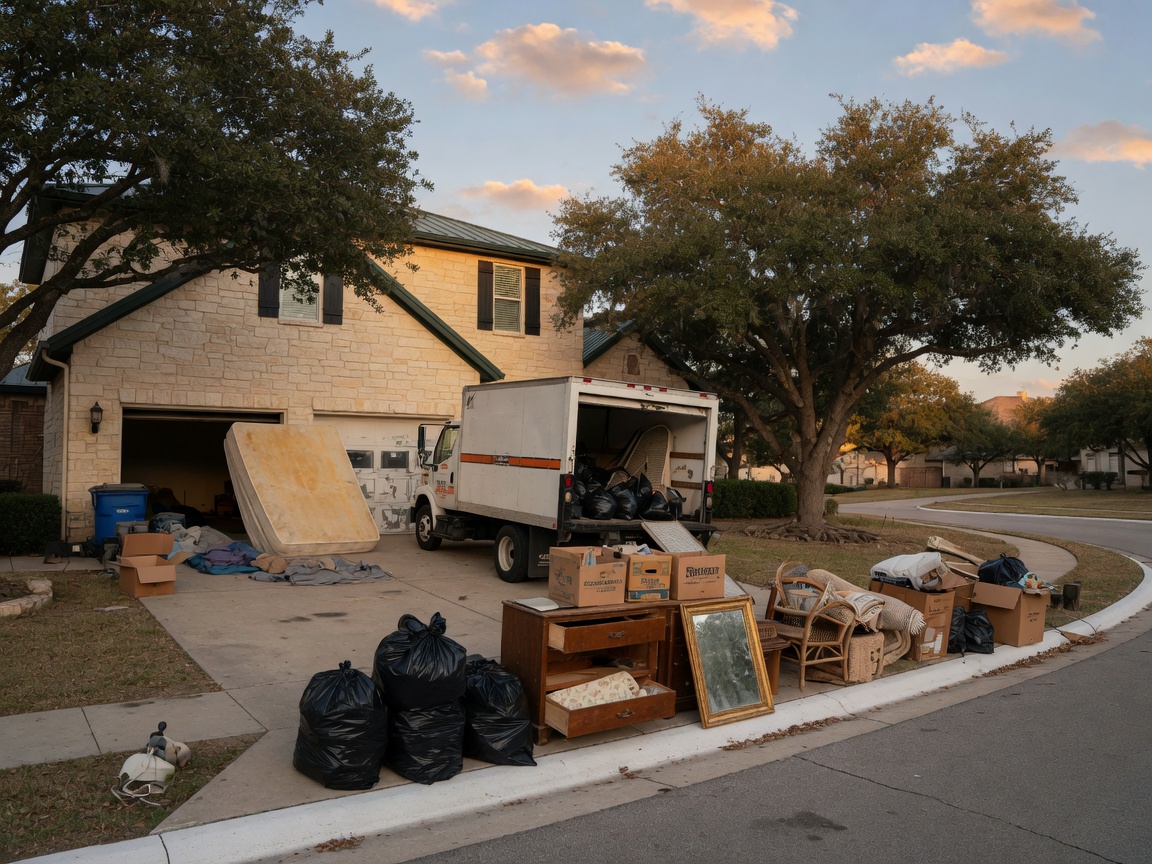
Family Disputes Over Belongings: The Conflict Nobody Expects
If the emotional weight of the clean-out is personal, the family dynamics are interpersonal — and they can be the most destructive force in the entire probate process. Nearly 44% of estate disputes involve siblings, making them the most common participants in inheritance conflicts [5]. And those disputes rarely resolve themselves cleanly.
Here's what I see happen in practice:
- "Shotgun" claims. One heir wants a specific item — a ring, a gun, a piece of furniture — and refuses to let the clean-out proceed until that item is resolved. Meanwhile, the estate is paying mortgage, taxes, and insurance every month [3].
- Perceived inequity. When one heir takes valuable items before the clean-out is complete, the remaining heirs feel shortchanged — even if the executor is following the will precisely. The perception of unfairness can be as damaging as actual inequity.
- Absent heirs who reappear. A family member who hasn't visited the house in years suddenly has strong opinions about what happens to the contents — and may slow the process while those opinions are sorted out.
- Hoarding and hidden contents. In some estates, the executor discovers that the home contained far more than expected — including items the family didn't know about, items of significant value hidden among decades of accumulation, or conditions that create safety hazards.
The practical fix is communication before action. Before anything moves, the executor should establish clear rules: who gets to claim items, how claims are prioritized, what happens when multiple heirs want the same thing, and what the deadline is for claiming items before the estate proceeds with donation or disposal. Written documentation — even a simple email chain — protects the executor and reduces conflict.
What a Professional Clean-Out Actually Costs in Texas
Most executors dramatically underestimate the cost of clearing out a home. The assumption is that you "just throw stuff away" — but the reality involves labor, hauling, disposal fees, donation coordination, potential hazardous materials handling, and sometimes specialized services for heavy items, electronics, or vehicles.
Here's what you're actually looking at in the Texas market based on current pricing data [6][7][8]:
| Home Size | Typical Contents Volume | Professional Clean-Out Cost | DIY Estimated Cost |
|---|---|---|---|
| Small (under 1,200 sq ft) | 1–2 truckloads | $800–$2,000 | $200–$600 |
| Medium (1,200–2,200 sq ft) | 2–4 truckloads | $2,000–$4,500 | $500–$1,500 |
| Large (2,200–3,500 sq ft) | 3–5+ truckloads | $3,500–$6,500 | $1,000–$2,500 |
| Estate with extensive accumulation | 5+ truckloads | $5,000–$8,000+ | $2,000–$4,000+ |
A full truckload of junk removal in Texas typically runs $600–$900 [6], and a medium-sized home generates two to four truckloads easily. If the home has a garage, attic, and outbuildings — common in the Hill Country — those numbers go up significantly.
Several national junk removal companies operate in the San Antonio and Hill Country area, including 1-800-GOT-JUNK?, Junk King, and College HUNKS Hauling Junk [7]. Their pricing is generally comparable, though the total cost depends on volume, item types, accessibility, and whether hazardous materials are involved. Most offer free on-site estimates, which I'd strongly recommend before committing to any service.
Where the Money Goes: Typical Cost Breakdown for a Professional Estate Clean-Out
This breakdown is based on industry averages for a medium-sized Texas home with moderate accumulation. Individual costs vary based on the property's condition, location, and contents.
DIY vs. Professional Clean-Out: A Realistic Comparison
The obvious question is whether the executor (or the family) can handle the clean-out themselves and save the estate money. The honest answer is: sometimes yes, sometimes no, and the decision involves more than just the dollar comparison.
DIY Clean-Out
- Lower direct cost — typically $500–$2,500 depending on home size, covering dumpster rental ($300–$500), dump fees ($50–$100 per load), and supplies.
- More control over which items are kept, donated, or discarded.
- Significant time commitment — a medium-sized home can take 2–4 weekends of full-day labor with a small crew.
- Physical risk — lifting injuries, exposure to dust, mold, pests, and hazardous materials are common.
- Carrying costs continue — every additional week adds mortgage payments, property taxes, insurance, and utilities to the estate's expenses.
Professional Clean-Out
- Faster completion — most professional teams can clear a medium-sized home in 1–3 days, accelerating the property's path to market.
- Reduced personal risk — licensed and insured crews handle heavy items, hazardous materials, and disposal logistics.
- Estate sale integration — many services can sort items for estate sale before hauling, potentially offsetting clean-out costs.
- Higher direct cost — $2,000–$8,000+ depending on the property.
- Less control over individual item handling unless specifically coordinated.
Here's the math that usually settles it: if the house is carrying $2,500–$4,000 per month in combined mortgage, taxes, insurance, and utilities [3], then every month the clean-out takes is a month of costs the estate absorbs. A professional clean-out that costs $4,000 but gets the property ready for listing two months faster than a DIY approach may actually save the estate money — even after paying for the service. The break-even analysis isn't about the clean-out cost alone; it's about the clean-out cost relative to the carrying costs it eliminates.
Decision Guide: Which Approach Makes Sense?
Not every estate needs the same approach. Here's how to match the clean-out strategy to the estate's actual situation.
Full DIY Clean-Out
Best for: Small homes (under 1,200 sq ft) with minimal accumulation, low-value contents, and family members who are local and physically able. Cost: $200–$600. Timeline: 1–2 weekends.
Consider it when: The contents are primarily low-value items, there are no hazardous materials, no hoarding conditions, and the family has 3+ able-bodied volunteers. The savings are real — but only if the family can actually execute.
Hybrid Approach (Family + Professionals)
Best for: Medium-sized homes where the family wants to handle sentimental items and valuables personally but needs professional help with labor, hauling, and disposal. Cost: $800–$3,000. Timeline: 1–3 weeks.
How it works: The family spends the first 1–3 days sorting high-value and sentimental items, then a professional team handles the remaining labor-intensive clean-out. This gives the family control where it matters most while accelerating the timeline on the rest.
Full Professional Clean-Out
Best for: Larger homes, out-of-state executors, estates with hazardous materials, hoarding conditions, or families that cannot physically manage the work. Cost: $2,000–$8,000+. Timeline: 1–5 days.
When it's the clear choice: The executor lives out of state, the home has 3,000+ square feet of contents, hazardous materials are present (asbestos, lead, mold), or the family's carrying costs make speed a financial priority. The premium you pay for professional help is often recovered in avoided carrying costs and reduced liability.
In my experience, the hybrid approach — family handles the decisions, professionals handle the labor — gives executors the best combination of control, speed, and cost management. But every estate is different.
Hazardous Materials: The Hidden Danger in Older Homes
This is the section that turns a straightforward clean-out into a complicated — and expensive — project. Many Texas homes built before 1980 contain materials that require special handling and disposal, and the executor is responsible for ensuring those materials are managed properly [2].
Here's what you might encounter:
- Asbestos. Common in insulation, flooring tiles, pipe wrapping, and roofing materials in homes built before 1980. Texas law prohibits do-it-yourself asbestos removal [9]. Professional asbestos abatement is required, and costs typically range from $1,500–$3,000 for a residential project — but can exceed $10,000 for extensive contamination.
- Lead-based paint. Present in homes built before 1978. Disturbing lead paint during a clean-out — sanding, scraping, or demolishing painted surfaces — can create lead dust, which is a serious health hazard and requires EPA-certified handling [9]. Professional lead paint testing costs $300–$500, and remediation can range from $2,000–$8,000 depending on the scope.
- Mold. Texas humidity makes mold a recurring concern, especially in homes that have been partially vacant or had water damage. Small areas of surface mold can often be cleaned during a standard clean-out, but extensive mold — particularly black mold (Stachybotrys) — requires professional remediation at costs of $10,000–$30,000 or more.
- Household chemicals and pesticides. Old paint cans, pesticides, herbicides, pool chemicals, automotive fluids, and propane tanks cannot go in a regular trash container. The Texas Commission on Environmental Quality (TCEQ) requires that household hazardous waste be disposed of at approved collection facilities [10]. Many Texas counties operate free or low-cost household hazardous waste collection events.
- Pharmaceuticals. A frequently overlooked issue: estates often contain expired or unused medications. These should not be flushed, thrown in the trash, or left for a junk removal crew. The DEA provides guidance on safe disposal, and many pharmacies and law enforcement agencies offer take-back programs.
The key point for executors: if you encounter any of these materials during the clean-out, stop and call a licensed professional. The cost of improper disposal — fines, health liability, and potential executor personal liability — far exceeds the cost of doing it right. These expenses are legitimate estate administration costs and should be paid from estate funds with proper documentation [11].
Where to Dispose of Hazardous Waste in the Hill Country
Household hazardous waste — paint, pesticides, automotive fluids, batteries, pool chemicals, and propane tanks — cannot go in your regular trash. Here are the disposal resources for executors managing estates in our service area.
Tip: Many Texas counties hold periodic HHW collection events, especially in spring and fall. Check your county's website or the TCEQ directory for upcoming dates. If you're unsure whether a material qualifies as household hazardous waste, err on the side of caution — keep it separated and contact your county's environmental services or the TCEQ hotline.
Insurance and Liability During the Clean-Out
Insurance is one of those things that doesn't become a problem until it becomes a very expensive problem. During the clean-out period, the estate faces a convergence of insurance risks that most executors don't anticipate — and gaps in coverage that can leave the estate exposed.
Homeowners Insurance During Vacancy and Clean-Out
Standard homeowners insurance policies in Texas often contain vacancy clauses that limit or void coverage if the home is unoccupied for a specified period — typically 30 to 60 consecutive days. When a property becomes vacant after a death, the executor needs to contact the insurance agent immediately to determine whether the current policy remains effective and whether a vacancy endorsement is needed [3].
Here's what can go wrong without proper coverage:
- Vandalism and theft. Vacant homes are targets. If the policy has lapsed or contains a vacancy exclusion, losses from vandalism, break-in, or theft during the clean-out may not be covered.
- Water damage. A burst pipe or failed water heater in a vacant home can cause tens of thousands of dollars in damage. Without active, proper coverage, the estate absorbs that loss entirely.
- Liability during clean-out. If a visitor, contractor, or volunteer is injured on the property during the clean-out, the homeowner's policy is the first line of defense. An expired or voided policy leaves the estate — and potentially the executor personally — exposed to a premises liability claim.
Workers' Compensation and Liability for Hired Clean-Out Crews
When you hire a professional clean-out company, the question of who is responsible if a worker is injured on the property is straightforward if you've hired a legitimate, insured company — and dangerous if you haven't. Licensed junk removal and estate clean-out companies carry their own general liability and workers' compensation insurance, which means injuries to their employees are covered by their policies, not the estate's.
But if the executor hires day laborers, informal crews, or family friends to help with the clean-out, the calculus changes dramatically:
- Uninsured workers on the property create direct liability for the estate. If an uninsured helper is injured and the executor directed the work, the estate — and potentially the executor personally — may face a premises liability or negligence claim.
- Texas does not require workers' compensation coverage for all employers. Some junk removal or hauling companies may not carry workers' comp. Always ask for proof of insurance before hiring any crew to work on the property.
Executor Protection: When You're Covered and When You're Not
Texas law provides certain protections for executors who act in good faith and within the scope of their authority. Under the Texas Estates Code, an independent executor who acts in good faith in the administration of the estate is generally protected from personal liability for actions taken within their authority [1][2]. But those protections have limits:
- Good-faith immunity. An executor who follows the will, acts within statutory authority, and makes reasonable decisions is generally shielded from personal liability for outcomes — even if the outcomes aren't ideal [2].
- What pierces that protection: Gross negligence, self-dealing, failure to secure the property, failure to maintain insurance, reckless disposal of estate assets, or actions taken before legal authority is confirmed. The executor who ignores a vacancy insurance issue and then faces a vandalism claim with no coverage has crossed from "reasonable decision" to "breach of fiduciary duty."
- Personal liability for losses. An executor can be held personally liable for losses to the estate caused by negligence or breach of fiduciary duty — including the failure to insure, secure, or properly manage estate property during the clean-out period [15].
Practical advice: Before the clean-out begins, (1) confirm the property's insurance status and obtain a vacancy endorsement if needed, (2) verify that any hired crew carries their own liability and workers' comp insurance, and (3) document your insurance decisions in writing. These three steps protect the estate and the executor from the most common — and most preventable — liability exposures during the clean-out.
Hoarding Situations: When "Clean-Out" Means Something Entirely Different
A significant number of estate clean-outs involve some degree of hoarding — and in my experience, it's more common than families expect. The Mayo Clinic estimates that hoarding disorder affects roughly 2.6% of the population, with prevalence increasing with age [12]. For estate executors, that means a meaningful chance of encountering a home where accumulation has gone well beyond what a normal clean-out can address.
Hoarding situations require a fundamentally different approach:
- Safety assessment first. Hoarded homes may have blocked exits, structural overload on floors, exposed wiring, mold hidden behind layers of material, and trip/fall hazards throughout. A safety walkthrough before any clean-out begins is essential.
- Specialized crews. Standard junk removal companies are often not equipped for large-scale hoarding clean-outs. Companies that specialize in hoarding remediation bring the labor, protective equipment, and methodology required for these projects.
- Document everything. Before clearing begins, photograph and video the entire home. This documentation protects the executor against claims that valuable items were discarded and provides a record for estate accounting.
- Budget realistically. Hoarding clean-outs typically cost two to three times more than standard estate clean-outs. For a heavily hoarded home, costs of $8,000–$15,000+ are not unusual.
The emotional dimension is significant here too. Family members may feel shame about the condition of the home, guilt about not recognizing the problem sooner, or conflict about whether the accumulation reflects a mental health condition that should have been addressed during the person's lifetime. The executor needs to manage both the physical project and the family dynamics with equal care.
Texas Probate Timelines and Clean-Out Pressure
The clean-out doesn't happen in a vacuum. It happens inside a legal timeline that's already in motion. Understanding how the clean-out fits within the probate process is critical to avoiding delays that cost the estate real money.
In Texas, independent administration — which applies to roughly 80% of estates — typically runs four to eight months from appointment to closing for straightforward cases [1]. But here's the part that creates pressure on the clean-out:
| Probate Phase | Typical Duration | Clean-Out Impact |
|---|---|---|
| Filing & hearing | 2–6 weeks | Clean-out should not begin before executor authority is confirmed — unauthorized action creates personal liability. |
| Inventory & appraisal | Within 90 days from the date the executor qualifies | All estate property — including household contents — must be inventoried. Clean-out of personal property can begin here with proper documentation. |
| Creditor period | 4 months (mandatory) | Property should be secured and maintained. Clean-out can proceed in parallel but must not interfere with creditor claims against specific items. |
| Preparation for sale | 1–2 months | Home must be cleared, cleaned, and market-ready. This is the deadline the clean-out must meet. |
| Marketing & closing | 2–4 months | Property is listed and sold. Clean-out must be complete before listing. |
The critical takeaway: the clean-out ideally happens during the creditor period, in parallel with the inventory and appraisal. If you wait until the creditor period ends to start the clean-out, you're adding one to two months to the timeline — and at $2,500–$4,000 in monthly carrying costs [3], that delay costs the estate $5,000–$8,000 in real money.
The most efficient approach is to begin planning the clean-out immediately upon appointment, start the personal property inventory as required by the Texas Estates Code [1], and coordinate the clean-out to occur during the creditor period so the property is ready for listing as soon as the estate has authority to sell.
The Legal Requirements: Inventory, Appraisement, and Executor Liability
Here's the part of the clean-out that connects directly to the law — and where well-meaning executors can create real legal exposure for themselves. The Texas Estates Code doesn't just give you the job of managing estate property; it imposes specific documentation requirements on how you account for that property, including the contents of the home [15].
What Must Be Documented: The Inventory and Appraisement
Within 90 days from the date the executor qualifies, the executor must file an itemized inventory of all tangible personal property belonging to the estate with the probate court [15] (Texas Estates Code § 309.051). This isn't a casual list — it's a formal document that must include:
- Every item of tangible personal property — furniture, appliances, vehicles, jewelry, firearms, tools, collections, artwork, and personal effects. "Everything in the house" is closer to the truth than most executors realize.
- Fair market value as of the date of death. Each item must be valued at what it would sell for on the open market at the time of the decedent's death — not what the family thinks it's worth, not what was paid for it, and not what it would cost to replace. This is the standard used for tax reporting, estate accounting, and distribution among heirs [15].
- Financial accounts and real property are listed separately, but the tangible personal property inventory is the piece that covers everything inside the house.
What if new assets are discovered? If, after the initial inventory is filed, additional personal property is found — say, a hidden safe, items stored in a separate location, or property that was overlooked — the executor must file a supplemental inventory with the court [15]. This happens more often than you'd think, especially in larger homes or estates where the decedent maintained storage units, outbuildings, or off-site property.
Executor Personal Liability: What Can Go Wrong
The inventory and appraisal requirement isn't just a bureaucratic formality — it's a safeguard against exactly the kind of problems that arise during a clean-out. When executors improperly handle, mismanage, or delay handling estate property, the consequences can be personal and financial:
- Failure to inventory. If the executor doesn't file the required inventory, the court can compel production, and the executor may face sanctions or removal. An incomplete or inaccurate inventory also makes it impossible to prove that estate assets were properly accounted for — which is exactly the proof an executor needs when heirs or creditors start asking questions.
- Improper disposal. An executor who discards, gifts, or sells estate property without proper documentation — or before the required inventory is complete — may be held personally liable for the value of those items [15]. This is especially risky with items that have significant value but aren't immediately recognized (coin collections, antiques, firearms, or artwork hidden in plain sight).
- Negligence or breach of fiduciary duty. Under Texas law, the executor owes a fiduciary duty to the estate and its beneficiaries — meaning they must act with reasonable care, prudence, and loyalty [2]. An executor who fails to secure the property, maintain insurance, protect valuables, or act within a reasonable timeline can be held personally liable for resulting losses. If a $20,000 coin collection disappears because the executor left the house unlocked for two months, that loss may come out of the executor's own pocket [15].
- Delay as negligence. Excessive delay in administering estate property isn't just a carrying-cost problem — it can constitute a breach of the executor's duty of timely administration. When the delay causes measurable harm to the estate (deterioration of the property, lost value, increased costs), the executor may face a surcharge — a personal financial liability for the difference between what the estate received and what it should have received [15].
The bottom line: the clean-out isn't just a physical project — it's a legally documented process. Every item that comes out of that house should be accounted for. The inventory protects the executor as much as it protects the estate. If you're unsure about the requirements, your estate attorney can help you set up the documentation framework before the clean-out begins.
What Happens When the Clean-Out Is Delayed
Every month of delay has a quantifiable cost. Here's a realistic scenario for a typical Hill Country home valued at $400,000:
| Monthly Carrying Cost | Amount |
|---|---|
| Mortgage (if applicable) | $1,200–$2,000/mo |
| Property taxes (Bexar/Kendall County avg ~2%) | $650–$750/mo |
| Insurance (vacancy endorsement) | $200–$350/mo |
| Utilities (minimal — HVAC + water) | $150–$300/mo |
| HOA dues (if applicable) | $50–$200/mo |
| Estimated Monthly Total | $2,250–$3,600/mo |
A three-month delay in the clean-out — from emotional paralysis, family disputes, or poor planning — costs the estate roughly $6,750–$10,800 in carrying costs alone, before any deterioration in the property's condition is factored in. Over six months, that doubles. And every month of delay is a month the property isn't on the market, which extends the total timeline and increases the total cost of administration.
Beyond carrying costs, delay creates additional risks: the property's condition continues to deteriorate (especially in Texas heat), potential buyers move on, the market can shift, and the estate's beneficiaries grow increasingly frustrated with the timeline. Delay doesn't just cost money — it erodes confidence in the executor's management of the estate.
Sentimental vs. Valuable: Sorting With a Clear Head
One of the most common mistakes executors make during a clean-out is treating all items with equal weight — either everything feels precious (making disposal emotionally impossible) or everything feels like junk (potentially discarding items with real value). The reality is that most estate contents fall into distinct categories, and sorting them efficiently requires a clear framework.

A practical sorting framework:
- Category 1 — Items with documented value. Jewelry, firearms, coins, antiques, art, collectibles, and tools. These items should be appraised before disposal or distribution. An estate sale professional can often identify items of value that the family would miss.
- Category 2 — Items of sentimental value. Family photos, letters, personal items, heirlooms. These items matter deeply to the family but typically have no market value. They should be distributed to family members who want them, digitized where possible, or donated to organizations that will give them a second life.
- Category 3 — Functional items for donation. Furniture, clothing, kitchenware, books, and household items in good condition. Donation to organizations like Habitat for Humanity ReStore, Goodwill, or local charities provides both a tax benefit to the estate and a practical disposal path.
- Category 4 — Disposal items. Broken furniture, worn-out appliances, outdated electronics, expired food, and damaged items. These go to the dumpster or junk removal service.
The key principle: make the high-value and high-sentiment decisions first, then let the professional clean-out handle the rest. Trying to sort every item individually is what turns a two-week project into a two-month ordeal.
Identifying and Monetizing Valuables During the Clean-Out
The difference between discarding a $50 item and a $5,000 item is often just knowing where to look. Here's how to make sure the estate captures the value that's hiding in the house.
Categories That Often Contain Hidden Value
- Firearms. Texas has a large market for firearms, and estate guns — especially older models, collectible brands, or well-maintained pieces — can be worth significantly more than the family expects. Federal law requires that firearms be transferred through a Federal Firearms Licensee (FFL), so the executor cannot simply hand them off or sell them privately without following proper procedures.
- Coins and stamps. Collections of silver coins, rare stamps, or precious-metal bullion can range from a few hundred to tens of thousands of dollars. A coin dealer or numismatic appraiser can quickly assess a collection's value.
- Jewelry. Even modest-looking pieces can carry significant value if they contain gold, platinum, or gemstones. A jeweler or estate appraiser can provide an accurate assessment — don't rely on weight alone, since craftsmanship and brand matter.
- Antiques and collectibles. Furniture, artwork, pottery (especially Texas-made or Hill Country pieces), vintage tools, and agricultural equipment can carry collector value. Regional auction houses and antique dealers are often the best resource for assessment.
- Vehicles. Classic cars, trucks, and motorcycles — even non-running ones — can have substantial value. The vehicle title is critical here: without it, the estate cannot sell or transfer the vehicle (see the Documents Checklist below). A vehicle appraiser or specialized dealer can provide a market valuation.
When to Get a Professional Appraisal vs. Self-Assessment
Self-assessment works when items are clearly common household goods with obvious market value — standard furniture, everyday dishes, basic tools. The family generally knows what these are worth.
Get a professional appraisal when you encounter items you can't confidently value: jewelry, firearms, coin collections, art, antiques, specialized equipment, or anything that a quick online search suggests might be worth more than $500. Many estate sale companies will include initial identification in their service, and independent appraisers typically charge $150–$500 for a focused assessment of a specific collection or category.
Options for Selling Valuable Items
- Estate sales. A professional estate sale company handles pricing, setup, advertising, and conducting the sale. They typically charge 30–40% of proceeds. Best for estates with a large volume of sellable items. Allows the estate to capture value from hundreds of items in a single weekend event.
- Consignment shops. Good for furniture, art, and higher-end household items. The shop displays and sells the item, splitting the proceeds (typically 50/50 or 60/40 in favor of the estate). Slower than an estate sale but can yield higher per-item returns.
- Auction houses. Best for high-value, unique, or collectible items — firearms, antiques, art, rare coins. Regional auction houses in the Hill Country and San Antonio handle estate consignments. Commission is typically 15–25%.
- Online platforms. eBay, Facebook Marketplace, and specialized dealer sites can reach buyers who value specific items. Best for items with a known market (collectibles, electronics, tools). Requires more executor involvement but can maximize return on individual high-value items.
- Specialized dealers. Coin dealers, gun shops, jewelry stores, and antique dealers will often purchase items directly. The offer will be below retail but the transaction is fast and simple — no consignment fees, no waiting for a buyer.
Security During the Clean-Out
A house in transition — doors opening and closing, strangers hauling items, boxes stacked in the yard — is a house that's vulnerable. Security during the clean-out is not optional; it's a fiduciary responsibility.
- Change the locks as soon as authority is confirmed. Collect all known keys and garage remotes. Limit access to documented individuals only.
- Secure high-value items immediately. Before the clean-out crew arrives, lock jewelry, firearms, coins, important documents, and small valuables in a safe or off-site location. These items disappear quickly in a busy, chaotic environment.
- Document the home's contents with photographs and video before anything moves. This creates a baseline record that protects against claims of theft or loss — and satisfies the inventory requirements discussed below.
- Verify insurance coverage (see the Insurance section above). If the property is vacant and items are being removed over multiple days, ensure the homeowner's policy covers the transition period.
Tax Implications of Disposal: What Executors Need to Know
The tax side of the clean-out is something most executors don't think about until after the fact — and by then, they may have missed opportunities to reduce the estate's tax burden or created complications that are harder to resolve.
Here's what you need to know:
- Clean-out costs are generally deductible by the estate. Costs incurred during probate administration — including clean-out, hauling, disposal, and estate sale expenses — are considered necessary administrative expenses and are deductible on the estate's federal tax return (Form 1041), provided they are directly connected to the estate process [11]. Keep every receipt and document every expense.
- Proceeds from estate sales are taxable income to the estate. If the estate conducts an estate sale and generates revenue from the sale of personal property, that income is subject to estate income tax. The estate's tax obligations must be settled before distributions to beneficiaries [11].
- Donations may provide a deduction. Items donated to qualified charitable organizations during the probate period may generate a charitable deduction for the estate, reducing the estate's taxable income. The deduction is available only if the donation is made during the administration period and properly documented with receipts.
- Texas has no state estate or inheritance tax. Texas does not impose its own estate tax or inheritance tax, so the clean-out's tax implications are governed entirely by federal tax law. However, the federal estate tax exemption ($14.39 million in 2026) means most Texas estates will not owe federal estate tax — but the income tax obligations of the estate during administration still apply.
Practical recommendation: coordinate with the estate's CPA before disposing of high-value items. The difference between discarding an item and documenting its disposal or sale can matter for the estate's tax filing. And the difference between a junk removal receipt and a charitable donation receipt can affect the estate's deductible expenses.
The Stepped-Up Basis: What It Means for the House and Its Contents
One of the most significant — and least understood — tax concepts in estate administration is the stepped-up basis. Under Internal Revenue Code § 1014, when a person dies, the cost basis of their assets — including the house itself — is "stepped up" to the fair market value as of the date of death [16].
What this means in practice: if the decedent purchased the house for $150,000 twenty years ago and it's worth $400,000 at the time of death, the heirs' cost basis is $400,000 — not $150,000. If the heirs sell the house for $400,000, there's essentially no capital gains tax owed on the appreciation during the decedent's lifetime. If they sell it for $420,000, the capital gains tax applies only to the $20,000 increase above the stepped-up basis — not the $270,000 of appreciation that occurred while the decedent owned the home.
This is a major financial advantage for heirs — and one reason why timely estate administration matters. The stepped-up basis applies at the date of death, so the longer the estate holds the property without selling, the more market appreciation above the stepped-up basis the heirs may owe taxes on.
Capital Gains on Sold Personal Property
The stepped-up basis also applies to personal property — furniture, collectibles, vehicles, and other assets. If the estate sells personal property at a price above its stepped-up basis (fair market value at date of death), the gain is taxable income to the estate. In practice, most personal property sells at or below fair market value, so capital gains on household contents are rare. But there are exceptions:
- Items that appreciate quickly after death. If a collectible coin, artwork, or antique appreciates significantly between the date of death and the date of sale (say, a hot market for vintage firearms), the gain above the date-of-death value is taxable. This is uncommon but worth noting for high-value items.
- Items sold for less than fair market value. If the estate sells a $10,000 item for $5,000 (perhaps during an estate sale with aggressive pricing), there's no capital gain — but there's also a $5,000 loss to the estate's value that should be documented for estate accounting purposes.
Charitable Donations: Documentation and Deductions
Donating estate property to qualified charitable organizations during the administration period can serve a dual purpose: the items go to a good cause, and the estate may receive a charitable deduction. But the rules are specific:
- The donation must be made during the estate's administration period — not after the estate is closed and assets have been distributed to heirs.
- The deduction is limited to the item's fair market value at the time of donation. For items worth more than $5,000, a qualified appraisal is generally required.
- Keep detailed records. Obtain a written receipt from the charitable organization for every donation. The receipt should include the organization's name, the date of the donation, a description of the items, and — for donations valued over $250 — a statement indicating whether the organization provided any goods or services in exchange [17].
- Non-cash donations over $500 require IRS Form 8283 to be filed with the estate's tax return. For donations exceeding $5,000 per item (or $10,000 for a group of similar items), a qualified appraisal must be attached.
Estate Tax Considerations for Larger Estates
For most Texas families, estate tax is not a concern — but it's worth understanding the threshold. In 2026, the federal estate tax exemption is $14.39 million per individual [18]. This means that the vast majority of Texas estates — including most Hill Country properties and their contents — will not owe any federal estate tax.
However, for estates that approach or exceed this threshold, the clean-out decisions take on additional significance:
- The combined value of the house, personal property, financial accounts, and other assets counts toward the exemption. An estate with a $1 million home, $200,000 in financial accounts, and $100,000 in personal property is well under the limit. An estate with a $10 million property portfolio, significant investment accounts, and valuable personal property may be closer than expected.
- Proper valuation of all estate assets — including the personal property inventory — is critical for accurate estate tax reporting. Undervaluing assets can trigger IRS scrutiny; overvaluing can cause the estate to overpay.
- Charitable deductions from the clean-out can reduce the taxable estate — making charitable donations a meaningful planning tool for estates that are near the exemption threshold.
Texas note: Texas does not impose its own state estate tax or inheritance tax. The clean-out's tax implications are governed entirely by federal tax law — but the income tax obligations of the estate during administration still apply regardless of estate size.
A Practical Step-by-Step Approach for Executors
If you're facing a clean-out right now — or you know it's coming — here's the approach I recommend based on years of working with executors through this process:
Don't start until you have authority
Wait for Letters Testamentary or Letters of Administration. Moving or disposing of estate property before you have legal authority can create personal liability. This is a common mistake among well-meaning family members.
Document the property's current condition
Photograph and video every room, the exterior, the garage, and any outbuildings before anything moves. This is your baseline record for the inventory, estate accounting, and any future disputes.
Secure the estate's high-value items first
Jewelry, firearms, collectibles, important documents, and anything easily portable with real value. Move these to a secure location. This isn't about hiding things from heirs — it's about protecting estate assets during a period when access is less controlled.
Communicate with the family before you begin
Set a clear deadline for heirs to identify and claim items. Put it in writing. Explain the timeline, the carrying costs, and the plan. Early communication prevents 90% of the conflicts that derail clean-outs.
Assess for hazardous materials
Before any major clean-out work begins, check the home's age and condition for potential asbestos, lead paint, mold, or hoarding. If any of these are present, call a licensed professional before proceeding.
Get at least two professional estimates
Whether you go with a professional service or decide on a hybrid approach, get on-site estimates from at least two companies. Most junk removal and estate clean-out services offer free estimates.
Coordinate timing with probate phases
Don't schedule major clean-out work before Letters Testamentary are issued. The probate court controls the timeline — plan the clean-out to run during the creditor period, in parallel with the inventory and appraisal, so the home is ready for listing when the estate is authorized to sell [1].
Sort contents into categories
Use a four-category framework: keep (items the family or heirs will retain), sell (items with market value that can generate estate income), donate (functional items that benefit the community and may provide a tax deduction), and discard (items with no value that require disposal). Separate hazardous waste — paint, chemicals, pesticides, batteries — into its own stream for proper county disposal. Make high-value and high-sentiment decisions first, before fatigue sets in.
Handle valuables — appraise and secure high-value items
Before anything goes to donation or disposal, identify items with significant market value — jewelry, firearms, coin collections, antiques, art, and vintage tools. Have them appraised if the value is unclear, and secure them in a location outside the property. Document every item with photographs and written descriptions. These items should be accounted for in the estate inventory and may require separate handling under the terms of the will.
Arrange professional clean-out or manage DIY/hybrid approach
Based on your estimates, home size, and timeline, choose the approach that fits the estate. A professional team can clear a medium-sized home in one to three days; a DIY approach typically takes two to four weekends. The hybrid model — family handles decisions, professionals handle labor — often delivers the best balance of control, speed, and cost. Remember: every month the clean-out takes adds $2,500–$4,000 in carrying costs to the estate [3].
Dispose of hazardous waste through proper county channels
Never put paint, pesticides, automotive fluids, propane tanks, asbestos, or pharmaceuticals in regular trash. Use TCEQ-approved household hazardous waste collection facilities or county-sponsored collection events [10]. Most Texas counties — including Bexar, Kendall, and Comal — offer free or low-cost HHW disposal programs. The cost of improper disposal, including fines and personal liability, far exceeds the cost of doing it right.
Complete final walkthrough and document completion
After the clean-out is finished, do a final walkthrough of every room, the garage, attic, and any outbuildings. Photograph the empty property to document its condition. Keep all receipts, invoices, donation acknowledgments, and haul-away records in the estate file. This documentation protects the executor against claims that items were improperly discarded and provides a clean record for estate accounting and tax reporting [11].
File final inventory and accounting with the court
The Texas Estates Code requires the executor to file a verified inventory and appraisement of the estate's property within 90 days from the date the executor qualifies [1]. Ensure that all personal property — including items sold, donated, discarded, or claimed by heirs — is accurately reflected in the inventory. Clean-out expenses, estate sale proceeds, and disposal costs should be documented in the estate's accounting and reported on the final tax return [11].
Executor Clean-Out Planning Checklist
Use this step-by-step checklist to plan and execute the clean-out methodically. Print it, check off items as you go, and keep it with your estate file.
Sample Communication Templates for Heirs
Communication is the single biggest factor in whether a clean-out goes smoothly or becomes a family conflict. Here are three templates you can adapt for your situation. Customize the language, but keep the structure — clear, documented communication protects the executor and reduces disputes.
1 Timeline Proposal
2 Addressing Heir Disagreements
3 "Claim Your Items" Notice
Clean-Out Timeline and Cost Summary
Here's a consolidated view of the typical clean-out timeline, from first action to listing-ready property, along with the cost ranges at each phase. This is what a well-managed clean-out looks like for a medium-sized Hill Country home.
| Phase | Timeframe | Key Actions | Typical Cost |
|---|---|---|---|
| 1. Secure & Document | Days 1–3 | Change locks, photo/video documentation, secure valuables, contact insurance agent. | $0–$200 |
| 2. Wait for Authority | 2–6 weeks | File probate, wait for Letters Testamentary. Plan the clean-out. Do not touch estate property yet. | $0 (legal fees separate) |
| 3. Sort & Claim | 1–3 weeks | Heir claims, valuables appraisals, sort keep/sell/donate/discard, begin estate sale planning. | $0–$500 (appraisals) |
| 4. Estate Sale (if applicable) | 2–4 weeks | Pricing, advertising, conducting the sale. Runs in parallel with clean-out planning. | 30–40% of proceeds (company takes commission) |
| 5. Professional Clean-Out | 1–5 days | Hauling, disposal, hazardous waste handling, donation drop-offs. | $2,000–$6,500 |
| 6. Deep Clean & Prep | 2–5 days | Professional cleaning, minor repairs, carpet cleaning, window washing. | $300–$1,500 |
| Total estimated timeline (from authority to listing-ready) | 4–8 weeks | ||
$2,300–$8,700
Total clean-out + prep cost range (medium home)
4–8 weeks
Typical timeline from authority to listing
$2,250–$3,600/mo
Carrying costs while you wait
These figures are based on a medium-sized Hill Country home (1,200–2,200 sq ft) with moderate accumulation. Actual costs and timelines vary based on property condition, contents volume, and the complexity of the estate.
Documents Executors Should NOT Throw Away
During the clean-out, the instinct is to start clearing surfaces, filing cabinets, and desk drawers. But certain documents that look like clutter may be critical to the estate's legal and financial obligations. Before anything goes in a box — or the trash — check for these items:
-
Vehicle Titles and Registration
A vehicle title is the only document that proves legal ownership and is required to transfer or sell the vehicle. Without a clear title, the estate cannot dispose of, transfer, or sell the car — and replacing a lost title through the Texas DMV adds weeks to the process. Keep both the title certificate and the current registration together.
-
Life Insurance Policies
Life insurance proceeds pass outside of probate and may be payable directly to named beneficiaries — but only if someone identifies the policy and files a claim. An unredeemed policy means the beneficiaries never receive funds they're entitled to. Old policies found in filing cabinets, safes, or desk drawers should be reviewed by the estate attorney or CPA, not discarded.
-
Pre-Need Burial Plots or Funeral Contracts
If the decedent purchased a burial plot, prepaid funeral plan, or cremation contract, these documents represent money already paid and services already arranged. Losing them can mean the family pays twice — or cannot locate the burial site. Check for contracts with funeral homes, cemetery deed records, and any pre-arrangement paperwork.
-
Tax Returns (Past 3 Years)
The estate's CPA will need the decedent's recent federal and state tax returns to prepare the final individual return (Form 1040) and, if applicable, the estate's income tax return (Form 1041). Tax returns also reveal income sources, deductions, IRA or retirement account details, and prior charitable giving — all of which affect estate planning and distributions [11].
-
Utility Statements (To Track Active Accounts)
Recent utility bills — electric, gas, water, trash, internet, phone — serve two purposes: they identify which accounts are still active and need to be closed or transferred, and they provide the account numbers and contact information needed to do it. An overlooked utility account can continue accruing charges against the estate for months after death.
General rule: when in doubt, set it aside for the estate attorney or CPA to review. Documents that seem irrelevant during the clean-out can become critical during tax filing, probate administration, or creditor claims. You can always discard something later — but you can't recover something already thrown away.
Modern Edge Cases: The Things Nobody Warns You About
Estate clean-outs aren't what they were twenty years ago. Modern homes contain categories of property and legal obligations that didn't exist a generation ago — and many executors have no framework for handling them. Here are the edge cases that catch people off guard.
Selling the House As-Is with Contents vs. Full Clean-Out
One option many executors don't realize they have: selling the property as-is with the contents still inside. This approach trades potential sale price for speed and cost avoidance — and in some situations, it's the financially smart move.
Selling As-Is with Contents
- Saves $2,000–$8,000+ in clean-out costs and eliminates carrying costs from clean-out delays.
- Faster to market — the property can be listed in days rather than weeks or months.
- Reduces buyer pool — most retail buyers want a clean, empty home. As-is-with-contents properties typically attract investors and flippers who price accordingly.
- Risk of lower net proceeds — the price reduction from selling as-is often exceeds what a clean-out would cost. But not always — it depends on the contents and the market.
Full Clean-Out Before Listing
- Maximizes buyer pool — a clean, empty home appeals to the broadest range of buyers including retail, investor, and relocation.
- Higher sale price potential — clean, staged homes typically sell for more than as-is properties.
- Opportunity to capture value from valuable contents through estate sale before listing.
- Costs more and takes longer — clean-out costs plus additional months of carrying costs. The timeline impact is real.
When as-is makes more financial sense: if the clean-out costs would exceed the expected price difference, or if the estate is burning through carrying costs at a rate that makes speed the priority. An experienced probate agent can run the numbers specific to your property and market — and that analysis is one of the most valuable conversations you can have before committing to a clean-out strategy.
E-Waste Recycling: Proper Disposal of Electronics
Texas households contain an average of $1,500–$3,000 in electronics at any given time — old computers, tablets, televisions, printers, and phones. During a clean-out, the temptation is to toss them in the dumpster. Don't. Texas law restricts the disposal of certain electronics in landfills [19], and many of these items contain components that require specialized recycling.
- Older televisions (CRT and plasma) contain lead, mercury, and other hazardous materials. These must be recycled through approved e-waste facilities — they cannot go in the trash.
- Computers and laptops should be wiped of personal data before recycling. The hard drives should be physically destroyed or securely wiped if the estate wants to protect the decedent's digital information.
- Where to recycle: Best Buy, Staples, and Office Depot accept many electronics for free recycling. The TCEQ maintains a directory of approved e-waste recyclers in Texas [19]. Many communities hold periodic e-waste collection events. San Antonio's Solid Waste Management Department also offers periodic drop-off events for electronic waste.
Digital Assets: The Clean-Out Extends Beyond the Physical House
A modern estate clean-out doesn't end at the front door. Executors may also need to address the decedent's digital footprint — email accounts, social media profiles, online banking, subscription services, cloud storage, and any cryptocurrency or digital financial accounts. While a full guide to digital asset administration is beyond the scope of this article, executors should be aware that:
- Digital accounts may contain financial value — PayPal balances, cryptocurrency wallets, reward points, and unused gift cards. These are estate assets that must be inventoried and accounted for.
- Active subscriptions continue to bill. Streaming services, gym memberships, magazine subscriptions, and software licenses can drain estate funds if not identified and cancelled promptly.
- Social media accounts can be memorialized or deleted, but the executor needs appropriate access credentials. Facebook, Google, and most major platforms have established processes for handling deceased users' accounts.
If the estate includes significant digital assets, the estate attorney can advise on proper administration under the Revised Uniform Fiduciary Access to Digital Assets Act, which Texas has adopted [21].
Out-of-State Executors: Additional Clean-Out Challenges
If you've been named executor but live in another state, the clean-out presents logistical challenges that local executors don't face. You can't drop by the property on a Saturday morning. You can't supervise the clean-out crew in person. You can't quickly resolve issues that come up during the process — and issues always come up.
Out-of-state executors managing a clean-out in Texas face specific challenges:
- Coordination overhead. Every decision — from which company to hire to which items to save — requires remote communication with the clean-out crew, the family, and the estate attorney. This adds time and increases the risk of miscommunication.
- Travel costs. If the executor needs to be physically present for key decisions (valuables identification, hazardous material assessment, final walkthrough), travel adds to the estate's expenses.
- Reliance on local professionals. Out-of-state executors depend more heavily on the estate agent, attorney, and clean-out company to execute the plan correctly. This makes selecting the right team even more critical.
For a detailed guide on the unique challenges and requirements for executors managing a Texas estate from out of state, see our dedicated guide: Out-of-State Executors: Managing a Texas Probate from Afar.
Frequently Asked Questions
Can I start cleaning out the house before probate is granted?
No — and this is one of the most common and most consequential mistakes family members make. Before you have Letters Testamentary or Letters of Administration from the probate court, you do not have legal authority to dispose of, remove, or alter estate property [1][2]. Wait for the court to confirm your authority, then proceed with documentation and a clear plan.
Why this matters so much: Under Texas law, a family member who removes, takes, or discards items from a decedent's home before an executor is officially appointed can face a conversion claim — the civil equivalent of theft [13]. Conversion occurs when a person unlawfully assumes control over someone else's property without authorization, to the exclusion of or inconsistent with the owner's rights. In the probate context, the "owner" is the estate itself, and only the appointed executor has the legal authority to control estate property.
That means a well-meaning family member who boxes up Mom's jewelry "for safekeeping" or hauls off furniture "to save the estate disposal costs" can be sued for conversion by other heirs, creditors, or the estate itself. If found liable, the consequences can include:
- Fair market value damages — the person who took or discarded the property may be ordered to pay the estate the full fair market value of the items at the time they were taken [13].
- Exemplary (punitive) damages — if the taking was intentional or involved gross negligence, Texas courts may award exemplary damages, subject to a constitutional cap (generally no more than four times the amount of actual damages) [13].
- Attorney's fees and court costs — under the Texas Theft Liability Act (Tex. Civ. Prac. & Rem. Code §§ 134.001–134.005), a person who commits theft — which includes unlawfully appropriating property with intent to deprive the owner — may be liable for the other party's attorney's fees [13].
- Personal liability for the executor — if the person who took property turns out to be the named executor who acted before being formally appointed, they may face removal as executor, surcharge for the value of estate assets improperly handled, and personal liability for any resulting losses to the estate.
This isn't a theoretical risk. In my experience, the most emotionally charged disputes in probate involve family members who moved, took, or discarded items before the process was legally underway — and then had to answer for it after the fact. Disgruntled heirs and creditors are exactly the people most likely to pursue these claims.
The practical advice is simple: secure the property (change locks if appropriate, collect keys, document the home's condition), but do not remove, relocate, or discard any estate property until you hold Letters Testamentary or Letters of Administration in hand. The two to six weeks it takes to get your authority confirmed is a small price to pay compared to the cost of a conversion lawsuit [1][2][13].
How long does a typical estate clean-out take?
A professional clean-out team can typically clear a medium-sized home in one to three days. A DIY approach with family members usually takes two to four weekends. For homes with significant accumulation, hoarding conditions, or hazardous materials, the timeline can extend to several weeks. The key variable is not the physical labor — it's the decision-making process. The faster you can make sorting decisions, the faster the clean-out proceeds.
Who pays for the clean-out — the estate or the executor personally?
The clean-out is an estate administration expense and should be paid from estate funds. The executor should not pay for the clean-out out of pocket unless there is no estate cash available and the executor chooses to advance the cost (which should be documented and reimbursed from estate proceeds). Clean-out costs are generally deductible as administrative expenses on the estate's federal tax return [11]. Keep every receipt and document every payment.
What if heirs disagree about what to keep or discard?
This is extremely common and one of the primary reasons clean-outs stall. The executor's legal authority under Texas law generally allows the executor to manage and dispose of estate property as part of the administration process [2]. However, the will may contain specific bequests that must be honored. My recommendation: set a written deadline for claims on specific items (typically 14–30 days), use a first-come-first-served or lottery system for contested items, and proceed with the clean-out once the deadline passes. The executor has a fiduciary duty to the estate as a whole — not to any individual heir's preferences.
Can the executor sell items from the estate before the house is listed?
In Texas, an independent executor generally has broad authority to manage estate assets, including selling personal property, without court approval [1]. However, the executor must act in the best interest of the estate and all beneficiaries. An estate sale of personal property can be an effective way to generate cash for estate expenses and reduce the clean-out burden. The proceeds become part of the estate and must be properly accounted for. If the will contains specific bequests (e.g., "my grandfather's watch goes to my son"), those items should be set aside before any sale.
How long do I have to complete the clean-out?
There is no court-imposed deadline specifically for the clean-out itself, but the probate timeline creates effective pressure. In Texas, independent administration typically runs four to eight months from appointment to closing [1]. The personal property inventory must be filed within 90 days of the executor qualifying [1], and the home should be cleared, cleaned, and market-ready before listing. Practically speaking, the clean-out should be completed during the creditor period (the first four months) so the property can be prepared for sale without adding months of carrying costs. Every additional month the house sits full costs the estate $2,500–$4,000 in mortgage, taxes, insurance, and utilities [3].
Can I hire a clean-out company before Letters Testamentary?
You can contact companies and get estimates, but you should not authorize any removal, disposal, or alteration of estate property before Letters Testamentary or Letters of Administration are issued by the probate court [1][2]. Before you have legal authority, you do not have the right to commit estate funds or direct the handling of estate assets. Signing a contract with a clean-out company before your authority is confirmed could expose you to personal liability. Use the waiting period productively: secure the property, document its condition, get estimates, and line up your team so the clean-out can begin as soon as the court confirms your authority.
What items should never be thrown away during probate?
Several categories of items require careful handling and should never be casually discarded during a clean-out. Legal documents — the will, trust documents, deeds, tax returns, insurance policies, and court filings — must be preserved in the estate file. Items named in the will as specific bequests must be set aside for the designated beneficiary. Valuables — jewelry, firearms, coin collections, antiques, and art — should be appraised, documented, and secured before anything else moves. Financial records — bank statements, brokerage statements, retirement account documents, and anything related to debts or liabilities — should be gathered for the executor and the estate's CPA. Prescription medications should be disposed of through pharmacy take-back programs, not thrown in the trash. When in doubt, set it aside and consult the estate attorney.
Do I need to account for all items removed from the property?
Yes. The executor has a fiduciary duty to account for all estate property [2]. While you don't need a line-item receipt for every discarded sock, you do need to document the disposition of significant items and maintain records of what was kept, sold, donated, and discarded. The Texas Estates Code requires a verified inventory and appraisement within 90 days of qualification [1], and all estate transactions — including clean-out expenses, estate sale proceeds, and donations — should be documented for the estate's accounting and final tax return [11]. Keep receipts for every vendor, hauler, and donation center, and maintain a written log of what heirs claimed and when.
What happens if something valuable is found after the clean-out begins?
This happens more often than you'd expect — a forgotten safe behind a closet wall, valuable coins in a junk drawer, or a vintage piece of furniture buried under boxes in the garage. If a valuable item is discovered during the clean-out, stop and document it immediately with photographs and a written description. Secure the item separately from the general clean-out flow. If it may have been specifically bequeathed in the will, set it aside and notify the relevant heir. If it has significant market value, have it appraised and include it in the estate inventory [1]. The discovery doesn't stop the clean-out, but it does require a pause to ensure the item is properly handled and accounted for.
How do I handle hazardous materials like paint, chemicals, or asbestos?
Household hazardous waste — paint, pesticides, automotive fluids, pool chemicals, propane tanks, and old batteries — cannot go in regular trash or dumpsters [10]. Texas law requires these materials to be disposed of through approved channels. Many Texas counties, including Bexar, Kendall, and Comal, offer free or low-cost household hazardous waste collection events or drop-off programs. For asbestos and lead-based paint, professional abatement is required by Texas law — do not attempt DIY removal [9]. Pharmaceuticals should be disposed of through pharmacy take-back programs or DEA-authorized collection sites. The cost of improper disposal — including environmental fines and personal liability — far exceeds the cost of doing it right. These expenses are legitimate estate administration costs.
What if the property has been vacant for a long time?
A property that has been vacant for months or years presents compounding challenges that go beyond a standard clean-out. Extended vacancy in Texas can lead to pest infestations (termites, rodents, scorpions), mold growth from humidity or undetected water damage, HVAC deterioration, plumbing issues from dried-out traps and seals, and general structural decline. Before beginning any clean-out work, do a thorough walkthrough with a licensed home inspector or contractor to identify safety hazards — including structural integrity, electrical condition, and potential environmental hazards. Budget for these repairs as part of the estate's clean-out and preparation costs. A vacant property also carries insurance risk: standard homeowners policies often limit or void coverage after 30–60 days of vacancy, so confirm coverage status immediately [3].
Resources and Next Steps
If you're preparing for or currently navigating an estate clean-out, here are the resources and professional contacts that can help — along with what to look for and what to avoid.
What to Ask When Vetting Clean-Out Companies
Not all clean-out companies are the same. Before hiring anyone, ask these questions:
- "Are you licensed and insured?" General liability insurance at minimum. Workers' compensation if they'll have a crew on the property. Ask for proof — don't just take their word for it.
- "Do you provide a written estimate?" A reputable company will give you a detailed, written estimate after an on-site visit — not a phone quote. If they won't put a number in writing, move on.
- "How do you handle estate-specific items?" Will they sort for valuables before hauling? Do they partner with estate sale companies? Do they coordinate donations? Companies experienced with estate clean-outs understand the difference between junk removal and estate administration.
- "What's included — and what's not?" Some companies provide hauling only; others include sorting, packing, and disposal. Get clarity on exactly what the price covers. Ask about additional fees for heavy items, hazardous materials, stairs, or limited access.
Red flags to watch for:
- Refusal to provide proof of insurance or licensing.
- Pressure to sign a contract immediately or accept a "today only" price.
- No physical walkthrough before quoting — the cost depends entirely on what's in the house and how accessible it is.
- Prices significantly below market rates — this often means they'll add fees after the work begins, or they're not carrying proper insurance.
Texas-Specific Resources
- TCEQ Household Hazardous Waste Programs — The Texas Commission on Environmental Quality maintains a directory of approved collection facilities and upcoming HHW collection events by county. tceq.texas.gov/waste/household-haz
- TCEQ E-Waste Recycling — Approved electronic waste recyclers and collection events in Texas. TCEQ Electronics Recycling
- National Estate Sales Association (NESA) — A directory of vetted estate sale professionals by state. Helpful for finding companies experienced with probate clean-outs and estate sales. estatesales.org
- Grief and Family Mediation — When family conflicts threaten to derail the clean-out, professional mediators can help resolve disputes without litigation. The Texas Mediation Training Institute and local dispute resolution centers in Bexar, Kendall, and Comal counties offer services.
Managing from out of state? If you've been named executor but live in another state, the clean-out presents unique logistical challenges. See our dedicated guide for out-of-state executors: Out-of-State Executors: Managing a Texas Probate from Afar
Sources
- Texas Estates Code, Chapter 401 — Independent Executor: Powers and Duties — Texas Legislature
- Texas Estates Code, Chapter 406 — Duties of Independent Executor — Texas Legislature
- Texas Tax Code, Chapter 33 — Delinquent Property Taxes and Tax Sales — Texas Legislature
- Ameriprise Study: Siblings Rarely Argue About Money, But When They Do, It's About Their Parents — Ameriprise Financial
- 10 Important Statistics About Sibling Estate Disputes — Lesser Lutrey Pasquesi & Howe, LLP
- 2026 Junk Removal Prices List — HomeGuide
- What Does an Estate Clean-Out Cost? (2026 Data) — HomeAdvisor
- How Much Does Junk Removal Cost in Texas? — AG Moving
- Household Hazardous Waste: A Guide for Texans — Texas Commission on Environmental Quality
- Probate Property Cleanouts: Complete Guide to Rules, Timeline & Costs — Easy Cleanouts
- Can Probate Costs Be Deducted from the Estate? — Tax Shark, Inc.
- Hoarding Disorder — Symptoms & Causes — Mayo Clinic
- Texas Theft Liability Act — Tex. Civ. Prac. & Rem. Code §§ 134.001–134.005 — Texas Legislature
- Household Hazardous Waste Programs — Texas Commission on Environmental Quality
- Texas Estates Code, Chapter 309 — Inventory, Appraisement, and List of Claims — Texas Legislature
- Texas Estates Code, § 309.001 — Inventory Contents — Texas Legislature
- IRS Publication 559 — Survivors, Executors, and Administrators — Internal Revenue Service
- IRS Publication 526 — Charitable Contributions — Internal Revenue Service
- Estate and Gift Tax FAQs — 2026 Federal Estate Tax Exemption — Internal Revenue Service
- TCEQ Electronics Recycling and E-Waste Programs — Texas Commission on Environmental Quality
- Texas Estates Code, Chapter 2001 — Fiduciary Access to Digital Assets — Texas Legislature
Legal Disclaimer: The information provided in this article is for general informational and educational purposes only. It does not constitute legal, tax, financial, or professional advice. Every estate, probate proceeding, and property situation is unique. The author and Hill Country Homesteads Group are not law firms or CPA firms and do not provide legal or tax representation. Readers should consult a licensed Texas probate attorney, CPA, or other qualified professional for advice specific to their individual circumstances. Reliance on any information in this article is solely at your own risk.