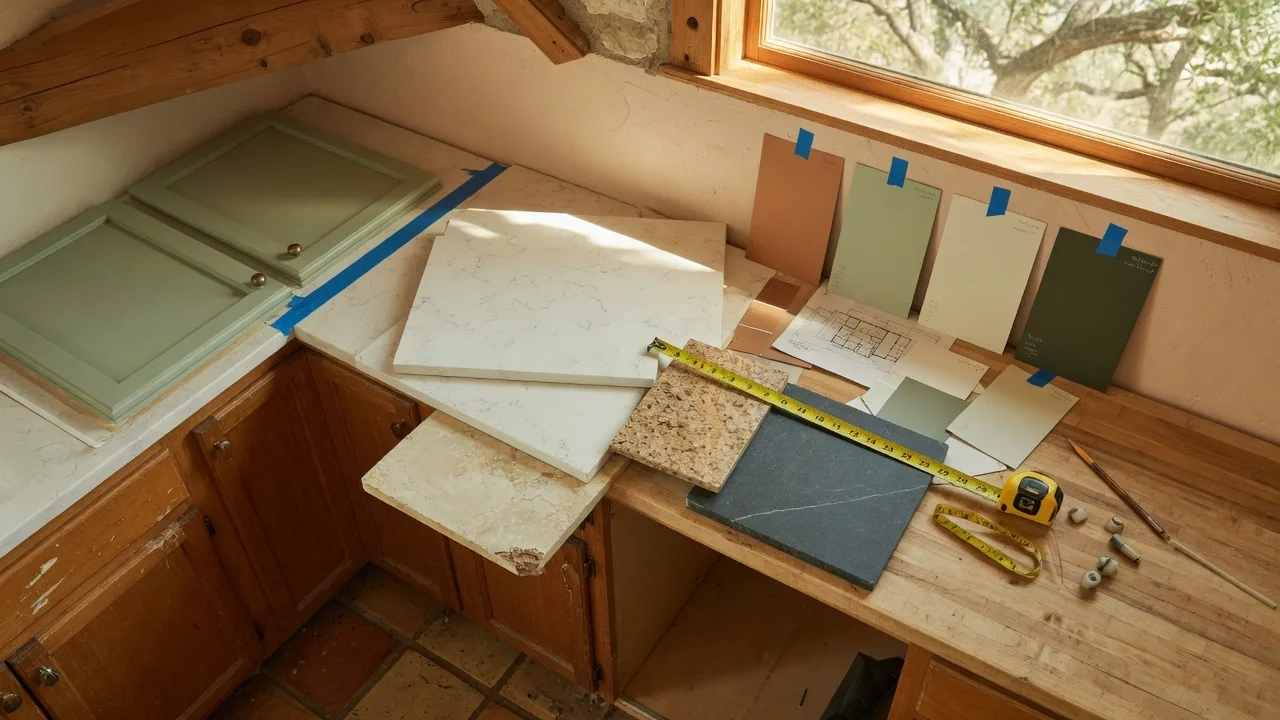

When someone passes away and leaves behind a house, the executor faces one of the first and most consequential financial decisions of the entire probate process: should the property be repaired and updated before selling, or sold in its current condition? Our probate real estate agent page explains how we help families evaluate their options.
The stakes are real. A home that could benefit from $20,000 in repairs might sell for $40,000 more if those repairs are completed. But those same repairs might take four months, cost $30,000 instead of the estimated $20,000, and eat into an estate that is already incurring substantial carrying costs. Meanwhile, the heirs are waiting, the property taxes are accruing, and the market is moving in unpredictable directions.
There is no universal answer. The right decision depends on the estate's cash position, the property's condition, the local market, the executor's timeline, and — more than most people expect — the emotional dynamics of the family involved. This article provides a practical, data-driven framework for making that decision clearly and defensibly.
Educational Notice
This article is for educational and informational purposes only and does not constitute legal, tax, financial, or real estate advice. Probate laws, executor duties, and real estate procedures vary by county and individual circumstance. Always consult a qualified Texas probate attorney, CPA, and licensed real estate professional before making decisions about estate property.
When Fixing Up Makes Financial Sense
In the right circumstances, targeted repairs can meaningfully increase the sale price of an estate home — sometimes enough to more than cover the cost of the work. The key is understanding which improvements actually move the needle in the local market and which ones consume capital without producing a return.

High-ROI Repairs That Can Pay for Themselves
Not all repairs are created equal. See our new construction vs. resale guide for insight into Hill Country renovation and building costs. The following table describes common improvements and their typical strategic purpose, rather than claiming specific cost-recovery percentages that may not apply to a particular estate property:
No improvement produces a guaranteed return. National remodeling reports can provide broad context, but an executor should not apply national cost-recovery percentages mechanically to a particular Texas estate home. The relevant question is how the proposed work is likely to affect this property's sale price, buyer pool, marketing time, financing eligibility, insurance eligibility, and net proceeds in the current local market.
When the Local Market Rewards Move-In-Ready Homes
The value of repairs depends heavily on the local buyer pool. In competitive markets like Boerne, Fair Oaks Ranch, and parts of San Antonio, buyers frequently compete for move-in-ready homes and are willing to pay a premium to avoid dealing with contractors themselves. In those markets, a home that has been freshly painted, re-floored, and cleaned up can sell faster and closer to asking price than a comparable home that needs work [4].
In more rural or price-sensitive markets, the calculus shifts. Buyers may expect discounted pricing regardless of condition, or the pool of buyers may be small enough that cosmetic improvements do not generate competitive offers. A real estate agent who knows the specific submarket can provide data on whether repaired homes in that area actually command higher prices — not just in theory, but in recent closed sales.
Functional Obsolescence vs. Deferred Maintenance
Understanding the difference between these two concepts is critical for an executor evaluating repair options:
- Deferred maintenance is repairable. A worn roof, peeling paint, stained carpet, or an aging HVAC system are all examples of maintenance that has been postponed. These items can often be corrected more directly than design-related deficiencies, but the cost and resale benefit are not always known in advance. Some repairs protect value or expand the buyer pool without returning their full cost in the sales price [5].
- Functional obsolescence is structural or design-related and far more expensive to correct. A home with a two-bedroom floor plan in a four-bedroom market, a bathroom accessible only through a bedroom, a kitchen closed off from the living area, or an inadequate electrical panel are examples. Correcting functional obsolescence often costs more than the value it adds — and that is before considering the timeline required [5].
The practical test is not a simple rule of thumb. If a condition materially limits financing, insurance, safety, habitability, or the available buyer pool, it deserves priority analysis. That does not automatically mean the estate should repair it. The executor should compare the cost and delay of correcting the condition with the discount required to sell it unrepaired. If the repair addresses a preference or style issue that some buyers will care about and others will not, the return is far less predictable.
When Contractor Bids Come in Reasonable
The numbers only work if the repair costs are predictable. Before committing to any scope of work, the executor should obtain two to three written, itemized bids from established and adequately insured contractors. Texas does not issue a single statewide general-contractor license, although electricians, air-conditioning contractors, plumbers, and certain other trades are subject to state or local licensing requirements. While there is no statewide license, municipal rules in Bexar and Kendall counties — and other Texas Hill Country jurisdictions — require local general-contractor registration for structural renovations. Executors should verify that any contractor performing significant work holds the required local registration or license for that specific county or municipality. The executor should also verify applicable trade licenses, insurance coverage, references, permits, warranties, payment schedules, and lien-release procedures before authorizing work. If the bids are close to each other and align with market data, the estate can plan with reasonable confidence. If the bids vary widely — which is common, especially on older homes where hidden problems are likely — the executor should budget for the highest realistic number and treat the difference as a contingency reserve [6].
A critical note: in estates where the property has been neglected for years, the first round of contractor bids often reveals problems the executor did not know about. Mold behind walls, outdated wiring that does not meet current code, foundation movement, or plumbing failures behind slab are common discoveries. When these come up, the repair scope changes — and so does the financial equation.
An executor should also consider whether to order a professional inspection before committing to a repair strategy. A pre-listing inspection may reveal issues that must be evaluated or disclosed and could alter the estate's approach. The attorney and listing agent should weigh the strategic and disclosure consequences of an inspection in the specific context of the estate and the property.
The Clean-Out First Rule
Before inviting contractors to bid on repairs, the executor should hire a dedicated estate sale company or clean-out crew to remove clutter, personal property, and debris. Contractors routinely overbid when a home is heavily cluttered because they cannot clearly inspect walls, flooring, baseboards, cabinetry, or layout limitations. A clean property produces more accurate bids, reduces the scope of work contractors assume is needed, and gives the executor a clearer picture of the home's actual condition.
When Selling As-Is Is the Smarter Move
For every estate where repairs make financial sense, there are others where selling as-is is the clearly better decision — financially, logistically, and for the well-being of everyone involved. The following scenarios commonly point toward an as-is strategy.

What "As-Is" Does — and Does Not — Mean
An as-is sale generally means the seller is not promising to make repairs and the buyer accepts the property in its existing condition, subject to the language of the contract. It does not automatically eliminate inspections, option periods, financing requirements, title objections, appraisal issues, or the possibility that the buyer will attempt to renegotiate after discovering defects.
"As-is" also does not give a seller permission to conceal known material defects, make false statements, or interfere with a buyer's inspection. While Texas Property Code § 5.008(e)(5) explicitly exempts a court-appointed executor or administrator from providing the standard statutory Seller's Disclosure Notice, this exemption is narrow. It does not apply if the property is being sold by heirs who took ownership via a Transfer on Death Deed (TODD), a Muniment of Title, or through an affidavit of heirship without a formal administration. Furthermore, an executor must still disclose any known latent material defects (such as known past flooding or structural failures) to avoid claims of fraud or violations of the Texas Deceptive Trade Practices Act (DTPA). Always consult your probate attorney and listing broker regarding which specific disclosure forms are legally required for your transaction type.
Major Structural, Foundation, or Systems Issues
When the property needs a new roof ($15,000–$35,000), foundation repair ($8,000–$25,000+), a complete HVAC replacement ($8,000–$15,000), major electrical rework ($5,000–$15,000), or whole-house repiping ($4,000–$12,000), the cost of repairs can easily exceed the value they add — especially in a market where investor buyers and contractors are actively seeking as-is properties [2][7].
These figures are broad planning ranges, not bids or valuation adjustments. Actual costs can vary substantially based on the home's size, accessibility, materials, jurisdiction, permit requirements, extent of damage, and contractor availability.
An unrepaired defect can reduce an offer by more than the estimated repair cost because buyers may account for uncertainty, financing or insurance obstacles, project-management time, carrying costs, contingencies, and — in the case of an investor — a required profit margin. However, there is no universal formula for the discount. The appropriate adjustment should be supported by contractor bids, inspection findings, comparable sales, and actual market response.
High-Demand Markets Where Land Value Drives Price
On certain acreage properties, redevelopment sites, unusually large lots, or parcels in locations with substantial development demand, land value may represent a significant share of the property's total value. That conclusion should be supported by land sales, teardown sales, zoning and deed restrictions, utility availability, development costs, and an appraisal or market analysis rather than assumed from the property's location alone. When the lot value represents a significant portion of the total property value, extensive improvements to an aging home may produce diminishing returns. A buyer in these areas may plan to demolish the existing structure and build new, which means the condition of the house is largely irrelevant to the sale price [4].
Tight Timelines and Carrying Cost Pressure
Estates operate under time pressure that most sellers do not face. Creditor claim deadlines, heir agreements, probate court schedules, and the simple reality of carrying costs all push toward a faster resolution. Every month the property sits — whether during renovation or while waiting for the market — costs the estate $1,500 to $3,500 or more in taxes, insurance, utilities, and maintenance. A four-month renovation does not just cost the repair budget; it costs four months of carrying costs on top of that [8].
Family Disagreements and Heir Conflict
When multiple heirs cannot agree on the property's condition, the scope of repairs, or the listing strategy, the resulting delays can cost the estate more than any renovation would recover. In these situations, an as-is sale — which produces a faster, cleaner resolution — often serves the estate's financial interest better than a prolonged negotiation over paint colors and contractor bids [9].
Severe Clutter, Hoarding Conditions, Biohazards, and Code Issues
Some properties present challenges that go beyond typical deferred maintenance. Hoarder conditions may require $5,000 to $20,000 in clean-out before any repair work can begin. Biohazard situations (meth contamination, hoarding-related structural damage, animal waste) require specialized remediation. Outstanding code violations, municipal liens, unsafe-building orders, permit problems, or required inspections can complicate a sale. Depending on the jurisdiction and the nature of the violation, the issue may need to be corrected, disclosed, paid, escrowed, assumed by the buyer, or otherwise addressed before or at closing. The executor should obtain the relevant municipal records and have the title company and probate attorney determine what must be resolved. In all of these scenarios, the cost and complexity of preparation often make an as-is sale to a specialist buyer the most efficient path [7].
The Hidden Costs of Holding and Repairing
The repair estimate is not the full cost of a renovation strategy. Executors who focus only on the contractor's bid often underestimate the total financial impact by a significant margin. The following carrying costs accrue every month the property is held — whether it is being renovated or simply sitting vacant [8][10]:
Based on 2025–2026 Hill Country market data for a typical $350,000–$450,000 property [8][10].
On a property in the $350,000–$450,000 range — common in the Boerne and Fair Oaks Ranch markets — these costs add up to roughly $1,200 to $2,000 per month. Over a four-month renovation period, that represents $4,800 to $8,000 in carrying costs that must be added to the repair budget to calculate the true cost of the renovation strategy.
Confirm Insurance Coverage Before Work Begins
A standard homeowners policy may restrict or exclude certain coverage after a house becomes vacant or unoccupied for a specified period. The risk is particularly important during probate because the executor may assume the existing policy remains fully effective after the owner's death or while the property is empty.
Before leaving the house vacant, beginning renovations, allowing contractors regular access, or shutting off utilities, the executor should notify the insurer in writing and ask whether the estate needs a vacancy endorsement, vacant-home policy, builder's-risk coverage, increased liability protection, or other changes. The executor should retain written confirmation of coverage and comply with requirements involving inspections, heat, water shutoff, alarms, lawn care, or property checks.
Opportunity Cost of Estate Capital
When the estate spends $25,000 on renovations, that capital is no longer available for other estate obligations — paying creditors, distributing funds to heirs, covering legal fees, or handling unexpected expenses. For estates with limited cash reserves or ongoing obligations, tying up working capital in a renovation project creates real financial risk [6].
Contractor Delays and Cost Overruns
Renovation projects frequently encounter change orders, material-price changes, scheduling problems, permit delays, contractor availability issues, and hidden defects. Older estate homes are particularly vulnerable because demolition or invasive inspection may reveal conditions that were not visible when the original bid was prepared.
Executors should use a written scope of work, payment milestones, proof of insurance, lien releases, a realistic schedule, and a contingency reserve. The appropriate reserve depends on the property and project, but it should be large enough to account for foreseeable unknowns rather than assuming the original bid is the final cost.
For an executor working on a timeline, these overruns create a compounding problem: the project costs more than expected, takes longer than expected, and the carrying costs continue to accrue during the delay.
Market Timing Risk
A renovation that begins in a strong market may finish in a shifting one. Interest rate changes, seasonal slowdowns, new inventory entering the market, or broader economic shifts can all affect what a renovated home will sell for three to six months after the work begins. The estate bears that risk entirely during the renovation period. An as-is sale, by contrast, prices and closes quickly — reducing the window of market exposure [4].
How to Run the Numbers
The decision between fixing up and selling as-is should be based on a net-proceeds comparison — not intuition, not emotion, and not what a family member thinks the house "should" sell for. Here is a practical framework that any executor can use:
Confirm That the Estate Can Convey the Property
Before spending money on repairs or committing to a sale strategy, confirm who legally owns the property and who has authority to sign. A house associated with an estate may also involve a surviving spouse, community-property rights, a transfer-on-death deed, survivorship agreement, trust, life estate, mortgage, reverse mortgage, judgment lien, Medicaid Estate Recovery claim, heirship issue, or property that passed outside probate.
The executor should provide the title company and probate attorney with the deed, will, death certificate, court filings, Letters Testamentary or Letters of Administration, mortgage information, and any trust or marital-property documents. Resolving ownership and title issues early prevents the estate from completing repairs on a property it cannot yet market or convey as expected.
- Title Company Underwriting Requirements: Confirm whether the title company will require a "Special Warranty Deed" or an "Executor's Deed," and find out early if they will mandate that all heirs sign the closing documents alongside you, regardless of your independent status.

Get a Professional "As-Is" Market Valuation
Do not rely on a Zillow estimate or online valuation tool. Have a local real estate agent prepare a Comparative Market Analysis (CMA) based on recent sales of similar homes in the area — both move-in-ready and in as-is condition. For additional credibility, consider a licensed independent appraisal. The goal is to understand what the property is worth right now, in its current condition, to a real buyer in this market [4].
Get Two to Three Contractor Bids for Recommended Repairs
Based on a walkthrough and inspection, have two to three established, adequately insured contractors provide written, itemized bids for the recommended scope of work. Make sure each bid breaks out materials, labor, and timeline. Verify applicable trade licenses, insurance coverage, and references. Ask each contractor what could go wrong — what hidden issues they expect in a home of this age and condition [6].
Research Comparable "Fixed Up" Sales
Look at recently sold homes in the same neighborhood or comparable areas that have been updated or renovated. Focus on sales from the last three to six months. The price difference between as-is comparables and updated comparables tells you the ceiling for what repairs might add in value [4].
Calculate Net Proceeds If Repaired
Use this formula: Estimated repaired sales price
minus repair and preparation costs
minus permits, inspections, design, project-management, and professional fees
minus additional insurance and utilities
minus carrying costs during construction and marketing
minus a repair contingency reserve
minus selling expenses, concessions, liens, and closing costs
equals estimated net proceeds if repaired. Be conservative. Use the highest realistic repair estimate, the longest realistic timeline, and the most conservative market value projection [1].
Calculate Net Proceeds If Sold As-Is
Use this formula: Estimated as-is sales price
minus any seller-paid clean-out, safety, preservation, or agreed repair costs
minus anticipated concessions
minus selling expenses, liens, and closing costs
equals estimated net proceeds if sold as-is. Do not subtract the property's condition twice. If the as-is market value was derived from comparable as-is sales, that valuation should already reflect the home's visible condition. Any additional deduction should represent a separate anticipated concession or newly discovered issue, not a second general condition discount [1].
Factor in the Executor's Time, Stress, and Timeline Constraints
If the two net-proceeds calculations are close, the tiebreaker is almost always the intangible costs: the executor's time managing contractors, the stress of overseeing a renovation during a period of grief, the family dynamics involved in repair decisions, and the pressure of probate timelines. When the numbers are close, the simpler path usually serves everyone better [9][11].
Use Three Scenarios, Not Two
In many estates, the best answer is neither a full renovation nor an untouched as-is sale. Compare at least three scenarios:
Scenario One: Sell in Current Condition
Sell with only required preservation and safety work.
Scenario Two: Limited Market Preparation
Complete a limited market-preparation package, such as clean-out, deep cleaning, yard work, paint touch-up, and minor repairs.
Scenario Three: Broader Renovation
Complete a broader renovation before listing.
For each scenario, estimate:
- Probable selling-price range
- Repair and preparation costs
- Inspection and appraisal costs
- Permit and professional fees
- Additional insurance costs
- Monthly carrying costs
- Expected time to market
- Expected days on market
- Selling expenses and concessions
- Contingency reserve
- Probability that the buyer will require additional repairs or credits
- Expected net proceeds
- Worst-case net proceeds
This three-scenario comparison often reveals that a limited preparation strategy produces most of the marketing benefit without exposing the estate to the cost and risk of a full renovation.
Quick Decision Guide
Fixing up may make sense when:
- The repairs address deferred maintenance rather than functional obsolescence
- The local market consistently rewards move-in-ready homes with higher prices
- The estate has cash reserves and no urgent creditor deadlines
- A net-proceeds analysis supports the repair strategy after accounting for costs, time, risk, and buyer-pool effects
- Heirs are aligned on the renovation strategy
Selling as-is may make sense when:
- Major systems (roof, foundation, HVAC, plumbing) need replacement
- A net-proceeds analysis shows that as-is sale produces higher expected proceeds after accounting for costs, time, risk, and buyer-pool effects
- The estate faces tight timelines or limited cash
- Heirs disagree on the scope of work or strategy
- The property sits in a high-demand area where land value drives price
Document Why the Decision Was Reasonable
The executor should maintain a file showing how the decision was made. Useful documentation may include:
- The will, court order, and Letters Testamentary or Letters of Administration
- Written confirmation of authority from probate counsel
- A comparative market analysis and, when appropriate, an appraisal
- Photographs and videos of the property's condition
- Inspection reports and specialist evaluations
- Contractor proposals and proof of insurance
- Estimated carrying costs and insurance requirements
- A written comparison of the available sale strategies
- Communications with beneficiaries
- Listing history, showing feedback, and offers received
- The reasons for selecting one offer over another
The goal is not to eliminate every possible disagreement. It is to create a contemporaneous record showing that the executor gathered relevant information, considered reasonable alternatives, and acted prudently.
Note that the highest offer is not always the best offer. Financing risk, appraisal risk, inspection rights, option periods, proof of funds, earnest money, closing date, assignment rights, and the likelihood of performance can materially affect the value of an offer.
The Emotional Factor
This is not purely a math problem. For many executors, the house carries emotional weight that no spreadsheet can capture. It is the home where they grew up, where holiday dinners happened, where a parent lived for decades. The idea of selling it in its current condition — with stained carpet, outdated wallpaper, and a yard that has not been mowed in months — can feel like a failure to honor the person who lived there.

Research on decision-making during bereavement confirms that grief significantly affects executive function — the cognitive processes responsible for planning, evaluating options, and making judgments. Studies show that bereaved individuals frequently experience what researchers call "grief brain," characterized by difficulty concentrating, impaired working memory, and increased susceptibility to decision fatigue [11]. Bereavement can affect concentration, memory, attention, sleep, and decision-making, although the experience and duration vary substantially from person to person.
For executors, this creates a specific risk: the emotional desire to "do the right thing" by fixing up the home can override the financial analysis that says a faster, simpler sale serves the estate better. Heirs may add to this pressure, particularly if they have strong sentimental attachments to specific features of the home or if they believe that selling without repairs somehow disrespects the deceased.
The practical guidance here is simple but important: prioritizing the estate's financial health and the executor's well-being over perfection is not a failure. It is a fiduciary decision. The executor's job is to manage the estate's assets wisely — and that sometimes means accepting that a clean, fast sale at a fair as-is price produces a better outcome for all beneficiaries than a months-long renovation project that consumes time, capital, and emotional energy.
Major financial decisions made during acute grief carry higher risk of error. Where possible, executors should build in time for consultation — with an attorney, a financial advisor, and a real estate professional who understands the probate context — before committing to a renovation strategy [11].
What Texas Probate Law Says
The executor's decision to fix up or sell as-is operates within a legal framework that provides both authority and constraints. Understanding the key provisions helps executors make defensible decisions.
The Executor's Duty to Protect and Prudently Manage Estate Property
Texas Estates Code § 351.101 requires an executor or administrator to take care of estate property as a prudent person would take care of that person's own property. That obligation does not necessarily require obtaining the highest imaginable sales price or undertaking every improvement that might increase gross value. The more defensible objective is generally to protect the property, evaluate the available alternatives, and choose a reasonable course that serves the estate after considering costs, risks, timing, liquidity, debts, and expected net proceeds.
If a supported financial analysis shows that an as-is sale is likely to leave the estate with more money, less risk, or a materially faster resolution than renovation, an as-is sale may be the more prudent decision [12].
Independent Administration and Executor Authority
Independent administration generally gives a personal representative broader authority and requires less routine court supervision than dependent administration. However, the authority to sell estate real property should not be assumed merely because the administration is independent. The executor must review the will, the order appointing the personal representative, the estate's debts and liquidity, the title status, and the applicable provisions of the Texas Estates Code.
Texas Estates Code § 402.052 governs the powers of independent executors. If a Will does not explicitly grant a Power of Sale, the statutory authority is generally limited to specific purposes, such as paying debts, taxes, administration expenses, or statutory family allowances. An independent executor cannot sell estate real property without an explicit Power of Sale simply because they believe a sale is in the "best interest," unless all beneficiaries consent under § 401.006 or the sale is required to satisfy estate obligations.
The executor should nevertheless have the probate attorney and title company confirm the executor's authority and the documentation required before signing a listing agreement or sales contract.
It is critical to note a common point of friction in Texas title clearings: the distinction between an Independent Executor with or without an explicit "Power of Sale" granted in the Will. If the Will explicitly grants the power to sell real property, the executor can generally proceed seamlessly. However, if the Will is silent, or if the administration is an independent intestate administration (no Will), Texas title companies will frequently require either a court order authorizing the sale or the unanimous written consent (and signatures at closing) of every single beneficiary named in the estate.
The Role of the Court When Heirs Disagree
In independent administration, the court generally does not intervene in the executor's business decisions about how to sell property — even when heirs disagree. In dependent administration, which applies in a smaller number of estates, the court may need to approve the sale strategy. Beneficiaries generally do not manage the estate merely because they expect to inherit from it. However, the extent of their rights and available remedies depends on the type of administration, the will, the court's orders, the executor's conduct, and the procedural posture of the estate. A beneficiary who believes the executor is wasting assets, acting beyond the granted authority, failing to account, engaging in self-dealing, or otherwise breaching a duty should obtain advice from a Texas probate attorney regarding the available court remedies [14].
Timeline Pressures
Texas law does not impose a general rule requiring every probate estate to be closed within two years after the executor is appointed. In fact, an independent executor is not necessarily required to formally close an independent administration. The practical timeline depends on the estate's assets, debts, tax issues, litigation, title problems, creditor claims, and the terms of the will.
Even without a fixed two-year deadline, an executor must administer the estate diligently and avoid unreasonable delay. Property taxes, insurance, utilities, maintenance, security risks, and market changes can steadily reduce the estate's net value while a house remains vacant or under renovation. A repair project that materially delays the sale should therefore be justified by a documented increase in expected net proceeds.
Working With the Right Team
The fix-up-versus-as-is decision should not be made in isolation. Executors benefit from assembling a small team of professionals who can provide objective data and practical guidance:
A Real Estate Agent Experienced in Probate and As-Is Sales
Not all agents understand the unique constraints of probate transactions. An agent experienced with estate sales will know how to price properties in both as-is and repaired condition, understand the disclosure requirements and fiduciary obligations, and have relationships with investor buyers who purchase as-is properties. Look for an agent who can provide comparable sales data for both scenarios and who does not have a financial incentive to push one strategy over the other [4].
A Licensed Appraiser for Unbiased Valuation
When the numbers are close or when heirs disagree, an independent appraisal provides a neutral, professional opinion of value in both as-is and repaired condition. This documentation also strengthens the executor's position if the decision is later questioned [4].
An Estate Attorney for Legal Guidance
The attorney can confirm the executor's authority, advise on the scope of permissible repairs, and ensure the decision is documented in a way that protects the executor from later challenge [13][14].
A Property Manager During the Decision Period
If the estate needs time to evaluate options, a property manager can maintain the home, handle insurance and utilities, and provide regular condition reports — preventing the deterioration that can undermine either strategy [8].
Some real estate professionals specialize in probate transactions and understand the unique intersection of estate law, family dynamics, and property valuation that these situations require. That specialized knowledge can be the difference between a smooth transaction and a protracted, costly one.
Frequently Asked Questions
Does the executor have to get court approval to sell as-is?
In most Texas estates — those administered under independent administration — the answer is no. The executor has broad authority to sell estate property, including in as-is condition, without court approval. In dependent administration, court authorization is required before the sale, but the court can still approve an as-is sale. The key is that Texas law does not require the property to be repaired before it can be sold, regardless of the administration type [13].
Can an executor make repairs without all heirs agreeing?
In independent administration, the executor has the authority to make business decisions about estate property — including repairs — without requiring agreement from every heir. The executor's duty is to act prudently in the interest of the estate, and that includes making repair decisions based on market data and financial analysis. However, if heirs believe the executor is making poor decisions, they may challenge the executor's conduct through the probate court. Getting heir buy-in early, even when it is not legally required, reduces the risk of later disputes [12][14].
What if the estate does not have cash for repairs?
This is a common situation and often resolves the debate quickly. If the estate lacks liquid funds for repairs, the executor has several options: selling as-is (the most straightforward), using estate funds that are earmarked for other purposes (which requires careful analysis), or, after consulting the estate's attorney and CPA, arranging properly documented financing or advances from beneficiaries or another source. Any beneficiary-funded repair arrangement should be documented before money is spent. The agreement should address whether the payment is a loan, reimbursable estate expense, capital contribution, or non-reimbursable payment; whether interest applies; when repayment occurs; what happens if the sale proceeds are insufficient; and whether the arrangement affects distributions among beneficiaries.
In many cases, the absence of repair capital makes an as-is sale the most practical path — and there is nothing wrong with that. Investor and cash buyers actively seek as-is properties, and the sale can proceed without any capital outlay from the estate [7].
How do I know if a buyer's as-is offer is fair?
The best protection against accepting an unfair offer is to have objective market data. A CMA from the listing agent and an independent appraisal establish the property's value range. Additionally, listing the property on the open market — even for a short exposure period — creates competition among buyers and helps ensure the estate receives market-rate offers. The executor must evaluate net proceeds, financing terms, and closing risks to act in the best interest of the estate and its beneficiaries. Under Texas Estates Code § 351.051, an executor owes a fiduciary duty to secure reasonable market value. Accepting a reliable, lower-priced cash offer with a quick closing may be more effective than a higher offer burdened by financing contingencies or repair demands.
What if the executor fixes it up and it still does not sell?
This is one of the real risks of the renovation strategy. A home can be repaired, updated, and still fail to sell — due to overpricing, market shifts, location issues, or problems that were not addressed. When this happens, the estate has spent capital on improvements that did not produce a return, and the property may now need to be sold as-is anyway — at a lower price than it would have fetched before the renovation. This scenario underscores the importance of conservative market analysis and understanding the buyer pool before committing to repairs [1][4].
Are there tax implications different between fixing up and selling as-is?
Potentially. Inherited property generally receives a basis tied to its fair market value on the date of death, although exceptions and alternate valuation rules can apply. Because of this adjustment, taxable gain is often based primarily on the change in value after death rather than on the decedent's original purchase price.
Executors should not assume that every repair expense increases the property's tax basis. Capital improvements that add value, prolong the property's useful life, or adapt it to a new use may increase basis, while ordinary cleaning, maintenance, and repair expenses may receive different tax treatment. Selling expenses and estate-administration expenses may also be treated differently depending on the facts and which taxpayer — the estate or a beneficiary — owns and sells the property.
Before deciding that renovation will create a tax benefit, the executor should have a CPA determine the property's date-of-death basis, ownership at the time of sale, qualifying basis adjustments, deductible expenses, and the likely taxable gain or loss [15].
The Capital Gains Step-Up Window
Because the property's tax basis steps up to fair market value on the date of death under IRS rules, selling the home relatively quickly — whether as-is or with minimal preparation — often results in little or no taxable gain for the estate. This can significantly simplify the estate's tax accounting and reduce the risk of a complicated capital-gains filing. Executors should consult a CPA to confirm the date-of-death valuation, but the general principle is straightforward: the shorter the time between the date of death and the sale, the less likely the estate will owe capital gains tax on the property.
How long does the probate process typically take in Texas?
There is no single statutory deadline requiring every Texas probate estate to be completed within a set number of months or within two years. Probate timelines vary significantly depending on the county court, complexity of the estate, form of administration, and whether disputes arise. Simple independent administrations may close in several months; complex or contested matters can take a year or longer. Your attorney can provide a timeline estimate based on your specific circumstances.
Once Letters Testamentary or Letters of Administration have been issued, the personal representative may begin acting within the authority granted by the will, the court order, and Texas law. The time required to sell the house will depend on the type of administration, the executor's authority, the property's condition, title issues, preparation work, pricing, financing, and current market conditions. The executor should ask the probate attorney whether any estate-specific deadlines or court requirements apply [14].
What if the executor lives out of state?
An out-of-state executor faces additional logistical challenges with either strategy, but the challenges are significantly greater with a renovation. Managing contractors remotely, monitoring construction quality, and making real-time decisions about scope and budget requires either frequent travel or a trusted local presence. An as-is sale is often the more practical choice for out-of-state executors because it requires less ongoing involvement — the listing agent and title company handle most of the process. If the executor does pursue repairs, hiring a property manager or project manager to oversee the work locally is strongly recommended [8].
Sources
- National Association of Realtors, 2025 Remodeling Impact Report; Remodeling Magazine / Zonda Media, 2026 Cost vs. Value Report. These reports provide national cost-recovery ranges by project type. Actual results for a specific Texas estate property will vary based on local market conditions, property condition, and project scope. nar.realtor/remodeling-impact-report
- Remodeling Magazine / Zonda Media, 2026 Cost vs. Value Report. costvsvalue.com
- National Association of Realtors, 2025 Remodeling Impact Report. nar.realtor/remodeling-impact-report
- Based on local market analysis and comparable sales data for the Texas Hill Country and Greater San Antonio area. Executors should obtain property-specific data from a licensed real estate agent familiar with the local submarket.
- Appraisal Institute, The Appraisal of Real Estate, 15th Edition. Discussion of functional obsolescence vs. deferred maintenance in residential valuation.
- Renovation cost management: industry experience and standard contractor practices. Executors should verify trade licenses, insurance, references, and permit requirements specific to their jurisdiction. Texas does not issue a statewide general-contractor license, although certain trades (electricians, HVAC, plumbing) are subject to state or local licensing.
- Based on local market analysis of as-is and investor-purchase transactions in the Texas Hill Country and Greater San Antonio area. Executors should obtain property-specific data from a licensed real estate agent.
- Ownwell, "Bexar County Property Taxes: 2026 Rates and Data." ownwell.com; Weigand Real Estate, "Average Home Cost in Boerne, TX." weigandrealestate.com; KSAT News, "What Homeowners Need to Know as Insurance Rates Surge in Texas." ksat.com
- General probate estate management principles. Statistics and broad conclusions about family conflict or fiduciary outcomes should be verified against primary sources for the specific jurisdiction.
- KSAT News, "What Homeowners Need to Know as Insurance Rates Surge in Texas." ksat.com
- ScienceDirect, "Competitive neurocognitive processes following bereavement," Brain Research Bulletin, 2023. sciencedirect.com
- Texas Estates Code, § 351.101 — Duty of Executor or Administrator to Manage Estate Property. statutes.capitol.texas.gov
- Texas Estates Code, § 402.052 — Powers of Independent Executor. statutes.capitol.texas.gov
- Texas Estates Code, Chapters 401–403 — Independent and Dependent Administration; § 405.005 — Closing Independent Administration. statutes.capitol.texas.gov
- Internal Revenue Service, Publication 559, Survivors, Executors, and Administrators; Publication 551, Basis of Assets. irs.gov
- Texas Property Code § 5.008 — Seller's Disclosure of Property Condition and statutory exemptions. statutes.capitol.texas.gov
Personal Note
If you are an executor navigating this decision, here is what I would want you to know: there is no single right answer, and the fact that you are thinking carefully about it puts you ahead of most. The fix-up-versus-as-is question is not about what the house used to be or what it could become. It is about what serves the estate and the people it supports right now.
I have worked with families on both sides of this decision. Sometimes the numbers clearly point toward repairs, and the results are satisfying. Just as often, the smarter move is a clean as-is sale that lets the family move forward without the burden of a renovation project on top of everything else they are managing.
If you are working through this and want to talk through the specifics — what the numbers might look like for your property, what the market is doing right now, or just how to think about the decision — I am happy to be a sounding board. This is complex territory, and having someone in your corner who understands both the property side and the probate side can make a real difference.
— Bill Ross, Certified Probate Expert
Hill Country Homesteads Group, Brokered by KW Boerne
Phone: (210) 294-9190
Email: Bill@HillCountryHomesteads.com
Office Address: 116 Herff Rd, Suite 203, Boerne, TX 78006
Related Reading
Can a Probate House Be Sold As-Is?
A comprehensive guide to selling as-is in Texas
The Hidden Carrying Costs of Keeping an Estate Home Too Long
What every month of delay actually costs the estate
How Do You Price an Inherited House When the Family Disagrees?
Pricing strategy when heirs cannot agree
7 Mistakes Executors Make With a Probate House
Common errors and how to avoid them