

The property still has to be managed, but death does not automatically give every heir or family member authority to act as landlord. Before collecting rent, changing payment instructions, serving notice, or offering the property for sale, confirm record title and identify the personal representative, trustee, entity representative, co-owner, or other person legally authorized to act.
This is a situation Texas executors may encounter. A parent or relative dies, and the family discovers the property has been rented out for years. The tenancy may still be in effect, and the occupant may retain enforceable rights. Once title and authority have been confirmed, the person or entity legally entitled to manage the property — such as a personal representative, trustee, surviving co-owner, entity manager, or successor owner — must address the applicable landlord obligations.
This article covers the principal issues an executor should evaluate about managing and selling an inherited Texas home with a tenant in place: what happens to the lease, how to handle the security deposit, how to collect rent during probate, when and how the tenant can be asked to leave, and how to sell the property with the tenant still living there.
The goal is to give you a clear, practical framework so you can protect the estate's value, respect the tenant's rights, and avoid the legal pitfalls that turn a straightforward probate sale into a costly dispute.
This article provides general information about Texas probate and landlord-tenant law. It is not legal advice and does not create an attorney-client relationship. Every estate and tenancy is unique. The distinctions between lease types, tenant classifications, and court procedures can determine the outcome of specific situations. Consult a licensed Texas probate attorney and a real estate attorney for guidance specific to your circumstances. Laws, court interpretations, and procedural rules can change.
What Happens to the Lease When the Owner Dies
The first question executors ask is usually the most important: does the lease end when the owner dies?
A landlord's death or a sale of the property ordinarily does not, by itself, terminate an existing residential lease. During administration, the estate or its authorized personal representative generally assumes the landlord's rights and duties. If the property is sold, the purchaser generally becomes the new landlord subject to the tenant's existing rights. However, the lease must be reviewed for any enforceable provision addressing termination, renewal, assignment, notice, or sale of the property, and the estate's authority to act must be confirmed. For that reason, it is more accurate to say that a purchaser ordinarily acquires the property subject to the tenant's existing rights than to state categorically that every lease "runs with the land." The result can depend on the lease, the type of sale, title and notice issues, and applicable law.
The tenant's right to quiet enjoyment continues. [Source 32] The tenant is not required to leave simply because the property owner has died. Texas Property Code Chapter 92 (Residential Tenancies) continues to apply to the estate as it would apply to any other landlord when the statutory prerequisites are met. [Source 7]
This general rule applies to both fixed-term leases (leases with a specific end date) and periodic tenancies (month-to-month or week-to-week arrangements). The key difference between these two types lies in how and when the tenancy can be terminated, which we will cover in detail below.
| Factor | Fixed-Term Lease | Periodic Tenancy (Month-to-Month Example) |
|---|---|---|
| Duration | Ends on the stated date unless the lease renews, extends, or requires advance notice of nonrenewal. | Continues for successive rental periods until properly terminated. |
| Termination | The lease controls, including any renewal, nonrenewal, sale, transfer, default, and notice provisions. | Texas Property Code §91.001 supplies default termination rules, but §91.001(e) recognizes a different notice arrangement — or no notice requirement — contained in an instrument signed by both parties, as well as a legally recognized breach of contract. |
| Sale | The property may generally be sold subject to the tenant's existing rights. | The property may generally be sold subject to the tenancy. |
| Options | Honor the term, sell occupied, rely on a valid contractual termination right, or negotiate a written early surrender. | Continue it, terminate it with legally sufficient notice, or sell occupied. |
Under Texas Property Code §91.001, a monthly or month-to-month tenancy may be terminated by giving notice. [Source 2] If the rent-paying period is at least one month, the tenancy ends on the later of the termination date stated in the notice or one month after notice is given. If the rent-paying period is shorter than one month, the tenancy ends on the later of the stated termination date or the day after a notice period equal to the rent-paying period expires. The statute does not require termination to coincide with the end of a rental period, and §91.001 itself does not expressly require the notice to be written, although a written, provable notice is prudent and the lease may require one. A signed agreement or a legally recognized breach can change the default rules under §91.001(e).

Your Obligations as Personal Representative
Once appointed by the probate court, the personal representative has a fiduciary duty to the estate and its beneficiaries. This duty extends to the management of estate property, including rental real estate.
Authority depends on title, the will, the court's orders, and the type of administration. Texas Estates Code §§101.001 and 101.003 address passage of property at death and the personal representative's right to possess estate property during administration. [Source 27] Section 402.002 generally allows an independent executor to take, without a court order, actions that a court-supervised personal representative could take, unless the Estates Code provides otherwise. Sections 402.052–402.053 address an independent executor's power of sale and protection of qualifying purchasers. [Source 28] A dependent personal representative generally obtains court authority for a sale, although §356.002 applies when a will directs or authorizes one. [Source 29] Sections 357.001–357.002 separately govern a personal representative's decision to enter a new rental: estate property may be rented for one year or less without a court order when doing so is considered in the estate's best interest, while a proposed rental longer than one year requires a written application and court order. These new-rental provisions are distinct from merely administering a lease the decedent signed before death.
The personal representative must keep estate funds separate from personal funds. Rent received or earned by the estate is generally estate income, but the proper recipient and taxpayer can differ when property is held by a trust or entity, passes outside probate, is co-owned, or has been distributed. Confirm title and authority before redirecting or depositing rent. The personal representative must maintain accurate records of all income and expenses related to the property. This is not just good practice — it is a legal requirement of the fiduciary role. [Source 25] [Source 26]
Security Deposits — What the Lawful Landlord Must Do
If the estate or another successor landlord controls a residential security deposit, the person or entity with legal authority must account for it under Texas Property Code §§92.101–92.109. At closing, address the deposit expressly in the closing documents. After title is acquired, the new owner must complete the notice required by §92.105.
Under §92.105(a), a new owner becomes liable for the deposit from the date title is acquired. The new owner must give the tenant a signed statement acknowledging acquisition of the property, accepting responsibility for the security deposit, and specifying the exact dollar amount of the deposit. Under §92.105(b-1), the former owner generally remains liable until the deposit is transferred to the new owner or the new owner assumes liability for it, unless a written contract provides otherwise.
The landlord generally must refund the deposit balance no later than the 30th day after the tenant surrenders the premises. A landlord may deduct damages and charges for which the tenant is legally liable under the lease or because of a breach, but may not retain amounts attributable to normal wear and tear. If the landlord retains any portion, the landlord generally must give the tenant a written description and itemized list of deductions. Section 92.104(c), however, removes the itemization requirement when the tenant owes rent at surrender and there is no controversy concerning the amount owed.
Section 92.107 provides that the landlord is not obligated to return the deposit until the tenant gives a written forwarding address. The tenant does not forfeit the right to a refund or the right to receive the required description and itemization by failing to provide the address.
Penalty for Mishandling Security Deposits
Texas Property Code §92.109 provides remedies for bad-faith retention, including $100, three times the portion wrongfully withheld, and reasonable attorney's fees in a suit to recover the deposit. A landlord who does not comply with the applicable refund or itemization duties by the 30th day is presumed to have acted in bad faith, subject to the itemization exception in §92.104(c).
Practical tip: Preserve the lease, deposit ledger, move-in documentation, repair records, forwarding address, closing statement, proof of transfer or assumption, and the new owner's signed notice. Texas law does not generally require a residential security deposit to be maintained in a separate bank account, but the estate must still account accurately for the money.
Rent Collection During Probate
Post-death rent should be collected only by the person or entity entitled to possess or manage the property. Depending on title and administration, that may be the personal representative, trustee, entity, surviving co-owner, or successor owner. Letters establish representative authority, but do not necessarily establish that the estate owns every interest or is entitled to every rent payment. Review the deed, lease, probate orders, entity or trust documents, and nonprobate transfers before changing payment instructions. [Source 27]
Do not describe the representative's appointment as a "change in ownership" unless title actually changed. Once authority is confirmed, give the tenant written notice identifying the authorized landlord or manager, the address for notices, and where and how rent should be paid. Preserve proof of delivery.
Prepaid rent is not automatically a free estate asset merely because it was received before closing. Account for it together with the lease obligations and the period of occupancy it covers. At a sale, allocate current, prepaid, or delinquent rent according to the purchase contract and closing statement rather than stating categorically that the buyer receives all rent from the closing date forward.
| Event | Action Required |
|---|---|
| Date of Death | Preserve the lease, ledger, payment records, deposit records, notices, and communications. Confirm title and authority before redirecting rent. |
| Authority Confirmed | Notify the tenant in writing of the authorized landlord or manager, notice address, and payment instructions. |
| During Administration | Record rent, expenses, arrears, concessions, and repairs in a property-specific ledger; keep estate funds separate from personal funds. |
| At Sale or Distribution | Allocate current, prepaid, and delinquent rent under the purchase contract and closing statement; account for the security deposit and any transfer or assumption of liability; record the sale proceeds and closing expenses. |
Notice Requirements — Ending a Tenancy and, If Necessary, Pursuing Eviction
A notice terminating a periodic tenancy under Chapter 91 is not automatically the same document as the notice to vacate required before a forcible-detainer case under Chapter 24. First determine whether and when the tenancy was validly terminated; then determine whether a separate statutory notice to vacate is required before filing. A tenant who does not leave after termination is not physically removed without a judgment and writ of possession.
If the personal representative needs the tenant to vacate (to sell the property vacant or for other reasons), proper notice is required. The type of notice depends on the type of tenancy.
Notice Delivery Under Current Law
For eviction suits filed on or after January 1, 2026, Texas Property Code §24.005(f-3) permits delivery by mail, including first-class, registered, or certified mail or a delivery service; delivery to a conspicuous place inside the premises; hand delivery to a tenant age 16 or older; or electronic communication if the parties agreed to that method in writing. Under §24.005(f-4), those delivery restrictions do not apply if the tenant actually receives the notice. For a Chapter 24 notice period, exclude the delivery date, count intervening Saturdays, Sundays, and legal holidays, and extend the deadline when its final day falls on a Saturday, Sunday, or legal holiday. Because defective notice can defeat an eviction case, the lease and the current statute should be reviewed before service. [Source 18]
Month-to-Month Tenancy
For a month-to-month tenancy, apply the Texas Property Code §91.001 termination framework summarized above; do not assume that "30 days" is the correct notice period in every payment arrangement. [Source 2]
Fixed-Term Lease
A tenant under a fixed-term lease generally may remain through the term, unless an enforceable lease provision permits earlier termination, the tenant commits a legally sufficient breach, the parties sign a voluntary-surrender agreement, or another lawful basis for possession applies. The lease's notice, cure, renewal, and nonrenewal provisions must also be followed.
Holdover Tenant
For a holdover tenant (a tenant who stays after the lease expires or after proper notice), the personal representative must provide a written notice to vacate before filing a forcible detainer action. Texas law sets a default of at least three days' notice, but the parties may contract for a shorter or longer period in a written lease. Texas Property Code §24.005(a). [Source 18]
Use the delivery and time-calculation rules summarized in "Notice Delivery Under Current Law" above.
Self-Help Eviction Is Illegal
Do not use lock changes, utility interruption, removal of belongings, threats, or physical exclusion as a substitute for judicial eviction. Texas law contains a narrow, highly regulated lockout procedure in some residential nonpayment situations, but it is not a permanent eviction and carries detailed notice and key-access requirements. [Source 15][Source 16][Source 17] Because an estate can incur statutory damages for an unlawful lockout or utility interruption, the personal representative should obtain Texas legal advice rather than attempting self-help.
Month-to-Month Occupants — Special Considerations
Inherited properties may involve month-to-month tenancies or informal occupancy arrangements. Understanding the legal status of these occupants is critical.
The absence of a written lease does not by itself establish the occupant's classification or the required notice. An oral lease, periodic tenancy, tenancy at will, tenancy at sufferance, license, family occupancy arrangement, or other status may exist depending on permission, rent payments, communications, prior agreements, and conduct. Do not assume that every informal occupant receives exactly 30 days' notice. Have Texas counsel identify the legal relationship and the correct termination and eviction procedure before serving notice.
Some occupants may claim homestead rights even without a formal lease. This is especially complex when the occupant is a surviving spouse or minor child. [Source 5][Source 6] Homestead rights under the Texas Constitution article XVI, §52 and Texas Estates Code Chapter 102 can override the estate's ability to sell or occupy the property in certain circumstances. A surviving spouse or qualifying minor child may have probate-homestead occupancy rights distinct from ordinary tenant rights.

Pets and Housing-Assistance Tenancies: Two Common Complications
Two situations come up often enough in inherited rentals that they deserve specific attention.
If the tenant has a pet
Permission for pets, pet deposits or fees, pet rent, and responsibility for pet damage are governed primarily by the lease, subject to fair-housing requirements and other applicable law. Once authority is confirmed, the authorized landlord assumes the lease rights and duties subject to law. Prior knowledge, consent, waiver, course of dealing, and any no-waiver clause may affect whether and how a lease restriction can be enforced. Review the lease and communications before acting.
The Fair Housing Act may require a reasonable accommodation to a pet rule when an animal is necessary to give a person with a disability an equal opportunity to use and enjoy a dwelling. HUD permanently rescinded FHEO-2020-01 and, in enforcement guidance dated May 22, 2026, stated that requests involving animals individually trained to perform disability-related work or tasks are presumptively reasonable, while requests involving untrained emotional-support animals are not. [Source 22] HUD also cautions that its enforcement policy does not eliminate a person's ability to bring a private civil action. Because the governing law and facts can affect pet-policy waivers, documentation, deposits, and fees, obtain current fair-housing advice before approving or denying an animal-related request.
If the tenant uses a Housing Choice Voucher (Section 8)
Promptly notify the administering public housing agency (PHA) of the owner's death and ask what documents and approvals it requires. The HUD Housing Assistance Payments contract states that assignment by the owner requires the PHA's prior written consent; do not promise that the estate or purchaser automatically succeeds to the contract or subsidy payments. [Source 20] Review the HAP contract, tenancy addendum, lease, and PHA instructions before changing payment directions, rent, ownership, or management. HUD's NSPIRE transition remains in progress for voucher programs. HUD Notice PIH 2026-18 states that PHAs may continue using the previously defined Housing Quality Standards or other HUD-approved inspection methods until February 1, 2027, although some NSPIRE-related requirements already apply and a PHA may implement NSPIRE earlier. [Source 23] Confirm the administering PHA's current inspection standard rather than assuming that either HQS or NSPIRE automatically controls. Provide the PHA copies of eviction notices when the program documents require it. A proposed purchaser should confirm PHA approval, inspections, payment status, and required ownership paperwork before closing.
Property Management During Probate
If the personal representative does not live near the inherited property, hiring a property manager is a practical solution. Many estates involve out-of-state executors managing Texas properties, and a local property manager can bridge the gap effectively.
A property manager can handle day-to-day operations: collecting rent, responding to repair requests, conducting inspections, and managing the tenant relationship. When the estate is the lawful landlord and the personal representative hires the manager, the manager acts as the estate's authorized agent. Delegating day-to-day work does not eliminate the personal representative's fiduciary duty to supervise estate property. If a trust, entity, co-owner, or other successor is the landlord, the management agreement must identify that proper principal.
Reasonable and properly authorized property-management fees incurred for estate administration may generally be paid from estate funds, subject to the will, court orders, type of administration, fiduciary duties, and required accounting. The personal representative should ensure the property manager understands the property is in probate and that any major decisions (repairs above a certain threshold, lease modifications, and so on) require the personal representative's approval.
The personal representative should maintain oversight, preserve supporting records, and provide beneficiaries and the court with information or accountings when legally required. The fiduciary duty to account for estate property does not transfer to the property manager.
Tenant File, Estoppel, and Privacy Checklist
Collect the signed lease and amendments; renewal and termination notices; complete rent ledger; deposit and pet-deposit records; move-in condition documentation; repair requests; notices; payment instructions; PHA/HAP documents; and communications about occupants, pets, concessions, or promises. With counsel and the broker, consider a tenant estoppel or written confirmation of rent, deposit, term, defaults, side agreements, and occupants. Share tenant information only as needed for management, due diligence, closing, or legal compliance; avoid publishing sensitive personal or financial information in marketing materials.
Insurance Warning
Notify the insurer or agent promptly of the owner's death, tenant occupancy, property-management arrangement, vacancy changes, repairs, and sale plans. Do not assume the decedent's homeowner policy remains adequate for an estate-owned rental or a property that later becomes vacant. Obtain written confirmation of coverage and comply with vacancy, inspection, security, and loss-control conditions.
Repairs and Habitability — Who Pays and Who's Responsible
The personal representative or other lawful landlord must comply with the lease and applicable Texas repair duties while the property remains rented, even if a sale is planned.
Texas Property Code §92.052 can require a landlord to make a diligent effort to repair a condition that materially affects an ordinary tenant's physical health or safety, but statutory prerequisites and exceptions matter, including the tenant's notice, rent status, causation, and the landlord's knowledge. [Source 10] The lease may allocate routine maintenance, but it cannot be summarized as eliminating nonwaivable statutory duties.
If the landlord fails to make diligent efforts to repair after proper notice, the tenant may have remedies. Remedies under §§92.056, 92.0561, and 92.0563 have procedural prerequisites [Source 11][Source 12][Source 13]. Repair-and-deduct is limited by statute, and a tenant generally should not simply withhold rent because a repair is disputed. Because the statutory repair remedies and their notice prerequisites are technical, a tenant or estate should review current Texas guidance and obtain legal advice before relying on a particular remedy.
Responsibility cannot be determined solely by labeling a problem plumbing, electrical, HVAC, or structural. Apply the lease and the conditions, exceptions, notice requirements, and remedies in Subchapter B of Texas Property Code Chapter 92 to the specific condition.
The personal representative should budget for repairs. If the property needs significant work, the personal representative may need to negotiate with the tenant about access for contractors.
The Fiduciary Exemption From the Standard Disclosure Form
Texas Property Code §5.008(e)(5) exempts a transfer by a fiduciary in the course of administering a decedent's estate, guardianship, conservatorship, or trust. Whether the exemption applies depends on the seller's legal capacity and the transaction. Do not describe it as applying automatically to every — or even "most" — estate-connected sale. [Source 30]
Two things to keep in mind:
- The exemption travels with the fiduciary sale, not the property. If a duly authorized personal representative transfers the house in a fiduciary capacity in the course of administering the estate, §5.008(e)(5) applies. A sale described informally as an “estate sale” does not qualify unless the statutory requirements are actually satisfied. If the property is first distributed and an heir later sells in the heir's own name, the fiduciary exemption in §5.008(e)(5) does not apply to that later transfer. The heir must provide the statutory notice unless another exemption in §5.008 applies.
- Exemption from the form is not a license to conceal known problems. Even when the formal disclosure notice isn't legally required, a personal representative who knows about a material defect (foundation issues, past flooding, a failed septic system, and so on) and actively conceals it or misrepresents it to a buyer can still face liability under general fraud and misrepresentation principles. The personal representative should discuss with Texas counsel and the broker how to disclose known material facts without implying that the statutory form is mandatory when an exemption applies.
Federal Lead-Based Paint Disclosure
For most residential property built before 1978, federal lead-based-paint disclosure requirements may still apply even when the transfer is exempt from Texas's statutory Seller's Disclosure Notice. Unless a federal exemption applies, before the buyer is bound, provide the required lead disclosure, available lead-related records or reports, and EPA pamphlet, and give the buyer a 10-day opportunity to conduct a lead-based-paint inspection or risk assessment. The parties may agree in writing to a different period, and the buyer may waive the opportunity in writing. [Source 19] Preserve the signed disclosure records.
Showing the Property to Prospective Buyers
Texas statutes do not create a general residential-landlord right of entry or a universal 24- or 48-hour showing-notice rule. Entry rights, purposes, timing, and notice are usually governed by the lease, subject to the tenant's possessory and privacy rights and other applicable law. [Source 32] Review the lease before scheduling buyers, inspectors, appraisers, photographers, or contractors. If the lease does not provide a workable entry right, seek the tenant's written cooperation or legal advice rather than assuming entry may be compelled.
If the tenant refuses to allow showings, the personal representative may need to negotiate or, in extreme cases, seek a court order. A cooperative tenant makes the selling process much smoother. Consider offering the tenant a relocation incentive or rent concession in exchange for their cooperation during the sale process.
Fair Housing and Retaliation Safeguards
Apply showing, screening, notice, negotiation, and move-out rules consistently and without discrimination because of race, color, national origin, religion, sex, familial status, or disability. Obtain legal advice before denying a disability-related reasonable-accommodation request or treating an assistance animal as a pet. Also review Texas Property Code §92.331, which prohibits specified retaliation against a tenant who exercises protected rights or makes a good-faith repair complaint. [Source 14] [Source 24]
Selling the Property With the Tenant in Place
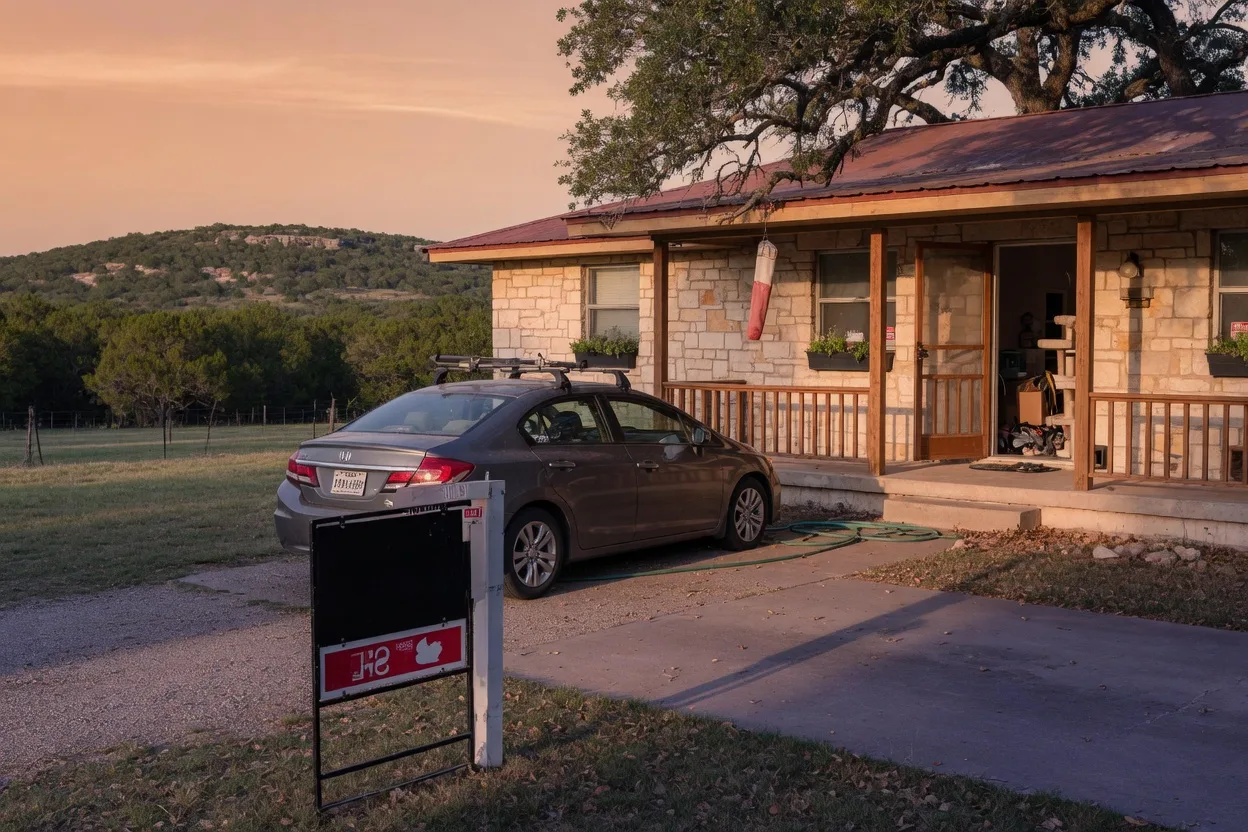
A Texas property generally may be sold while occupied by a tenant, provided the seller has authority to convey it. In an ordinary voluntary sale, the purchaser is generally bound by the existing lease, subject to the lease terms and applicable title, notice, foreclosure, and other legal rules. [Source 1] The lease and tenant file should be disclosed during buyer due diligence, including rent, deposit, term, renewal provisions, defaults, concessions, and side agreements. The sale itself ordinarily does not require the tenant's consent, but the lease should be checked for a purchase option, right of first refusal, termination-on-sale provision, or other relevant right.
The sale price may be affected by the existing tenancy. Some buyers prefer vacant properties; others may value the prospect of continuing rental income. Investor buyers, in particular, may see an occupied property as an advantage because it provides immediate cash flow.
If the lease contains an enforceable provision permitting termination because of a sale or transfer, follow every condition and notice requirement in that provision. Do not assume that the transfer automatically ends the lease. At closing, the parties should account for the security deposit and allocate current, prepaid, or delinquent rent under the purchase contract and closing statement. The new owner's statutory deposit liability and notice obligations must also be addressed. The personal representative should ensure the closing documents properly reflect the transfer of landlord obligations, including the security deposit.
| Factor | Occupied Sale (Tenant in Place) | Vacant Sale |
|---|---|---|
| Likely Buyers | Investors and some owner-occupants whose plans are compatible with the tenancy. | Owner-occupants and investors. |
| Benefits | Continuing rent and less turnover if the tenant and lease are satisfactory. | Broader access for preparation and showings; may support owner-occupant financing and occupancy plans. |
| Risks | Restricted access, tenant/lease due diligence, deposit and rent accounting, financing or appraisal complications, and a smaller buyer pool. | Turnover costs, lost rent, security, insurance, utilities, maintenance, and unlawful-removal risk. |
| Timing/Value | Market-dependent; analyze the lease, rent, tenant history, condition, buyer financing, and projected net. | Market-dependent; compare the cost and delay of lawful vacancy with the expected change in net proceeds. |
A buyer's lender and intended occupancy can matter. Do not market a tenant-occupied property as available for immediate owner occupancy unless possession can legally and practically be delivered.
Removing a Nonpaying Tenant
If the tenant stops paying rent, the personal representative must follow Texas's forcible entry and detainer procedures. These are the legal steps for removing a nonpaying tenant, and they must be followed exactly.
Nonpayment cases require careful use of the current lease and Texas Property Code Chapter 24. Under the 2026 version of §24.005(a), a tenant whose right to possession is being terminated solely for nonpayment and who was not previously late or delinquent before the month of the notice must receive a notice to pay rent or vacate. If the tenant was late or delinquent before that month, the notice may be either a notice to pay rent or vacate or a notice to vacate. The written lease may establish a shorter or longer presuit notice period, but the current statute, lease, payment history, and any federal-program rules should be reviewed together before notice is served. Serve the correct written notice by an authorized method and calculate the period under current law. If the tenant remains, file the proper justice-court case; do not characterize filing as physical removal. After judgment, account for the five-day appeal period and the statutory restrictions on issuance and execution of a writ of possession. Contested cases, service problems, appeals, bankruptcy, local dockets, defects in notice, and federal-program rules can materially extend the timeline. For those reasons, no single eviction timeline is reliable.
The personal representative should consult with an attorney before initiating eviction proceedings, especially if the tenant has raised habitability complaints.
Voluntary Surrender / Cash for Keys
A negotiated early move-out can be faster and less costly than litigation, but document it. Use a written agreement identifying the parties, property, surrender deadline, required condition, keys and access devices, payment amount and timing, treatment of rent and deposit, abandoned property, inspection, and what happens if possession is not delivered. Do not pay the final amount until the agreed surrender conditions are verified. Have Texas counsel draft or review the agreement; do not use threats, utility interruption, lockout, or misrepresentation to obtain consent.
Confirm Who Owns the Property and Who May Sign
Before changing rent instructions, terminating a tenancy, signing a listing agreement, or contracting to sell, confirm record title and legal authority. The decedent may have owned the property individually, with a surviving co-owner, through an LLC, or in a trust. A will does not by itself prove that the person holding it may act for the estate. Coordinate the deed, probate filings, letters testamentary or administration, will, court orders, entity or trust documents, and title-company requirements. Do not assume that every heir, beneficiary, executor, trustee, or surviving family member has interchangeable authority.
Accounting for Rental Income Within the Estate
A personal representative must care for estate property as a prudent person would care for that person's own property. Keep records sufficient for tax reporting, closing adjustments, and any accounting required by the will, a court order, or the Estates Code. The timing and scope of an interested person's right to demand an accounting depend on the form and stage of administration; for an independent administration, see Texas Estates Code §404.001. [Source 25] [Source 26]
The personal representative must maintain detailed records of: rent received (dates, amounts, payment method), expenses paid (repairs, maintenance, property management fees, insurance, mortgage payments, property taxes), and security deposit transactions.
Texas Estates Code §309.051 governs the inventory, appraisement, and list of claims, while §309.056 permits a qualifying personal representative to file an affidavit in lieu of the inventory with the court while still providing the inventory to entitled beneficiaries. [Source 3] [Source 4] Verify deadlines, extensions, local requirements, and whether the affidavit option is available.
IRS Form 1041 is the estate's fiduciary income-tax return, not the federal estate-tax return. An estate generally must file Form 1041 if it has $600 or more of gross income for the tax year or has a beneficiary who is a nonresident alien, subject to current IRS instructions. [Source 21] Rental income and sale activity can affect the filing. The personal representative should consult with a CPA or tax professional to ensure proper reporting.
After the sale, proceeds must be accounted for and applied to authorized expenses, taxes, creditor claims, reserves, and other estate obligations before distributable funds are paid according to the will, applicable intestacy law, and any controlling court orders. See also: How and When Heirs Receive Money From a Texas Probate Home Sale.
| Timing | Action |
|---|---|
| Date of Death | Establish baseline: rent amounts, tenant info, security deposit amount |
| Monthly | Record rent received, expenses paid, maintenance and repairs |
| Quarterly | Review income vs. expenses (recommended internal review) |
| At Sale | Prorate rent, transfer security deposit, account for sale proceeds |
| Final | Required filing and closing steps — File the inventory or, if eligible, an affidavit in lieu of inventory within the applicable deadline; file required tax returns; complete required accountings; retain appropriate reserves; and distribute only when authorized. |
Decision Tree — Keep the Tenant or Sell Vacant?
Every inherited property with a tenant requires a decision about whether to sell with the tenant in place or to end the tenancy and sell vacant. The answer depends on the specific facts of the lease, the property, and the estate's goals.
- Confirm title and the authority of the person who will act.
- Collect the lease, amendments, payment history, deposit records, notices, occupant information, and any PHA/HAP documents.
- Classify the tenancy or occupancy with counsel; do not infer legal status solely from the absence of a written lease.
- Determine whether the existing lease continues, renews, permits termination, or can be ended by written agreement.
- Compare an occupied sale with a lawful vacant sale using projected net proceeds, access, condition, rent, financing, insurance, and timing.
- If the tenant is performing, either continue management, market subject to the tenancy, or negotiate a voluntary surrender.
- If there is a default, identify the exact legal ground and serve the termination, cure, pay-or-vacate, or notice-to-vacate document required by the lease and current law.
- If possession is not surrendered, use the applicable judicial process. Do not use lockout, utility interruption, or removal of belongings as a substitute for eviction.
Executor's Checklist
Frequently Asked Questions
Can I sell while the tenant is living there?
Generally yes, if the seller has authority to sell. The sale ordinarily does not itself erase the tenant's existing rights, but the lease, title, probate authority, court orders, and any subsidy contract must be reviewed.
Does the tenant have to leave when the owner dies?
Ordinarily no. Death alone usually does not terminate the tenancy. The lease, occupant status, probate-homestead rights, and any lawful termination ground still matter.
What happens to the security deposit?
Account for it at closing and follow Texas Property Code §92.105. The new owner must give the tenant a signed statement acknowledging acquisition of the property, accepting responsibility for the security deposit, and stating the exact dollar amount of the deposit.
How much notice for month-to-month?
Section 91.001 generally ends a monthly tenancy on the later of the termination date stated in the notice or one month after notice is given. The tenancy does not have to end at the close of a rental period. A signed agreement or a legally recognized breach may change the default rule.
Can rent be raised?
During a fixed term, the lease controls. For a periodic tenancy, review the lease, the proposed effective date and notice, fair-housing and retaliation law, and any voucher-program requirements. Texas Local Government Code §214.902 generally prevents municipal rent control unless a housing emergency is declared and the governor approves the ordinance. [Source 31]
What if the tenant refuses showings?
Review the lease's access provision and seek written cooperation. Texas has no universal statutory 24- or 48-hour showing rule. Obtain legal advice before attempting entry or seeking judicial relief.
Can I evict to sell vacant?
A sale is not itself a ground to dispossess a tenant. A periodic tenancy may be terminable with proper notice; a fixed term generally continues unless the lease provides a valid termination right, the tenant breaches, or the parties sign a voluntary surrender. Judicial process is required if the occupant does not leave.
Who pays for repairs?
The estate or other lawful landlord must comply with the lease and applicable duties, including Texas Property Code §92.052 when its conditions are satisfied. Repair remedies have statutory prerequisites.
What if rent stops?
Review the lease and payment history before serving notice. For an eviction based solely on nonpayment, the 2026 version of Texas Property Code §24.005(a) generally requires a notice to pay rent or vacate if the tenant was not late or delinquent before the month in which the notice is given. If the tenant was late or delinquent before that month, the notice may be either a notice to pay rent or vacate or a notice to vacate. If the tenant remains after legally sufficient notice, the landlord may file an eviction case in justice court. [Source 18]
Is court approval required?
It depends on the will, title, court orders, and type of administration. Independent and dependent administrations have different rules, and §356.002 can matter when a will authorizes or directs a sale.
Related Articles
If you are navigating selling inherited property Texas, the resources below cover every angle of the process. For more context on the broader probate home sale process, these articles may be helpful:
- How and When Heirs Receive Money From a Texas Probate Home Sale
- What If an Heir Is Living in the Estate House and Refuses to Leave?
- How to File for Probate in Texas: The Starting Point for Everything
- Can an Executor Sell a House Before Probate Is Finished in Texas?
- What Happens When a Probate House Sits Vacant in Texas?
- Disclosure Problems Executors Worry About Most
- The Hidden Carrying Costs of Keeping an Estate Home Too Long
- Property Insurance in the Texas Hill Country: A Guide for Homeowners
Sources
- Texas State Law Library — Landlord-Tenant Law: Property Sales. https://www.sll.texas.gov/faqs/landlord-tenant-property-sale/
- Texas Property Code §91.001 — Notice for Terminating Certain Tenancies. https://statutes.capitol.texas.gov/Docs/PR/htm/PR.91.htm
- Texas Estates Code §309.051 — Inventory, Appraisement, and List of Claims. https://statutes.capitol.texas.gov/Docs/ES/htm/ES.309.htm
- Texas Estates Code §309.056 — Affidavit in Lieu of Inventory. https://statutes.capitol.texas.gov/Docs/ES/htm/ES.309.htm
- Texas Estates Code Chapter 102 — Probate Homestead Rights. https://statutes.capitol.texas.gov/Docs/ES/htm/ES.102.htm
- Texas Constitution Article XVI, §52 — Probate Homestead. https://statutes.capitol.texas.gov/Docs/CN/htm/CN.16.htm
- Texas Property Code §§92.101–92.109 — Residential Security Deposits. https://statutes.capitol.texas.gov/Docs/PR/htm/PR.92.htm
- Texas Property Code §92.107 — Forwarding Address. https://statutes.capitol.texas.gov/Docs/PR/htm/PR.92.htm
- Texas Property Code §92.109 — Liability of Landlord for Bad Faith Retention of Security Deposit. https://statutes.capitol.texas.gov/Docs/PR/htm/PR.92.htm
- Texas Property Code §92.052 — Landlord's Duty to Repair or Remedy. https://statutes.capitol.texas.gov/Docs/PR/htm/PR.92.htm
- Texas Property Code §92.056 — Landlord Liability and Tenant Remedies; Notice and Time for Repair. https://statutes.capitol.texas.gov/Docs/PR/htm/PR.92.htm
- Texas Property Code §92.0561 — Tenant's Repair and Deduct Remedies. https://statutes.capitol.texas.gov/Docs/PR/htm/PR.92.htm
- Texas Property Code §92.0563 — Tenant's Judicial Remedies. https://statutes.capitol.texas.gov/Docs/PR/htm/PR.92.htm
- Texas Property Code §92.331 — Retaliation. https://statutes.capitol.texas.gov/Docs/PR/htm/PR.92.htm
- Texas Property Code §92.008 — Interruption of Utilities. https://statutes.capitol.texas.gov/Docs/PR/htm/PR.92.htm
- Texas Property Code §92.0081 — Removal of Property and Exclusion of Residential Tenant. https://statutes.capitol.texas.gov/Docs/PR/htm/PR.92.htm
- Texas Property Code §92.009 — Residential Tenant's Right of Reentry After Unlawful Lockout. https://statutes.capitol.texas.gov/Docs/PR/htm/PR.92.htm
- Texas Property Code Chapter 24, including §§24.0042, 24.005, 24.005107, and 24.0061 — Eviction Notices, Time Computation, Appeals, and Writs of Possession. https://statutes.capitol.texas.gov/Docs/PR/htm/PR.24.htm
- U.S. Environmental Protection Agency — Real Estate Disclosures About Potential Lead Hazards. https://www.epa.gov/lead/real-estate-disclosures-about-potential-lead-hazards
- U.S. Department of Housing and Urban Development, Housing Assistance Payments (HAP) Contract, Form HUD-52641 — https://www.hud.gov/sites/dfiles/OCHCO/documents/52641.pdf; Tenancy Addendum, Form HUD-52641-A — https://www.hud.gov/sites/dfiles/OCHCO/documents/52641A.pdf
- IRS Form 1041 and Instructions — U.S. Income Tax Return for Estates and Trusts. https://www.irs.gov/forms-pubs/about-form-1041
- HUD Memorandum, "Assessing Requests for the Use of an Animal as a Reasonable Accommodation Under the Fair Housing Act" (May 22, 2026). https://www.hud.gov/sites/default/files/hudclips/documents/AS-Trainor-Enforcement-Guidance-Assessing-Requests-for-the-use-of-an-animal-as-a-reasonable-accommodation-under-the-fair-housing-act.pdf
- HUD Notice PIH 2026-18. https://www.hud.gov/sites/default/files/PIH/documents/PIH-2026-18.pdf
- U.S. Department of Housing and Urban Development, "Housing Discrimination Under the Fair Housing Act." https://www.hud.gov/helping-americans/fair-housing-act-overview
- Texas Estates Code Chapter 351, including §351.101 (duty of care). https://statutes.capitol.texas.gov/Docs/ES/htm/ES.351.htm
- Texas Estates Code Chapter 404, including §404.001 (accounting by independent executor). https://statutes.capitol.texas.gov/Docs/ES/htm/ES.404.htm
- Texas Estates Code Chapter 101, including §§101.001 and 101.003 — Passage and Possession of Estate Property. https://statutes.capitol.texas.gov/Docs/ES/htm/ES.101.htm
- Texas Estates Code Chapter 402, including §§402.002 and 402.052–402.053 — Independent Administration and Power of Sale. https://statutes.capitol.texas.gov/Docs/ES/htm/ES.402.htm
- Texas Estates Code Chapters 356 and 357 — Sales and Rentals of Estate Property. https://statutes.capitol.texas.gov/Docs/ES/htm/ES.356.htm and https://statutes.capitol.texas.gov/Docs/ES/htm/ES.357.htm
- Texas Property Code §5.008, including §5.008(e)(5) — Seller's Disclosure Notice and Fiduciary-Transfer Exemption. https://statutes.capitol.texas.gov/Docs/PR/htm/PR.5.htm
- Texas Local Government Code §214.902 — Municipal Rent Control. https://statutes.capitol.texas.gov/Docs/LG/htm/LG.214.htm
- Texas State Law Library — Landlord Entry. https://www.sll.texas.gov/faqs/landlord-entry/
Need Guidance on a Probate Property With a Tenant?
If you are an executor or administrator managing an inherited Texas home with a tenant in place, a conversation can help clarify your options. Bill Ross is a Certified Probate Expert serving Boerne, Fair Oaks Ranch, San Antonio, and the surrounding Hill Country communities.
Request a Confidential Consultation